

Maddy summaryThis House resolution (HRES 669) honors the victims and survivors of the August 27, 2025, mass shooting at Annunciation Catholic Church and School in Minneapolis, which killed 2 children and injured 21 others. It condemns the violence, offers condolences to affected families, and commends first responders, medical staff, and community members who aided victims. The resolution expresses solidarity with the Minneapolis Catholic community and affirms that everyone deserves safety in places of worship and schools. As a symbolic gesture with no policy changes, it does not impose new laws or funding requirements.
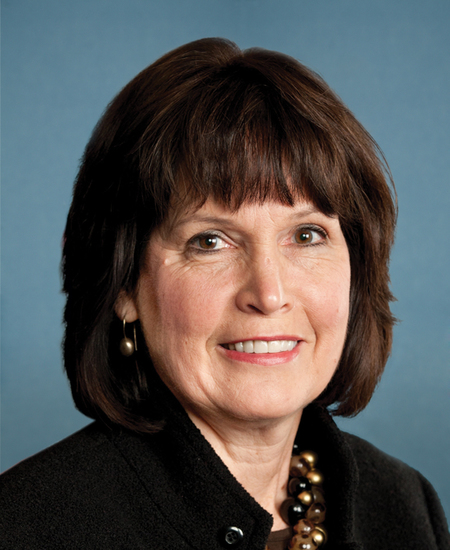
Rep. Betty McCollum
Sponsored bills
Maddy summaryThis bill (HJRES 115) terminates a presidential emergency declaration made on August 11, 2025, which claimed a "crime emergency" in Washington, D.C. It directly affects the District of Columbia by ending federal restrictions that prevented D.C. from using $1 billion in locally-raised funds for public safety, law enforcement, fire services, and schools. The resolution cites that the emergency declaration was legally flawed - section 740 of the DC Home Rule Act does not permit federalizing the Metropolitan Police Department - and notes that D.C. violent crime has reached a 30-year low. The bill formally ends the emergency under the DC Home Rule Act, restoring D.C.'s authority over its own budget and public safety resources.
Maddy summaryHRES 658 is a symbolic resolution recognizing the nonprofit sector’s contributions to communities and supporting the designation of August 17, 2025, as "National Nonprofit Day." It highlights nonprofits as the nation’s third-largest employer (12 million workers) and key community partners, without creating new laws or funding. The resolution formally honors nonprofits’ role in services like education, health, and shelter but does not alter policies or obligations. This is a non-binding gesture of appreciation, not a legislative change.
Maddy summaryThe PUPP Act of 2025 creates a federal grant program to fund housing for unhoused people who have pets. It authorizes $5 million annually (2026-2030) for grants to local governments, nonprofits, or housing providers to build or retrofit properties that offer both human housing and pet-friendly accommodations. Key requirements include on-site veterinary care for pets (spaying, vaccinations, etc.), supportive services like mental health counseling for residents, and coordination with local animal care providers. This directly affects unhoused individuals with pets - often excluded from standard shelters - and the organizations managing these housing programs.
Maddy summaryThis bill requires the U.S. Department of State to include specific, detailed reporting on reproductive rights in its Annual Country Reports on Human Rights Practices. It mandates descriptions of each country's policies regarding access to contraception, abortion services, and comprehensive reproductive health care, alongside data on pregnancy-related deaths, discrimination against women and LGBTQI+ individuals, and disparities based on race, disability, or other factors. The bill also directs the State Department to consult with civil society organizations and health experts to ensure thorough reporting on these issues. This change aims to align U.S. reporting with international human rights standards and address past omissions of reproductive rights from these reports.
Maddy summaryHRES 629 is a non-binding House resolution honoring Dr. Paul Farmer and calling for U.S. policy changes to address global health inequities. It directly affects low- and middle-income countries by urging the federal government to adopt a "21st-century global health solidarity strategy," including increasing U.S. global health funding to $125 billion annually (to meet the UN 0.7% GNI target) and supporting national health systems through Dr. Farmer’s "Five S’s" framework (staff, space, stuff, systems, social support). The resolution also mandates addressing systemic economic harms like debt, tax evasion, and colonial legacies through debt cancellation, tax reform, and reparations for historical injustices. It emphasizes concrete policy shifts rather than funding alone, requiring coordinated multilateral action to close health financing gaps and reform global governance institutions.
Maddy summaryThis bill adjusts health insurance subsidies by modifying the premium tax credit structure under the Internal Revenue Code. It replaces previous income thresholds with a sliding-scale formula, increasing subsidies for households earning between 150% and 400% of the federal poverty level - reducing their required premium payments as income rises within these tiers. The changes apply to tax years beginning after December 31, 2025, directly affecting middle-income individuals and families purchasing coverage through health insurance marketplaces. It also repeals specific provisions from a prior reconciliation law related to health care.
Maddy summaryThis bill removes a barrier preventing most low-income students from accessing SNAP benefits. It amends the Food and Nutrition Act to explicitly allow students enrolled at least half-time in recognized higher education programs to qualify for SNAP, reversing a prior exclusion. The key change eliminates the previous requirement that students meet specific exceptions (now deleted) and adds a new eligibility category under Section 3(m)(5). This directly affects low-income undergraduate and graduate students at colleges and training programs who were previously ineligible. The changes take effect January 2, 2026.
Maddy summaryHRES 613 is a symbolic House resolution expressing support for designating July as "Disability Pride Month." It directly affects people with disabilities by raising public awareness of their contributions and challenges, referencing CDC data showing 70 million U.S. adults live with disabilities. The resolution calls on the public and organizations to celebrate Disability Pride Month in July and actively work to prevent discrimination against people with disabilities, aligning with the anniversary of the Americans with Disabilities Act (ADA). This is a non-binding gesture focused on recognition, not policy change.
Maddy summaryHR 4699, the BIKE Act of 2025, requires federal grant funding to support bicycle safety education programs for elementary and secondary school students. It mandates the Secretary of Transportation to revise Highway Safety Program Guideline No. 14 to include specific provisions for teaching bicycling skills, traffic rules, road navigation, safety precautions, and helmet use. The revised guidelines must be developed with input from educators and disseminated to state education agencies for integration into school curricula. This bill directly affects public school students and school districts through new safety education requirements and federal funding opportunities.