

Domestic Workers Bill of Rights Act This bill provides rights and protections for domestic workers (e.g., housekeepers, nannies, caretakers, personal assistants, and chauffeurs), including pay and leave rights, and health and safety protections. Specifically, the bill repeals the exemption of domestic live-in employees from certain minimum wage and maximum hour requirements. Employers must provide written notice of termination and provide at least 30 days of lodging and two weeks of severance pay to terminated live-in employees. Live-in employees also must be provided with reasonable access to telephone and internet service during their employment. The bill requires employers to provide domestic workers with a written agreement covering wages, sick leave, benefits, and other matters. Further, domestic workers may request and be granted changes to work schedules due to personal events. The bill also provides domestic workers with certain privacy rights, extends to domestic workers protections against discrimination in employment, and increases the federal medical assistance percentage (FMAP) for certain Medicaid-funded medical services provided by domestic workers. The Department of Labor must (1) award grants for a domestic worker national hotline for reporting emergencies, training on hazards facing domestic workers, and workforce investment activities for domestic workers; and (2) establish a Domestic Worker Wage and Standards Board to investigate standards in the domestic workers industry. Labor must publish online a document that describes the rights and protections for domestic workers under this bill.
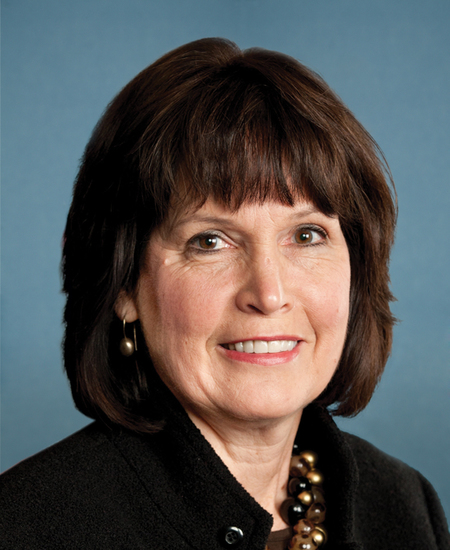
Rep. Betty McCollum
Sponsored bills
Protecting Renters from Evictions Act of 2021 This bill extends through December 31, 2021, the order issued by the Centers for Disease Control and Prevention titled Temporary Halt in Residential Evictions To Prevent the Further Spread of COVID–19 and published on September 4, 2020.
Critically Endangered Animals Conservation Act of 2021 This bill provides statutory authority for the Critically Endangered Animals Conservation Fund, which finances a grant program to protect critically endangered species. Specifically, the bill requires the Department of the Interior to establish the fund as a separate account in the Multinational Species Conservation Fund. Critically endangered species means any animal species categorized on the International Union for Conservation of Nature (IUCN) Red List of Threatened Species as either endangered or critically endangered. The term also means any other animals species categorized on such list as data deficient or under a threat category lower than endangered if Interior determines that (1) the most recent IUCN Red List assessment indicates that the population is decreasing, or (2) such species is facing new or emerging threats.
This resolution (1) commits to advancing policies that will end roadway fatalities by 2050, and (2) calls on Congress and the Department of Transportation to commit to working together to achieve zero roadway fatalities by the year 2050.
Healthy Dog Importation Act This bill imposes requirements on the importation of live dogs. Specifically, the bill prohibits the importation of a live dog into the United States unless the Department of Agriculture (USDA) determines the dog (1) is in good health, (2) has received all necessary vaccinations and demonstrated negative test results as evidenced by a certificate from a licensed veterinarian, and (3) is officially identified by a permanent method approved by USDA. Additionally, dogs entering the United States for transfer must be at least six months of age and accompanied by a USDA permit. Transfer is defined as a change of ownership or control of an imported dog to another person, including by sale, adoption, exchange, or donation. USDA must provide an exception to any requirements under the bill for dogs that are transferred for (1) research purposes; (2) veterinary treatment under certain conditions, including appropriate quarantining; or (3) lawful importation into the state of Hawaii if the dog is not transported out of Hawaii for resale at less than six months of age. USDA also has enforcement authority under the bill.
Saving America's Pollinators Act of 2021 This bill addresses the use of certain pesticides and the health and status of native bees and other pollinators. First, the bill requires the Environmental Protection Agency (EPA) to establish a Pollinator Protection Board to develop an independent review process for pesticides that pose a threat to pollinators and their habitats. All active ingredients and pesticide products that contain one or more specified neonicotinoid pesticides must be deemed to generally cause unreasonable adverse effects to the environment. Under the bill, the registration of all uses of neonicotinoid pesticides must be immediately and permanently canceled. The EPA must revoke any tolerance or exemption that allows the presence of a neonicotinoid pesticide, or any pesticide chemical residue that results from neonicotinoid pesticide use, in or on food. The continued sale or use of existing stocks of neonicotinoid pesticides is prohibited, and the EPA may not register any such pesticides under the Federal Insecticide, Fungicide and Rodenticide Act. The bill requires the Department of the Interior, the EPA, and the Department of Agriculture to coordinate monitoring activities and report on the health and population status of native bees and other pollinators. Finally, a state or federal agency may be granted an exemption to use neonicotinoid pesticides if the board votes that use of the pesticide is warranted (1) in an emergency situation to avert significant risk to threatened or endangered species, (2) to quarantine invasive species, or (3) to protect public health.
Eleanor Smith Inclusive Home Design Act of 2021 This bill requires certain newly constructed, federally assisted housing, including single-family homes and town houses, to contain at least one level that complies with specified minimum standards of accessibility for individuals with disabilities. An aggrieved person may commence a civil action with respect to a violation of this requirement.
Mississippi River Restoration and Resilience Initiative Act or the MRRRI Act This bill establishes the Mississippi River Restoration and Resilience Initiative to protect and restore the Mississippi River Corridor. The Environmental Protection Agency (EPA) must establish the initiative and the Mississippi River National Program Office to carry out the initiative. The office must (1) coordinate agency actions to protect and restore the Mississippi River Corridor; (2) develop, implement, and update the initiative, actionable goals, and an action plan required by the bill; (3) make updates and information available on a public website; and (4) submit annual reports to Congress. Additionally, the bill outlines the focus areas that each project carried out under the initiative must address, such as improving water quality and protecting wildlife habitat. The office may make grants to certain nonfederal entities to carry out eligible projects. The bill directs the EPA to include the initiative as a separate budget line item in its annual budget submission. Next, the bill directs the Department of the Interior to coordinate with the office to establish four Mississippi River Corridor research centers within the U.S. Geological Survey (USGS). These research centers must, among other duties, conduct scientific research on the focus areas of the initiative. The bill also directs the USGS to host a science forum to share current science and identify data gaps related to the ecological health of the Mississippi River Corridor. The USGS must, within two years of the forum, develop a science plan for the initiative.
Securing Universal Communications Connectivity to Ensure Students Succeed Act or the SUCCESS Act This bill provides additional funding for the Emergency Connectivity Fund, which supports remote learning during the COVID-19 emergency period by covering reasonable costs of laptop and tablet computers, Wi-Fi hotspots, modems, routers, and broadband connectivity purchases for off-campus use by students, school staff, and library patrons.
Averting Loss of Life and Injury by Expediting SIVs Act of 2021 or the Allies Act of 2021 This bill increases the number of special immigrant visas available to qualified Afghan nationals who worked for the U.S. government or the North Atlantic Treaty Organization (NATO) missions in Afghanistan. The bill also relaxes certain qualifications for such visas. Specifically, this bill makes available an additional 8,000 visas for principal aliens under this special visa program, to be available until all such visas have been issued. (The numerical limitations in this program apply only to the principal alien who applies for the visa, not to any accompanying spouse or child.) Under this bill, an alien may qualify based on a credible basis for concern about the possibility of an ongoing serious threat in Afghanistan due to their work with the U.S. government or a NATO mission, where currently the alien must have experienced such a threat. The bill also eliminates a requirement for each applicant to submit a credible sworn statement describing that threat. Furthermore, for an applicant qualifying for a visa by performing duties for U.S. military personnel stationed with a NATO mission, this bill eliminates a requirement that the duties performed qualify as sensitive and trusted duties. If an alien submits a visa application that included an accompanying spouse or child but the alien passes away before the application is granted, the surviving spouse or child shall remain eligible to receive a visa under that application. Currently, a surviving spouse or child retains eligibility only if the application was approved before the alien passed away.