Maddy summaryThis resolution designates the week beginning March 13, 2022, as National Tribal Colleges and Universities Week. It recognizes 35 accredited Tribal colleges and universities serving over 230 federally recognized tribes, highlighting their role in providing culturally grounded education and postsecondary opportunities to Native students in isolated or economically disadvantaged communities. The resolution calls for public observance through activities but does not create new policies or funding changes.
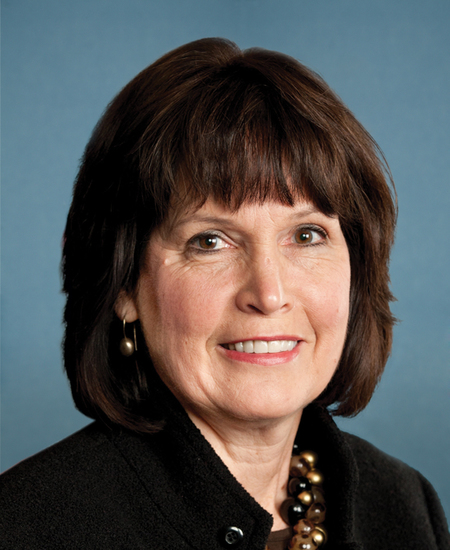
Rep. Betty McCollum
Sponsored bills
This resolution (1) recognizes Girl Scouts of the United States of America for 110 years of providing girls with a safe, inclusive, all-girl space where they can hone their skills and develop leadership abilities; and (2) congratulates all Girl Scouts who earned the Gold Award in 2021.
Honoring Harriet Tubman Act This bill requires the Joint Committee on the Library to obtain a statue of Harriet Tubman and place the statue in a suitable permanent location in National Statuary Hall.
This concurrent resolution condemns violence and threats of violence against historically Black colleges and universities (HBCUs) and reaffirms the federal government's commitment to combating violence against HBCU students, faculty, and staff.
This resolution expresses that the House of Representatives must take action on climate change and address the mental health effects of climate change on children and families.
School Social Workers Improving Student Success Act This bill provides certain resources to increase the number of social workers in elementary and secondary schools. Specifically, the bill directs the Department of Education to award grants to high-need local educational agencies to retain or hire school social workers. The bill also establishes a national technical assistance center for school social work to, among other duties, develop strategies for improving the effectiveness of the school social work workforce.
This resolution condemns the terrorist attack on Congregation Beth Israel in Colleyville, Texas, on January 15, 2022. It also expresses support for the affected community, commends the actions of law enforcement and emergency responders, and reaffirms a commitment to combat hate, bigotry, anti-Semitism, and violence against Jewish Americans.
This resolution honors the life of James Hagedorn, former Representative of Minnesota, and offers the condolence of the House of Representatives regarding his death.
Medicare Demonstration of Coverage for Low Vision Devices Act of 2022 This bill requires the Centers for Medicare & Medicaid Services (CMS) to carry out a demonstration project to evaluate the fiscal impact of covering low-vision devices under Medicare in the same manner as Medicare coverage is provided for durable medical equipment. The bill defines low-vision device to mean a physician-prescribed device that magnifies, enhances, or otherwise augments or interprets visual images; the term does not include ordinary eyeglasses or contact lenses. The bill appropriates $2.5 million for FY2022 and each of the next four fiscal years for the CMS to carry out the project.
Women's Health Protection Act of 2021 This bill prohibits governmental restrictions on the provision of, and access to, abortion services. Specifically, governments may not limit a provider's ability to prescribe certain drugs, offer abortion services via telemedicine, or immediately provide abortion services when the provider determines a delay risks the patient's health. Furthermore, governments may not require a provider to perform unnecessary medical procedures, provide medically inaccurate information, comply with credentialing or other conditions that do not apply to providers whose services are medically comparable to abortions, or carry out all services connected to an abortion. In addition, governments may not (1) require patients to make medically unnecessary in-person visits before receiving abortion services or disclose their reasons for obtaining such services, or (2) prohibit abortion services before fetal viability or after fetal viability when a provider determines the pregnancy risks the patient's life or health. The bill also prohibits other governmental measures that are similar to the bill's specified restrictions or that otherwise single out and impede access to abortion services, unless a government demonstrates that the measure significantly advances the safety of abortion services or health of patients and cannot be achieved through less restrictive means. The Department of Justice, individuals, or providers may bring a lawsuit to enforce this bill, and states are not immune from suits for violations. The bill applies to restrictions imposed both prior and subsequent to the bill's enactment.