Childhood Cancer Survivorship, Treatment, Access, and Research Reauthorization Act of 2022 or the Childhood Cancer STAR Reauthorization Act This bill reauthorizes through FY2028 and modifies pediatric cancer research and related programs, including to expand collection of and access to relevant biospecimens and to support the transition of pediatric cancer survivors to primary care.
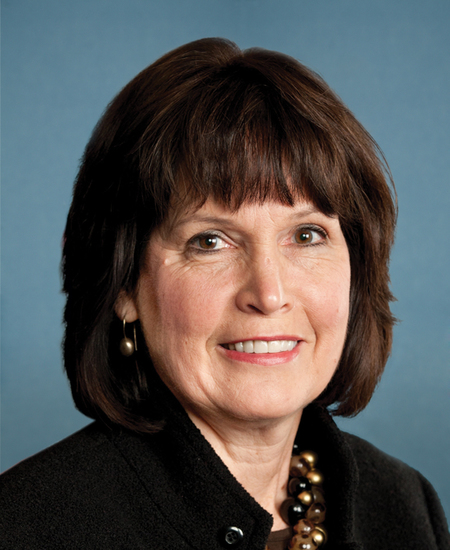
Rep. Betty McCollum
Sponsored bills
Clean Energy Minerals Reform Act of 2022 This bill addresses mineral leasing, exploration, and development on federal land. For example, the bill prohibits the issuance of a patent for certain mining or millsite claims; establishes a permitting and leasing system for hardrock mining; establishes a 12.5% royalty on new mining operations and an 8% royalty on existing operations, with an exemption for small miners; protects special places, such as wilderness study areas, roadless areas, and wild and scenic rivers, from hardrock mining activity; requires consultation prior to undertaking any mineral activities that may have a substantial direct impact on the lands or interests of Indian tribes; establishes an environmental standard for mining activities to ensure that mining activities prevent undue degradation of public lands and resources; prescribes requirements for the exploration permit process and for operations permits, including financial assurances; and authorizes the Hardrock Minerals Reclamation Fund to be used for responding to hazardous substance releases on abandoned hardrock mine land, including efforts to reclaim the land.
Maddy summaryThe Nonprofit Sector Strength and Partnership Act of 2022 establishes a White House Office on Nonprofit Sector Partnership led by a Nonprofit Advisor to coordinate federal support for nonprofits. It creates an Interagency Council and an Advisory Board to improve data collection on nonprofits, streamline federal grant processes, and enhance coordination between government and nonprofit organizations. The bill requires agencies to collect and publish data on nonprofit employment, revenue, volunteerism, and the impact of federal funding, and aims to create a single online portal for nonprofits to meet state registration requirements. This legislation directly affects nonprofits of all sizes, particularly smaller organizations with limited resources, by seeking to make federal support more accessible and efficient.
This resolution recognizes that Black women are experiencing high, disproportionate rates of maternal mortality and morbidity in the United States and that Black Maternal Health Week is an opportunity to deepen the national conversation about Black maternal health.
IHS Contract Support Cost Amendment Act This bill allows tribes to receive contract support costs for activities that would otherwise be carried out by the Department of the Interior or the Department of Health and Human Services for direct operation of a program, but for which the costs are not fully covered by the amount of funds required by the Indian Self-Determination and Education Assistance Act of 1975.
Maddy summaryHR 7477, the CERTS Tax Exemption Act, ensures that grants provided under the Coronavirus Economic Relief for Transportation Services Act are tax-free for eligible transportation service providers. The bill directly affects companies and organizations providing transportation services that receive these specific federal grants. Key provisions state that grant amounts cannot be counted as taxable income, deductions related to grant-funded costs cannot be denied, and tax attributes (like basis increases) must be treated as tax-free for partnerships and S corporations. This change simplifies tax treatment for recipients by preventing unintended tax liabilities on relief funds.
Ensuring Lasting Smiles Act This bill requires private health insurance plans to cover diagnosis and treatment of congenital anomalies and birth defects, such as reconstructive services and items. Coverage must include services and items that functionally improve, repair, or restore any body part that is medically necessary for normal bodily functions or appearance, as determined by the treating physician. Coverage limits and cost-sharing requirements for such services and items may not be more restrictive than those applicable to all medical and surgical benefits under the plan.
Supply Chain Disruptions Relief Act This bill modifies the treatment of liquidations of new motor vehicle inventory as qualified LIFO (last in first out accounting method) inventory. It allows new motor vehicle dealers to elect to wait until the end of 2025 to replace their inventory for purposes of determining income attributable to the sale of such inventory during 2020 and 2021.
Marijuana Opportunity Reinvestment and Expungement Act or the MORE Act This bill decriminalizes marijuana. Specifically, it removes marijuana from the list of scheduled substances under the Controlled Substances Act and eliminates criminal penalties for an individual who manufactures, distributes, or possesses marijuana. The bill also makes other changes, including the following: replaces statutory references to marijuana and marihuana with cannabis , requires the Bureau of Labor Statistics to regularly publish demographic data on cannabis business owners and employees, establishes a trust fund to support various programs and services for individuals and businesses in communities impacted by the war on drugs, imposes an excise tax on cannabis products produced in or imported into the United States and an occupational tax on cannabis production facilities and export warehouses, makes Small Business Administration loans and services available to entities that are cannabis-related legitimate businesses or service providers, prohibits the denial of federal public benefits to a person on the basis of certain cannabis-related conduct or convictions, prohibits the denial of benefits and protections under immigration laws on the basis of a cannabis-related event (e.g., conduct or a conviction), establishes a process to expunge convictions and conduct sentencing review hearings related to federal cannabis offenses, directs the Government Accountability Office to study the societal impact of state legalization of recreational cannabis, directs the National Highway Traffic Safety Administration to study methods for determining whether a driver is impaired by marijuana, directs the National Institute for Occupational Safety and Health to study the impact of state legalization of recreational cannabis on the workplace, and directs the Department of Education to study the impact of state legalization of recreational cannabis on schools and school-aged children.

Restorative Practices in Schools Act of 2022 This bill requires the Department of Education to award grants for local educational agencies to replace existing zero-tolerance disciplinary polices and punitive discipline in elementary and secondary schools with restorative practices. Additionally, the bill directs the Government Accountability Office to study and report on the use of discipline practices that funnel students out of school and toward the juvenile legal and criminal legal systems (i.e., the school-to-prison pipeline).