

Family Reunification Act of 2021 This bill addresses issues related to aliens obtaining legal permanent resident status, including by removing certain deadlines in a provision that allows eligible aliens to obtain such status. Specifically, the bill amends a provision that allows an alien to obtain lawful permanent resident status if the alien (1) is physically present in the United States, (2) entered the United States without inspection or meets certain other criteria, (3) is a beneficiary of a qualifying family-based immigrant petition or a labor certification application filed no later than April 30, 2001, and (4) has filed an application and meets other requirements. This bill removes the April 30, 2001, deadline for the filing of the required immigrant petition or labor certification. It also removes another requirement for certain applying aliens to have been physically present in the United States on December 21, 2000. Furthermore, a beneficiary of a family-based immigrant petition that appears to be eligible for approval may not be removed while the petition is pending. The bill also makes nonimmigrant V visas available to a beneficiary of an approved family-based immigrant petition, subject to certain requirements, regardless of when the immigrant petition was filed or how long it has been pending. Currently, a V visa is only available to an alien whose approved family-based immigrant petition was filed no later than December 11, 2000, and has been pending for at least three years. A V visa holder may not receive any means-tested public benefits or certain health insurance-related benefits.
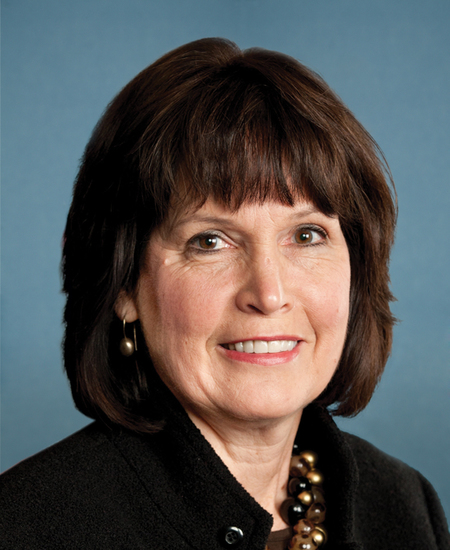
Rep. Betty McCollum
Sponsored bills
Extreme Risk Protection Order Act of 2021 This bill establishes grants to support the implementation of extreme risk protection order laws at the state and local levels, extends federal firearms restrictions to individuals who are subject to extreme risk protection orders, and expands related data collection. Extreme risk protection order laws, or red flag laws, generally allow certain individuals (e.g., law enforcement officers or family members) to petition a court for a temporary order that prohibits an at-risk individual from purchasing and possessing firearms. Among its provisions, the bill directs the Office of Community Oriented Policing Services within the Department of Justice to establish a grant program to help states, local governments, Indian tribes, and other entities implement extreme risk protection order laws; extends federal restrictions on the receipt, possession, shipment, and transportation of firearms and ammunition to individuals who are subject to extreme risk protection orders; and requires the Federal Bureau of Investigation to compile (and later destroy) records from federal, tribal, and state courts and other agencies that identify individuals who are subject to extreme risk protection orders.
Major Richard Star Act This bill provides that combat-disabled uniformed services retirees with fewer than 20 years of creditable service may concurrently receive, without reduction, veterans' disability compensation and retired pay or combat-related special compensation.
Keep Americans Safe Act This bill establishes a new criminal offense for the import, sale, manufacture, transfer, or possession of a large capacity ammunition feeding device (LCAFD). The bill does not prohibit certain conduct with respect to an LCAFD, including the following: importation, sale, manufacture, transfer, or possession related to certain law enforcement efforts, or authorized tests or experiments; importation, sale, transfer, or possession related to securing nuclear materials; and possession by a retired law enforcement officer. The bill permits continued possession of, but prohibits sale or transfer of, a grandfathered LCAFD. Newly manufactured LCAFDs must display serial number identification and the date of manufacture. Additionally, the bill allows a state or local government to use Edward Byrne Memorial Justice Assistance Grant Program funds to compensate individuals who surrender an LCAFD under a buy-back program.
Global Malnutrition Prevention and Treatment Act of 2021 This act sets out programs and otherwise directs the U.S. Agency for International Development (USAID) to carry out activities to prevent and treat malnutrition globally. Specifically, USAID may leverage resources to address malnutrition through the Global Nutrition Coordination Plan (an interagency effort to strengthen the impact of U.S. investments in nutrition) and its role on the board of directors of the U.S. International Development Finance Corporation. USAID must also select countries based on specified malnutrition-related indicators for purposes of targeting malnutrition prevention and treatment programs and update the selection within five years. Additionally, USAID may establish the Nutrition Leadership Council to coordinate federal government activities to prevent and treat malnutrition; and target resources and nutrition interventions to the populations most susceptible to severe malnutrition and otherwise support efforts to prevent and treat malnutrition globally. The act also requires USAID to provide to Congress an implementation plan and annual reports concerning its programs for treating and preventing malnutrition. The act's provisions terminate seven years after its enactment.
Maddy summaryHRES 1438 is a non-binding House resolution expressing support for Lights On Afterschool, an annual event held on October 20, 2022. It recognizes the value of afterschool programs in providing safe, engaging learning opportunities for children, especially during the pandemic. The resolution highlights how such programs support working families, enhance academic and social development, and strengthen community partnerships. It does not create new policies or affect any specific groups, as it solely serves to publicly endorse this national celebration of afterschool initiatives.
This concurrent resolution commemorates the 50th anniversary of the enactment of the Federal Water Pollution Control Act Amendments of 1972, commonly known as the Clean Water Act.
Global Food Security Reauthorization Act of 2022 This bill reauthorizes through FY2028 activities to implement the Global Food Security Strategy, a whole-of-government strategy to promote global food security, resilience, and nutrition. The bill also modifies aspects of the strategy, such as requiring the strategy to seek to improve the efficiency and resilience of agricultural production. The bill also reauthorizes through FY2028 activities related to the Emergency Food Security Program, an international market-based assistance program.
Credit Union Board Modernization Act This bill revises the frequency of meetings required to be held by a credit union's board of directors. Specifically, the bill requires monthly meetings for new credit unions during their first five years and for credit unions with a low soundness rating. All other credit unions must hold at least six meetings annually, with at least one meeting held during each fiscal quarter. Currently, all credit union boards must meet at least once a month.
Wage Theft Prevention and Wage Recovery Act of 2022 This bill requires employers to make initial and modified disclosures to employees of the terms of their employment, provide such employees with regular paystubs, and make a final payment to an employee for uncompensated work hours within 14 days of the employee's termination. Employers must also allow employees access to wage records. An employer must compensate an employee at the rate specified in an employment contract, including a collective bargaining agreement, that specifies a rate of pay higher than the minimum wage rate. The bill makes all of such unpaid wages recoverable through civil enforcement. The bill establishes new and increased civil and criminal penalties for violations of overtime or minimum wage requirements, including referral to the Department of Justice for criminal prosecution of employers who engage in wage theft, falsification of wage records, or retaliation against employees. The Wage and Hour Division of the Department of Labor must provide grants to specified organizations, including nonprofits and educational institutions, to support efforts to prevent and reduce violations of wage and hour laws.