

Maddy summaryHR 6720 creates a grant program administered by the U.S. Department of Agriculture to provide stabilization payments to farmworkers, meat processing workers, and grocery workers affected by natural or other disasters designated by the Secretary. Eligible entities - such as labor unions or membership organizations representing these worker groups - can apply for funding to support affected workers. The program is authorized to spend up to $50 million, with the Secretary required to report on its outcomes within four years. This bill directly affects workers in specific food industry sectors during disaster events, offering financial stabilization through grants administered by the Agricultural Marketing Service.
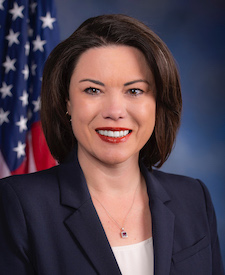
Rep. Angie Craig
Sponsored bills
Maddy summaryThis bill reauthorizes and extends federal funding for research and support services related to preterm birth through 2028, replacing the previous 2019-2023 funding period. Key provisions include adding chronic condition screening and treatment to maternal health education services, mandating an interagency working group on prematurity within 18 months, and requiring a National Academies study on preterm birth costs, risk factors, and program gaps. The study must assess neonatal care expenses, societal impacts, and effective prevention strategies, with a final report due within 24 months. These changes directly affect preterm infants, their families, healthcare providers, and federal agencies managing maternal health programs.
Maddy summaryThis bill amends existing law to expand substance abuse treatment services for children, adolescents, and young adults to explicitly include suicide prevention. It broadens eligibility for funding to include pediatric specialists, children’s hospitals, emergency departments, and Indian Health Service programs. The bill requires grantees to provide parents or guardians with counseling on preventing overdose/suicide and supplies to reduce access to lethal means (like medications or firearms). It mandates a minimum of $2 million annually in federal grants for these suicide and overdose prevention programs, effective 2024-2028.
Maddy summaryThe Innovative FEED Act of 2023 defines and regulates "zootechnical animal food substances" - substances added to animal feed to affect digestion, reduce foodborne pathogens, or alter gut microbiome without providing nutrition. It requires these substances to be approved as food additives by the FDA under existing rules, with specific data on intended effects and mandatory labeling stating "Not for use in the diagnosis, cure, mitigation, treatment, or prevention of disease in animals." The bill excludes drugs, hormones, ionophores, and other substances from this category. This directly affects animal feed manufacturers, the FDA’s regulatory process, and the labeling requirements for these products.
Maddy summaryThis bill amends the Clean Air Act to explicitly include "fuel for ocean-going vessels" in the definition of fossil fuel used for regulatory purposes. It directly affects ocean shipping companies and the Environmental Protection Agency (EPA), as the EPA must create new regulations within one year to implement this change. The key provision expands existing Clean Air Act requirements to cover marine fuels, requiring the EPA to promulgate regulations and submit a report to Congress within 365 days of final rulemaking. The bill does not mandate specific fuel types but adjusts regulatory scope to include ocean vessels.
Maddy summaryHR 6600, "Tyler’s Law," requires the Secretary of Health and Human Services to study how often hospital emergency departments test for fentanyl during overdose cases, along with the costs, benefits, risks, and patient privacy impacts. The study must be completed within one year of the bill’s enactment, followed by guidance issued within six months on whether fentanyl testing should become routine. This guidance will address how hospitals can inform clinicians about testing protocols and how fentanyl testing might affect future overdose risks and patient health outcomes. The bill directly affects hospitals and emergency departments treating overdose patients, focusing on improving data-driven practices for fentanyl detection.
Maddy summaryThe Saving Vet Halls Act of 2023 authorizes the Department of Veterans Affairs to provide grants to eligible veterans service organizations (like local VFW or American Legion chapters) for repairing or upgrading existing facilities or technology at their locations. Organizations must submit a detailed plan for their proposed improvements and cannot use funds for new construction. Grants are capped at $75,000 per organization annually, and recipients cannot receive another grant for five consecutive fiscal years. The bill allocates $10 million in funding to support these facility and technology upgrades for veterans service organizations nationwide.
Maddy summaryHR 6579, the Congressional Pension Accountability Act, changes pension rules for members of Congress expelled from office. If a member is expelled, their congressional service is no longer counted toward their pension eligibility or amount under either the Civil Service Retirement System or the Federal Employees Retirement System. The bill requires a refund of the member’s own contributions (minus prior annuity payments) but does not require repayment of pensions already received before expulsion. Additionally, any government contributions to the member’s Thrift Savings Plan during their congressional service would be forfeited. These changes apply only to expulsions occurring after the bill’s enactment date.
Maddy summaryThe Flex Fuel Fairness Act of 2023 requires the Environmental Protection Agency (EPA) to adjust emissions calculations for flexible fuel vehicles (FFVs) that run on E85 (a fuel blend containing 85% ethanol). It mandates that the EPA use a 31% lower CO2 emissions value for FFVs compared to standard gasoline vehicles, based on a study showing E85 reduces emissions by 31% per mile. This change directly helps vehicle manufacturers meet federal fleet emissions standards by making it easier to count FFVs as lower-emission vehicles. The EPA may further adjust this percentage higher if future studies support a larger reduction.
Maddy summaryHRES 874 is a symbolic resolution expressing the House's support for designating November as "Prematurity Awareness Month." It does not create new laws or alter funding but urges the public, organizations, and communities to observe the month through events, promote awareness, and support preterm birth prevention programs. The resolution highlights statistics on preterm births (383,000 babies born preterm in 2021) and health disparities, but its sole action is endorsing the awareness designation. As a non-binding resolution, it has no direct impact on policy or affected individuals beyond raising public visibility.