

Maddy summaryThis bill extends a temporary COVID-19 emergency waiver that allows nurse aides in training to count hours worked during the pandemic toward their certification requirements at nursing facilities. It specifically permits these hours to satisfy the 75-hour minimum training requirement and allows facilities to conduct competency evaluations on-site if states don’t offer them weekly. The waiver remains in effect for at least 24 months after enactment, with a requirement for the Secretary to study its continued appropriateness within one year. The policy directly affects nurse aides working in skilled nursing facilities and nursing facilities under federal Medicare/Medicaid rules. It does not create new training programs but maintains pandemic-era flexibility for staffing.
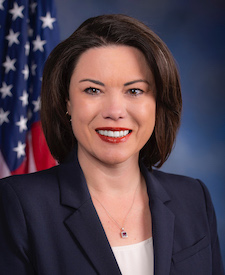
Rep. Angie Craig
Sponsored bills
Maddy summaryHR 7438 directs the U.S. Treasury to mint commemorative coins for the 2026 FIFA World Cup, including 100,000 $5 gold coins, 500,000 $1 silver coins, and 750,000 half-dollar coins. The coins will be sold to the public at face value plus surcharges ($35, $10, and $5 per coin, respectively), with all surcharge revenue paid to FWC2026 US, Inc. for U.S. soccer programs. These funds must support soccer initiatives, particularly in underserved communities and youth development, as specified in the bill. The coins are legal tender but will only be issued during 2026, with no net cost to the U.S. government.
Maddy summaryThis bill extends funding for the existing Public Health Service Act program focused on raising public awareness about Alzheimer's disease and related dementias. It authorizes $33 million annually for fiscal years 2025 through 2029 to support public health education and outreach initiatives. The program directly affects public health organizations and community groups that develop and distribute educational materials about Alzheimer's prevention, diagnosis, and care. The key provision is the multi-year funding extension, ensuring continued support for nationwide awareness efforts without altering the program's core structure.
Maddy summaryHR 6751 authorizes the U.S. Mint to produce commemorative coins honoring Roberto Clemente, a Hall of Fame baseball player and humanitarian, including 50,000 $5 gold coins, 400,000 $1 silver coins, and 750,000 half-dollar coins. The coins must feature Clemente's image and inscriptions like "Roberto Clemente" and "2027," with all sales including a surcharge ($5-$35 per coin) paid to the Roberto Clemente Foundation. The foundation, which supports youth sports, education, and disaster relief programs, will use these funds for its mission, while the U.S. Treasury must recover all production costs. The coins will be sold exclusively in 2027, with no net cost to the government.
Maddy summaryThe Working Dog Commemorative Coin Act (HR 807) directs the U.S. Treasury to mint three types of commemorative coins honoring working dogs' service: $5 gold coins, $1 silver coins, and half-dollar coins with specific weight and composition requirements. Each coin will carry a surcharge ($35 for $5 coins, $10 for $1 coins, $5 for half-dollars) that will be paid directly to America's VetDogs to support their programs providing service dogs for veterans, the disabled, and others. The coins will be issued in 2027 with designs reflecting working dogs' roles in military, detection, therapy, and assistance work. The legislation specifies that all surcharge revenue must fund America's VetDogs' operations without creating new government programs. This is a commemorative measure focused on honoring working dogs' contributions through coin sales, with all surcharge funds going to a specific nonprofit organization.
Maddy summaryThis bill establishes a Truth and Healing Commission to investigate the history and impacts of U.S. Indian Boarding School policies on Native American communities, including cultural, emotional, and physical effects on survivors, descendants, and tribal communities. The Commission will document these impacts through research, public meetings, and testimony, working with two advisory committees focused on Native American perspectives and Federal agency coordination. The Commission will operate for six years, with annual reports to Congress and a final report containing recommendations for Federal action. The bill also includes provisions for managing burial sites related to boarding schools and ensures the Native American Graves Protection and Repatriation Act applies to remains found on Federal lands related to these schools.
Maddy summaryHRES 1594 is a symbolic House resolution supporting the designation of "National Rural Health Day," observed annually on the third Thursday of November. It recognizes rural health care providers and the communities they serve, highlighting challenges like hospital closures, workforce shortages, and access barriers in rural areas. The resolution expresses the House's commitment to improving rural health care accessibility and affordability but does not create new laws or allocate funding. It is a non-binding gesture aligning with an existing observance since 2011, organized by the National Rural Health Association.
Maddy summaryHRES 1588 is a House resolution supporting Transgender Day of Remembrance (TDoR) by recognizing the epidemic of violence against transgender people and memorializing those killed between October 1, 2023, and September 30, 2024. It specifically honors 38 transgender or gender-nonconforming individuals whose lives were lost to violence during that period, highlighting that transgender women of color face disproportionate risks. The resolution acknowledges systemic issues like underreporting, barriers to healthcare, and higher rates of homelessness and suicide within the community. It calls for the U.S. government to prioritize solutions to this violence while affirming transgender people's right to dignity and safety. As a symbolic resolution, it does not create new laws or policies but formally recognizes these issues for congressional record.
Maddy summaryHRES 1581 is a symbolic resolution expressing congressional support for designating November 2024 as "Prematurity Awareness Month." It highlights the U.S. maternal and infant health crisis, including higher preterm birth rates and disparities affecting Black and Native American women and their infants. The resolution urges Americans, communities, and organizations to observe the month through events and education focused on preterm birth prevention. It does not create new laws or funding but aims to raise public awareness about this health issue, which contributes to infant mortality and costs an estimated $25.2 billion annually.
Maddy summaryThe Parity for Tribal Law Enforcement Act would allow tribal law enforcement officers working under federal contracts or compacts (via the Indian Self-Determination Act) to enforce federal law on tribal lands, provided they complete equivalent training, pass background checks, and receive Bureau of Indian Affairs certification. It designates these officers as federal law enforcement officers for legal protections under specific federal laws, such as the Federal Tort Claims Act. The bill requires the Secretary of the Interior to establish a credentialing process within 24 months and directs the Attorney General to coordinate federal public safety efforts in Indian communities through improved data collection and training. This policy change directly affects tribal officers and communities by expanding their enforcement authority and legal recognition.