

Maddy summaryThe SAFE Act creates a new category of "fentanyl-related substances" that would automatically be controlled under Schedule I of the Controlled Substances Act based on specific chemical modifications to fentanyl. This affects anyone involved in the production, distribution, or use of substances meeting this broad definition. The bill establishes a process for removing or rescheduling these substances if they're determined to have less potential for abuse than Schedule I substances, and allows courts to review past convictions involving substances that have since been removed from this category. It also creates new research procedures for Schedule I substances and requires a GAO report analyzing the law's implementation and impact within four years.
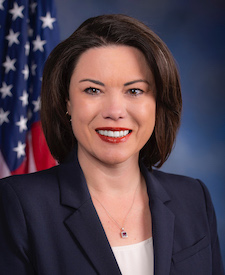
Rep. Angie Craig
Sponsored bills
Medicare Patient Access and Practice Stabilization Act of 2025 This bill increases certain payment adjustments under the Medicare physician fee schedule for services furnished between April 1, 2025, and January 1, 2026.
Maddy summaryThe Fighting Budget Waste Act requires the President and the Office of Management and Budget (OMB) to consider the most recent Government Accountability Office (GAO) report on reducing government waste when preparing the annual federal budget. Specifically, it mandates review of the GAO's findings about cutting fragmentation, duplication, and overlap in federal programs - such as the report titled *Additional Opportunities to Reduce Fragmentation, Overlap, and Duplication and Achieve Billions of Dollars in Financial Benefits* - to identify potential savings. The OMB must also submit a separate report to Congress detailing how it incorporated the GAO's recommendations into the budget submission. This law aims to make the budget process more transparent by formally integrating the GAO's waste-reduction analysis into federal fiscal planning.
Maddy summaryThe Keeping Drugs Out of Schools Act of 2025 establishes a federal grant program to fund partnerships between community coalitions and local schools for evidence-based drug prevention programs. Eligible entities - community coalitions with existing federal grants and formal agreements with at least one school - can receive up to $75,000 annually per school partnership to implement tailored prevention strategies. Funds must supplement, not replace, existing school drug prevention funding, and grantees must submit detailed implementation plans. The program authorizes $7 million annually from 2026 through 2031 to support these school-community partnerships.
Maddy summaryHCONRES 4 is a symbolic resolution expressing Congress's support for tax-exempt fraternal benefit societies (like mutual aid organizations). It recognizes these groups, which have over 7 million members nationwide, as historically and currently providing critical community benefits - including life/health insurance, charitable work, and volunteer services - valued at over $3.8 billion annually. The resolution affirms that their tax-exempt status under Section 501(c)(8) of the Internal Revenue Code remains beneficial and should continue to be promoted. This is a non-binding expression of congressional sentiment, not a policy change.
Maddy summaryThis resolution expresses the House of Representatives' position that Congress should take steps to prevent the privatization of the United States Postal Service (USPS), ensuring it remains a federal independent agency. It highlights USPS’s constitutional role, self-sustaining nature (relying on service revenue, not taxpayer funds), and critical functions - serving 168 million addresses daily, supporting rural communities, and underpinning e-commerce. The resolution opposes privatization, noting it would raise prices, reduce services, and harm the $1.9 trillion mailing industry. As a non-binding resolution, it reflects the House’s stance but does not create new law or policy.
Maddy summaryHR 768, the Holocaust Education and Antisemitism Lessons Act, requires the U.S. Holocaust Memorial Museum Director to study how states and school districts currently teach about the Holocaust and antisemitism in K-12 schools. The study will examine curriculum requirements, teacher training, educational materials used, and assessment methods across all states and a representative sample of school districts and schools. It specifically aims to identify gaps, resources needed, and how schools address antisemitism and genocide prevention in their teaching. The Museum must submit a report to Congress within three years of the bill's enactment, detailing findings on current practices and challenges. This bill does not mandate new teaching requirements but seeks to understand existing approaches to Holocaust education.
Maddy summaryHR 764, the Global Health, Empowerment and Rights Act, removes two barriers for foreign nongovernmental organizations (NGOs) seeking U.S. foreign assistance. It ensures these organizations cannot be denied funding solely because they provide health services (like counseling and referrals) using non-U.S. government funds, as long as those services comply with local laws. The bill also requires that foreign NGOs face the same rules on using non-U.S. funds for advocacy and lobbying as U.S. NGOs receiving similar aid. This directly affects international health-focused NGOs working in countries where U.S. aid is provided.
Maddy summaryThis bill authorizes a posthumous Congressional Gold Medal for Fred Korematsu, a Japanese American civil rights advocate who challenged the World War II internment of Japanese Americans. It recognizes his legal fight against Executive Order 9066, which led to the unjust incarceration of over 120,000 people, and his lifelong advocacy against racial discrimination. The medal, designed by the Treasury Secretary, will be displayed at the Smithsonian Institution. The bill is purely commemorative and does not create new legal rights or funding requirements.
Maddy summaryHR 801, the Charitable Act, creates a new tax deduction for individuals who do not itemize deductions on their federal tax returns. It allows these taxpayers to deduct up to one-third of their standard deduction amount for charitable contributions in 2026 and 2027. The bill directly affects non-itemizing individual taxpayers by providing a limited, direct deduction for charitable giving without requiring them to itemize. The deduction is capped at 1/3 of the standard deduction amount for those tax years, effective for returns filed in 2027 and 2028.