Protecting and Transforming Cyber Health Care Act of 2022 or the PATCH Act of 2022 This bill requires premarket applications for cyber devices (i.e., medical devices that include software or connect to the internet) to include information relating to cybersecurity, including plans to monitor for cybersecurity risks and address vulnerabilities through regular product updates.
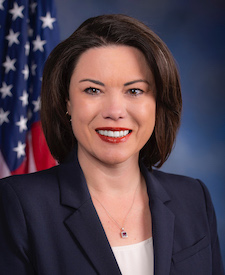
Rep. Angie Craig
Sponsored bills
Into the Light for Maternal Mental Health and Substance Use Disorders Act of 2022 or the Into the Light for MMH and SUD Act of 2022 This bill reauthorizes through FY2028 a program that addresses maternal depression and, among other changes, expands its scope to include mental health and substance use disorders. It also requires the Department of Health and Human Services to maintain a national hotline to provide mental health and substance use disorder resources to pregnant and postpartum women and their families.
Access to Prescription Digital Therapeutics Act of 2022 This bill provides for Medicare and Medicaid coverage of prescription digital therapeutics (i.e., software applications that are used to prevent, manage, or treat medical conditions). The Centers for Medicare & Medicaid Services must establish a Medicare payment methodology for payments to manufacturers that takes into account certain factors (e.g., ongoing use); manufacturers must report specified information about private payors, subject to civil penalties.
Hospital Inpatient Services Modernization Act This bill extends the Acute Hospital Care at Home Program under Medicare until two years after the end of the COVID-19 public health emergency (the program allows hospitals to treat certain patients from emergency departments or inpatient hospital beds at home during the emergency period). It also requires an evaluation of this program and the Hospital Without Walls program (the program allowed hospitals to transfer patients to outside facilities, such as hotels, to continue treatment during the emergency period).
Record of Military Service for Members of the Armed Forces Act of 2022 This bill requires the Department of Defense (DOD) to create the Certificate of Military Service. The Certificate of Military service will be a standard record of military service for all members of active and reserve components of the armed forces to encompass all duty, including that of National Guard and Coast Guard duty. Under the bill, the document must (1) be standardized, (2) be the same for all members of the armed forces, and (3) replace and serve the same function as a discharge certificate or certificate of release (DOD Form DD-214). The bill also requires that a current record of service be issued to members of the reserve components upon the occurrence of any of the following events: permanent change to duty status (e.g., retirement or transfer to active duty), discharge or release from temporary active duty orders, specified promotions, and transfer to another state National Guard.
Enhanced Access to Affordable Medicines Act of 2022 This bill specifies that the Food and Drug Administration may approve generic drugs with different labels than the brand-name versions if, among other requirements, the brand-name drug is subject to an active patent or exclusivity period and a revised label for the brand-name drug is approved within 90 days (rather than 60 days) of the expiration of the patent or exclusivity period.
This resolution condemns the terrorist attack on Congregation Beth Israel in Colleyville, Texas, on January 15, 2022. It also expresses support for the affected community, commends the actions of law enforcement and emergency responders, and reaffirms a commitment to combat hate, bigotry, anti-Semitism, and violence against Jewish Americans.
No Tax Dollars for First-Class Flights Act This bill prohibits funds made available for the official travel of a Member of Congress or other officer or employee of the legislative branch from being used for airline accommodations that are not coach-class accommodations. This prohibition is inapplicable for an individual if the use would be permitted for an employee of an agency subject to specified federal regulations for temporary duty travel allowances.
Small Business Energy Loan Enhancement Act This bill increases from $5.5 million to $10 million the maximum amount of certain Small Business Administration loans for plant acquisition, construction, conversion, and expansion. Projects eligible for these increased loan amounts must (1) reduce the borrower's energy consumption by at least 10%; or (2) generate renewable energy or renewable fuels, such as biodiesel or ethanol production.
Women's Health Protection Act of 2021 This bill prohibits governmental restrictions on the provision of, and access to, abortion services. Specifically, governments may not limit a provider's ability to prescribe certain drugs, offer abortion services via telemedicine, or immediately provide abortion services when the provider determines a delay risks the patient's health. Furthermore, governments may not require a provider to perform unnecessary medical procedures, provide medically inaccurate information, comply with credentialing or other conditions that do not apply to providers whose services are medically comparable to abortions, or carry out all services connected to an abortion. In addition, governments may not (1) require patients to make medically unnecessary in-person visits before receiving abortion services or disclose their reasons for obtaining such services, or (2) prohibit abortion services before fetal viability or after fetal viability when a provider determines the pregnancy risks the patient's life or health. The bill also prohibits other governmental measures that are similar to the bill's specified restrictions or that otherwise single out and impede access to abortion services, unless a government demonstrates that the measure significantly advances the safety of abortion services or health of patients and cannot be achieved through less restrictive means. The Department of Justice, individuals, or providers may bring a lawsuit to enforce this bill, and states are not immune from suits for violations. The bill applies to restrictions imposed both prior and subsequent to the bill's enactment.