

Maddy summaryHR 1491, the Small Business Energy Loan Enhancement Act, increases the maximum loan amount for energy-related small business loans under the Small Business Investment Act of 1958 from $5.5 million to $10 million. This directly affects small businesses seeking financing for energy efficiency or renewable energy projects by doubling their potential loan access. The bill requires the Small Business Administration to submit annual reports to Congress detailing which industries and geographic areas received these enhanced loans. These changes aim to expand access to capital for qualifying energy projects without altering eligibility criteria.
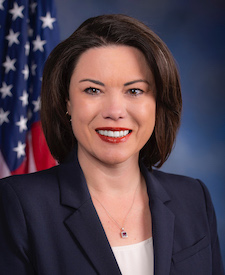
Rep. Angie Craig
Sponsored bills
Maddy summaryThis bill expands the use of 529 college savings accounts to cover career training and credentialing costs. It allows funds to pay for tuition, fees, books, and testing expenses related to recognized postsecondary credential programs (like vocational certifications) that meet specific standards under the Workforce Innovation and Opportunity Act. The change directly affects workers seeking industry-recognized credentials - such as nursing certifications or IT certifications - instead of traditional degrees. It treats these expenses the same as traditional college costs for 529 account withdrawals, making it easier to save for career-focused training. The provision applies to expenses paid after the bill's enactment date.
Maddy summaryHR 1447 prevents employers from ending health insurance coverage for workers during a lawful strike or a lockout (when an employer stops work to pressure union demands). It directly affects unionized workers participating in strikes or facing lockouts, ensuring they maintain healthcare coverage during these labor disputes. The bill adds penalties: employers violating this rule face up to $75,000 per violation for lockouts ($150,000 for repeat offenses or serious harm) and up to $50,000 per violation for strikes ($100,000 for repeat offenses or serious harm). These penalties apply to employers who cut healthcare during strikes or lockouts, with the National Labor Relations Board enforcing the fines.
Maddy summaryThe Modern, Clean, and Safe Trucks Act of 2023 would remove a 12-percent federal excise tax on new heavy trucks, tractors, and trailers. This tax, in place since 1917, adds $12,000 to $22,000 to the cost of a new truck and is argued to discourage replacing older, less efficient vehicles. The bill aims to lower costs for buyers - especially for electric and alternative-fueled trucks, which face higher upfront prices - by eliminating the tax, thereby encouraging adoption of newer, cleaner models. The repeal would apply to sales occurring on or after the bill's introduction date.
Maddy summaryThis bill requires student loan lenders to provide clear, plain-language disclosures to borrowers before loan disbursement and monthly throughout the loan term. Before disbursing a loan, lenders must give a written statement showing the loan's principal, interest rate, estimated repayment timeline, total projected cost (including fees), and how existing loans affect the borrower's total debt. Monthly statements must detail current balances, interest rates, payments made, interest accrued, and projections of future payments, including explanations of how interest capitalization increases long-term costs. These disclosures directly affect all borrowers of federal student loans and the lenders/servicers managing those loans, aiming to improve transparency about loan terms and costs.
Advancing Safe Medications for Moms and Babies Act of 2023 This bill establishes programs and requirements to support the inclusion of pregnant and lactating women in clinical research. For example, the bill requires the Department of Health and Human Services to align the Food and Drug Administration's regulations for human subjects in clinical trials with other departmental regulations for pregnant women in clinical research. The bill also establishes (1) a national online clearinghouse with information about clinical trials that enroll pregnant and lactating women, (2) an advisory committee to help coordinate federal activities with respect to clinical research for pregnant and lactating women, and (3) an educational campaign on the importance of including pregnant and lactating women in clinical research. The National Institutes of Health must also prioritize certain research projects on new and existing medications for pregnant and lactating women based on need, feasibility, and the potential impact of the research.
This resolution supports the designation of National FFA Week. It also (1) recognizes the important role of the National FFA Organization (Future Farmers of America) in developing the next generation of leaders who will change the world, and (2) celebrates the 90th anniversary of the iconic FFA jacket.
Maddy summaryThis bill requires airlines to train flight crews and maintenance staff on identifying and responding to cabin smoke/fume incidents, implement a standardized reporting system for such events, and install real-time air quality monitors to detect dangerous contaminants like carbon monoxide. It directly affects airline crews, maintenance technicians, and passengers by mandating new safety protocols and equipment on commercial flights. Key provisions include annual training on fume sources and health impacts, detailed incident reports covering flight details and symptoms, and public databases of reported events (with personal information redacted). The law also mandates aircraft manufacturers to include monitoring procedures in flight manuals and requires the FAA to investigate incidents involving health symptoms. These changes aim to improve cabin air safety through better detection, reporting, and response systems.
Maddy summaryHR 1321, the "More Homes on the Market Act," increases the tax exclusion for gains from selling a primary residence. It doubles the exclusion amount from $250,000 to $500,000 for single filers and from $500,000 to $1,000,000 for married couples filing jointly. The bill also adds automatic annual inflation adjustments to these amounts starting in 2023, ensuring the exclusion keeps pace with rising costs. This change directly affects homeowners who sell their primary residence and meet the ownership and use requirements under current tax law. The policy modifies the Internal Revenue Code to make selling a home less financially burdensome for qualifying homeowners.
Maddy summaryThe Military Spouse Hiring Act expands the Work Opportunity Tax Credit to include military spouses. Employers who hire a spouse of an active-duty military member - certified by a local agency as meeting eligibility requirements on the hiring date - can claim this tax credit. The credit reduces the employer's federal tax liability for hiring such individuals. This provision applies to new hires after the bill's enactment date.