

Resident Physician Shortage Reduction Act of 2023 This bill increases the number of residency positions eligible for graduate medical education payments under Medicare for qualifying hospitals, including hospitals in rural areas and health professional shortage areas. Current law provides for an increase of up to 200 positions per fiscal year beginning in FY2023, with a total increase of 1,000 positions; each hospital may receive up to 25 additional positions. Current law also provides for an additional increase of up to 200 positions for FY2026, with at least 100 of these positions for psychiatry or related specialties; each hospital may receive up to 10 additional positions. The bill provides for an additional increase of 2,000 positions per fiscal year from FY2025-FY2031; during this period, each hospital may receive up to 75 additional positions in total under the bill and current law. Additionally, one-third of the positions that are made available under the bill must be allocated to hospitals that are already operating above applicable resident limits. The bill also requires the Government Accountability Office to report on strategies to increase the diversity of the health professional workforce, including with respect to representation from rural, low-income, and minority communities.
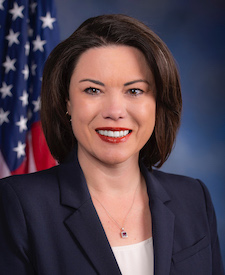
Rep. Angie Craig
Sponsored bills
Maddy summaryHR 1839, the Combating Illicit Xylazine Act, makes the illicit use and distribution of xylazine a federal crime by adding it to the Controlled Substances Act. The bill broadly defines xylazine to cover numerous chemical variants and prohibits human use or non-licit distribution, while preserving legitimate veterinary and pharmaceutical uses. It requires tracking xylazine in drug supply chains and mandates two reports to Congress within 1 and 4 years on its prevalence, sources, and whether it should be rescheduled. The bill directly affects individuals distributing or using xylazine illicitly, including as an additive to drugs like fentanyl, and aims to address its public health risks. Congress declared illicit xylazine an "emerging drug threat" under existing law.
Maddy summaryHR 1812 requires the Federal Communications Commission (FCC) to study whether the Universal Service Fund (USF), which funds broadband access in rural and low-income areas, should expand who pays into the fund to ensure fairness. Within 120 days of enactment, the FCC must complete this study and report findings to Congress. By one year after enactment, the FCC must also develop new rules to reform the USF contribution system, specifically expanding who contributes. This directly affects telecommunications companies that pay into the USF, as the changes could shift funding responsibilities, potentially impacting broadband costs for consumers and businesses. The bill aims to make the funding system more equitable without specifying final changes.
Maddy summaryThe Women's Health Protection Act of 2023 would protect access to abortion services by prohibiting states from imposing restrictions that are more burdensome than those for comparable medical procedures. The bill would ensure people can obtain abortion services before fetal viability without unnecessary limitations like mandatory waiting periods or biased counseling, and after viability when necessary to protect the patient's life or health. It would preempt state laws that conflict with these protections and allow for civil enforcement actions to challenge restrictive state laws. This bill directly affects people seeking abortion services (including transgender and nonbinary individuals who can become pregnant), health care providers, and states that have implemented abortion restrictions.
Maddy summaryHRES 277 is a non-binding resolution passed by the U.S. House of Representatives in April 2023 that urges the United States Postal Service (USPS) to restore mail delivery standards in effect as of July 1, 2012. It specifically calls for ending the 2015 service cuts that eliminated overnight first-class mail delivery and delayed other mail types, which the resolution states harmed businesses, rural communities, and the economy. The resolution cites the Postal Regulatory Commission’s finding that USPS could achieve cost savings without degrading service, emphasizing that returning to 2012 standards would improve delivery reliability without worsening USPS finances. As a resolution, it does not mandate action but expresses the House’s policy preference.
Maddy summaryHR 2486, the "Closing the Congressional Revolving Door Act," prohibits former U.S. Senators and Representatives from lobbying Congress on behalf of others within one year of leaving office. It specifically bans them from making communications or appearances before current lawmakers to influence legislation or decisions, with penalties for violations. The bill also eliminates exclusive benefits for former House members, including access to the House Hall, dining facilities, parking, and document rooms, though the Speaker and minority leader may grant limited waivers published in the Congressional Record. These changes aim to reduce immediate transitions from public office to lobbying roles.
Maddy summaryHR 2539 permanently extends the New Markets Tax Credit (NMTC) program, which incentivizes private investment in low-income communities. The bill directly affects community development financial institutions (CDFIs) and investors who fund projects in designated low-income areas by ensuring the credit remains available beyond 2025. Key provisions include automatically adjusting the credit amount annually for inflation starting in 2024 and clarifying that the credit can be used to offset alternative minimum tax liability. This maintains the program’s effectiveness in channeling capital to underserved neighborhoods without changing eligibility or funding levels.
Maddy summaryThis bill amends the law governing Basic Allowance for Housing (BAH) for uniformed service members stationed in the U.S. It changes the calculation method so that BAH amounts must equal the actual monthly cost of adequate housing in each location, as determined by the Secretary of Defense. This directly affects active-duty service members and their families who receive BAH for housing. The key provision replaces the previous formula with a requirement that BAH payments match local housing costs for members in the same pay grade and dependency status. The change ensures BAH reflects current housing expenses rather than an older calculation method.
Maddy summaryThe PRECISE Act (HR 1459) modifies existing USDA loan and conservation programs to specifically support farmers and ranchers adopting precision agriculture technologies. It expands eligibility for loan guarantees and increases payments under the Environmental Quality Incentives Program (EQIP) and Conservation Stewardship Program (CSP) for practices involving precision agriculture - such as GPS-guided equipment, soil sensors, and data management software. The bill defines "precision agriculture" broadly to include technologies that reduce input use (like fertilizer or water) while improving efficiency, and requires USDA agencies to coordinate on these programs. Directly affects farmers using EQIP/CSP, with special provisions for socially disadvantaged and beginning farmers. It does not create new programs but adjusts existing funding mechanisms to prioritize precision agriculture adoption.
Maddy summaryHCONRES 32 is a symbolic resolution supporting International Transgender Day of Visibility, introduced in the U.S. House of Representatives on March 30, 2023. It encourages Americans to observe the day through ceremonies and activities, celebrates transgender achievements, and recognizes the community's fight for dignity amid ongoing discrimination and anti-trans legislation. The resolution does not create new laws or policies - it is a non-binding statement of support, referencing over 700 anti-trans bills introduced in 2021-2023 that target education, healthcare, and identity documents. It directly acknowledges transgender individuals and their contributions without altering any legal rights or obligations.