

Maddy summaryThe Latonya Reeves Freedom Act of 2023 strengthens the Americans with Disabilities Act's requirement that individuals with disabilities receive long-term services and supports in community settings rather than institutions. It defines "community-based" services to include specific housing options where individuals with disabilities can live independently with maximum control over their lives, including access to integrated housing, employment, and community participation. The bill requires states to develop transition plans to move people from institutional settings to community-based services within 12 years, with measurable annual targets for reducing institutionalization. It establishes enforcement mechanisms through the Department of Justice and Department of Health and Human Services to ensure compliance with these requirements.
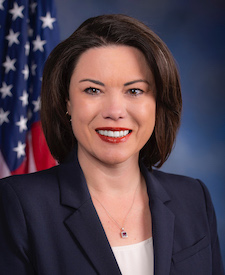
Rep. Angie Craig
Sponsored bills
Maddy summaryHR 2726, the Small Business Payment for Performance Act of 2023, requires U.S. government agencies to provide small businesses with interim partial payments when they unilaterally change construction contract terms. Specifically, it mandates that agencies pay at least 50% of the estimated additional costs requested by small businesses within the timeframe specified by the contract. The bill also requires small businesses to pass these interim payments to first-tier subcontractors and any lower-tier subcontractors who incurred increased costs due to the contract change. This law applies directly to small business concerns awarded federal construction contracts and takes effect by October 1, 2025, or the start of the next full fiscal year after enactment.
Maddy summaryThis bill establishes a 10-member Commission to study how U.S. federal laws and policies affect citizens living abroad. The Commission will examine specific issues including tax reporting requirements, access to financial institutions, voting procedures, Social Security/Medicare interactions, and immigration processes for family members. It must submit an initial report within one year of enactment, detailing findings and recommendations for improving these systems. The Commission will terminate after submitting a follow-up report one year later, with no direct policy changes enacted by the bill itself.
Maddy summaryHR 2693, the Pay Our Coast Guard Parity Act of 2023, ensures Coast Guard members, civilian staff, and qualifying contractors receive pay and benefits during specific funding gaps. It requires Congress to appropriate funds for Coast Guard personnel pay, allowances, and key benefits (like death gratuities and housing allowances) if a Coast Guard-specific funding lapse occurs - when Coast Guard funding isn’t approved before a fiscal year starts but Department of Defense funding is. The bill mandates these payments continue until a full appropriation is enacted or for up to two weeks after the lapse begins, with costs charged to future appropriations. This addresses a gap in funding continuity for Coast Guard personnel during government shutdowns affecting only the Coast Guard.
Maddy summaryThe Puppy Protection Act of 2023 sets new standards for businesses that sell dogs (dealers), directly affecting pet stores and breeders operating under the Animal Welfare Act. It requires specific housing with space allowances based on dog size (e.g., 12-30 square feet per dog), temperature control (45-85°F), clean food twice daily, and daily exercise or socialization with humans/dogs for at least 30 minutes. The bill also mandates annual veterinary exams including dental care, strict breeding limits (e.g., age restrictions, maximum 2 litters in 18 months), and efforts to place retired breeding dogs in homes instead of selling them to other breeders. Regulations must be finalized within 18 months of enactment.
Maddy summaryHRES 303 is a symbolic House resolution designating April 2023 as "Care Worker Recognition Month" to honor care workers in the U.S. It specifically recognizes home care workers supporting older adults and people with disabilities, childcare workers, and early educators. The resolution highlights how these workers enable families to remain in the workforce and emphasizes the importance of their roles in community care. This is a non-binding expression of support with no new policy or funding changes.
Maddy summaryHR 2665 delays Medicaid payment reductions for safety net hospitals by two years, changing the effective date from 2024 to 2026 under Section 1923(f)(7)(A) of the Social Security Act. This bill directly affects hospitals that serve high numbers of low-income and uninsured patients, providing them with additional time before facing reduced federal Medicaid payments. The key mechanism is a technical amendment to existing law, postponing an already scheduled payment adjustment without altering funding levels or eligibility. As a procedural bill, it does not create new programs or change hospital requirements.
Maddy summaryThis bill allows the Department of Veterans Affairs (VA) to use existing funds more flexibly to assist homeless veterans and veterans in HUD housing programs. It authorizes the VA to provide immediate needs like food, shelter, transportation for appointments, and communication devices (e.g., phones, tablets) to support veterans' stability and health. The law expands how VA funds can be applied beyond traditional housing assistance, focusing on urgent, practical support. It directly affects homeless veterans and those in HUD's housing assistance program by enabling faster, more adaptable aid. The bill amends existing VA law to improve responsiveness to veterans' immediate survival and health needs.
Maddy summaryThe VA Same-Day Scheduling Act of 2023 requires the Department of Veterans Affairs to schedule appointments for enrolled veterans during the same phone call when they request care. This applies to veterans enrolled in the VA healthcare system who contact the VA by phone to request appointments. The law mandates that the VA must complete the scheduling during the call - without delay or future scheduling - regardless of the appointment date. The requirement takes effect 120 days after the bill is enacted.
Maddy summaryThis bill amends tax law to allow charitable organizations to fund collegiate housing projects without losing their tax-exempt status. Specifically, it permits 501(c)(3) charities to make grants for building, improving, or maintaining housing properties where full-time students live, as long as the housing is connected to a college or university. Grants cannot fund fitness facilities, and the bill clarifies that housing must primarily serve students (not incidental social activities). It directly affects charitable organizations and universities seeking tax-qualified funding for student housing infrastructure.