

Secure Testing Resources Instead of Prosecuting Act or the STRIP Act This bill exempts the possession, sale, or purchase of fentanyl drug testing equipment, including test strips, from criminal penalties under the Controlled Substances Act.
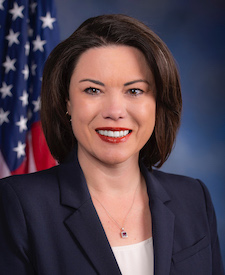
Rep. Angie Craig
Sponsored bills
Maddy summaryThis bill establishes a federal registry to track military personnel exposed to PFAS chemicals (specifically from aqueous film-forming foam used on bases) for health monitoring. The VA must create the registry within one year, coordinate with the Defense Department, and run public awareness campaigns to inform eligible service members about registering. The VA must submit two reports to Congress: one within two years assessing data collection efforts and health recommendations, and another within five years evaluating the registry's scientific relevance. The registry specifically covers individuals who served at military sites where AFFF was used, focusing on collecting health data to inform future medical support.
Maddy summaryThis bill makes the adoption tax credit refundable, meaning adoptive parents who claim the credit can receive a cash refund even if they owe no federal income tax. Currently, the credit is non-refundable, so any excess credit beyond taxes owed is lost. The bill redesignates the credit in tax code (from section 23 to 36C), adds new requirements for third-party affidavits to verify adoptions, and applies to tax returns filed for 2024 and later. It directly affects adoptive parents who qualify for the credit but have no tax liability.
Maddy summaryThis bill amends the Older Americans Act to better serve LGBTQI older adults (defined as lesbian, gay, bisexual, transgender, queer, intersex individuals, and those living with HIV) by adding specific definitions and creating new support structures. It establishes an Office of LGBTQI Inclusion within the Administration on Aging, led by a Director and Assistant Director, to coordinate services, advocate for this community, and collect data on their challenges. The bill also creates a National Resource Center on LGBTQI Aging to provide training and resources to organizations serving LGBTQI older adults and requires data collection on discrimination against them in long-term care settings. These changes aim to improve access to culturally competent services and address the unique needs of LGBTQI older adults through concrete policy updates.
This bill directs the Federal Aviation Administration (FAA) to require that medications and medical equipment for the emergency treatment of a known or suspected opioid overdose be included in an aircraft emergency medical kit; the FAA must, to the maximum extent possible, follow the guidance of the Aerospace Medical Association. In a 2019 guidance document to the FAA, the Aerospace Medical Association recommended including an opioid antagonist (e.g., naloxone or Narcan) in an aircraft emergency medical kit.
Maddy summaryHRES 439 is a non-binding resolution expressing the House of Representatives' support for keeping the U.S. Postal Service (USPS) as an independent federal agency, not subject to privatization. It highlights USPS's constitutional role, self-sustaining nature (relying on service revenue, not taxpayer funds), and its importance to rural communities, e-commerce, and over 600,000 employees. The resolution urges Congress to take action to preserve USPS's independence, emphasizing that privatization could raise prices, reduce services, and harm the nation's mail infrastructure. As a procedural resolution, it does not change law but formally states the House's position.
Maddy summaryThis resolution (HRES 436) symbolically designates the week of May 22-26, 2023, as "Educator Mental Health Awareness Week" to highlight mental health challenges faced by teachers and school staff. It directly addresses educators, citing pandemic-era data showing high rates of depression, anxiety, and stress among teachers compared to the general population. The resolution expresses support for recognizing educator well-being as critical to student success but does not create new policies, funding, or enforceable requirements. As a non-binding resolution, it serves solely as a symbolic gesture to promote awareness.
Maddy summaryThis bill would designate approximately 1.7 million acres of public land in Utah's Colorado Plateau and Great Basin regions as wilderness areas, protecting them from development while preserving traditional uses by Indigenous communities. It establishes specific wilderness areas across Utah's red rock canyons, including the Great Basin Wilderness Areas, Grand Staircase-Escalante Wilderness Areas, and others, with detailed acreage for each designated zone. The bill includes administrative provisions for managing these areas, such as maintaining existing livestock grazing rights, setting road setbacks to protect wilderness character, and reserving water rights for the wilderness areas. This legislation directly affects how the Bureau of Land Management administers public lands in Utah and defines the boundaries for public use of these designated wilderness areas.
Maddy summaryHRES 422 is a non-binding resolution recognizing National Public Works Week, observed annually during the week of May 21-27. It encourages Americans to honor public works professionals - including engineers, maintenance staff, and local government employees - who maintain critical infrastructure like roads, water systems, and public buildings. The resolution highlights their role in supporting community health, safety, and quality of life without creating new laws or requirements. As a formal tribute, it serves to raise public awareness of these workers' contributions.
Maddy summaryHR 3523, the Perinatal Workforce Act, provides $15 million annually from 2024 to 2028 to expand and diversify maternity care providers. It directs HHS to issue guidance for states on recruiting diverse providers (including midwives, nurses, and community health workers) and requires grant recipients to prioritize students from racial/ethnic minority groups, implement bias training, and target health professional shortage areas. The bill also mandates annual reporting on workforce diversity and outcomes, and requires a GAO report assessing barriers to equitable access in maternal healthcare. This legislation directly affects hospitals, nursing schools, midwifery programs, and insurers by funding targeted workforce development to address racial disparities in maternal care.