Protect Farmers from the SEC Act This bill prohibits the Securities and Exchange Commission from requiring the disclosure of greenhouse gas emissions related to agricultural products.
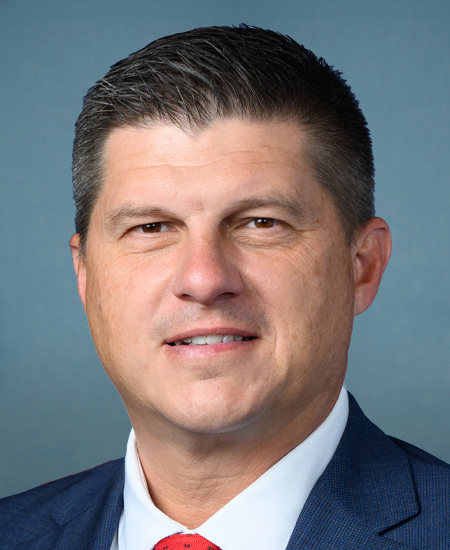
Rep. Brad Finstad
Sponsored bills
Maddy summaryThis bill requires the Office of Management and Budget to audit unspent funds from major pandemic relief packages - including the CARES Act, American Rescue Plan, and related bills - within 30 days of enactment. It mandates a report listing all unobligated funds remaining under these laws. The unspent amounts would then be automatically returned to the Treasury’s general fund for deficit reduction, with no further congressional action needed. The bill directly affects how the federal government handles leftover pandemic relief funds, focusing on accounting and fiscal responsibility rather than new program benefits.
Maddy summaryThis concurrent resolution expresses Congress's view that all government support for sugar production and exports by major global producers (like Brazil, India, the EU, and Mexico) should be eliminated. It directs the President to work toward ending these subsidies and report to Congress on progress, followed by proposals for U.S. sugar policy reforms. The resolution does not create new laws but urges diplomatic action to address what Congress describes as market-distorting subsidies affecting the global sugar market. It directly concerns international sugar trade policies and U.S. agricultural competitiveness.
Maddy summaryHR 976, the TCJA Permanency Act, makes permanent many tax provisions from the 2017 Tax Cuts and Jobs Act (TCJA) that were scheduled to expire after 2025. The bill affects individual taxpayers by keeping lower tax rates, higher standard deductions, increased child tax credits, and other key changes permanently. Key provisions include permanent modifications to income tax brackets, repeal of personal exemptions, limits on state and local tax deductions, and increased estate and gift tax exemptions. These changes would prevent the tax code from reverting to pre-TCJA rates and rules for millions of taxpayers.
Maddy summaryHR 621, the PART Act, requires catalytic converters on vehicles to be stamped with a visible vehicle identification number (VIN) using special high-visibility paint to deter theft. It creates a federal grant program to help auto dealers, repair shops, and law enforcement implement this stamping at no cost to vehicle owners. The bill also mandates that sellers of catalytic converters retain buyer identification and vehicle details for two years, and adds new federal criminal penalties for stealing or trafficking in catalytic converters.
Biofuel Cell Research Act This bill requires the Department of Energy (DOE) to establish a research, development, and demonstration program to expand the use of biofuels in vehicles. Under the program, DOE must develop a commercially viable fuel cell system that uses biofuel as a fuel source.
Maddy summaryHR 914, the Simplifying Grants Act of 2023, requires federal agencies to simplify grant application processes for small local governments (defined as those in areas with fewer than 50,000 people, per Census standards). Within 180 days of enactment, agencies must review and simplify complex grant requirements for existing programs and ensure new programs are designed with simplicity from the start. Agencies must also publish public checklists for each grant step and report annually to Congress on implementation progress, including how much technical assistance was provided and how many grants were awarded to small communities versus larger ones. This bill directly affects counties, towns, and other small local governments that receive federal grants but face bureaucratic hurdles.

Felony Murder for Deadly Fentanyl Distribution Act of 2023 This bill makes the distribution of fentanyl resulting in death a first degree murder. An individual who is guilty of first degree murder by distributing fentanyl is subject to death or life in prison.
Maddy summaryHRES 110 is a non-binding resolution supporting the designation of "Career and Technical Education (CTE) Month" to recognize CTE's role in preparing students for high-demand careers. It encourages educators, school counselors, and parents to promote CTE as a respected pathway for students seeking credentials in fields like healthcare, technology, and skilled trades. The resolution highlights CTE's benefits, including reducing high school dropout rates and aligning education with workforce needs, without creating new funding or policy changes. It directly affects schools, educators, and students by affirming CTE's value in workforce development.
Maddy summaryHCONRES 9 is a symbolic resolution passed by the U.S. House of Representatives that formally denounces socialism as incompatible with American values, citing historical examples of socialist regimes causing widespread suffering and authoritarian rule. It states Congress opposes the implementation of socialist policies in the United States. This resolution has no legal effect, does not change any laws, and serves solely as a non-binding statement of congressional opinion. It directly affects no individuals or policies, as it is purely a declarative position.