

Maddy summaryThis bill requires the U.S. Department of Agriculture to audit state agencies administering child nutrition programs for known fraud committed between January 2020 and December 2022. It specifically targets fraud in the Child and Adult Care Food Program and Summer Food Service Program, examining state oversight, responses to fraud reports, overpayments, and fraudulent fund use. State agencies and local institutions must cooperate with these audits and retain fraud-related records. The audits must be conducted within 180 days of the bill’s enactment (and annually thereafter), with findings reported to four congressional committees. The law applies only to fraud already under investigation by federal or state authorities, not to new fraud allegations.
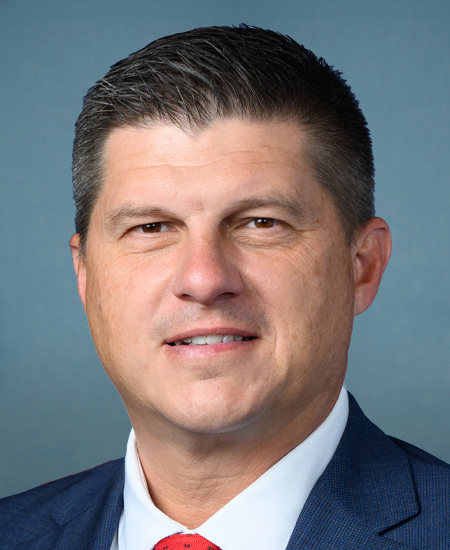
Rep. Brad Finstad
Sponsored bills
Stopping Teachers Unions from Damaging Education Needs Today Act or the STUDENT Act This bill revises the federal charter for the National Education Association. The bill specifies that the corporation and its state and local affiliates may only accept payment of membership dues or fees from a state or local government employee if the employee (1) has been notified of the employee's right under the First Amendment to refrain from membership and payment of associated dues or fees, (2) has clearly and affirmatively consented to membership and payment of associated dues or fees, and (3) has authorized the transmittal of membership dues or fees without the use of payroll deduction. Further, the corporation and its state or local affiliates must process and honor cancellation requests for membership or payment of dues as soon as practicable following receipt of the request. The bill also outlines requirements for the corporation, such as prohibiting the corporation or its directors or officers from contributing to, supporting, or participating in political activities; requiring each officer of the corporation to be a U.S. citizen; requiring the corporation to submit annual reports to Congress; prohibiting the corporation and its affiliates from requiring staff, officers, affiliates, or members to affirm, adopt, or adhere to certain principles related to race or sex; and prohibiting the corporation and its affiliates from calling or participating in a strike, work stoppage, or slowdown affecting a state or local government. The bill repeals the corporation's exemption from District of Columbia property taxes.
Maddy summaryHR 4721, the Main Street Tax Certainty Act, makes a permanent the 20% tax deduction for eligible small business owners under Section 199A of the tax code. This provision directly affects pass-through business owners (like S-corps, partnerships, and sole proprietorships) who qualify for the deduction. The bill achieves this by removing the temporary expiration language (subsection (i)) from the existing tax code provision. The key change is ending the need for annual congressional extensions of this deduction, providing long-term tax certainty for small businesses.
Maddy summaryThis bill, the Veteran Care Improvement Act of 2023, establishes new standards for when veterans can receive care from private providers instead of the Department of Veterans Affairs (VA). It requires the VA to allow veterans to seek community care if they cannot get an in-person appointment within 30 days for primary care or 60 days for specialty care at a VA facility within a 30 or 60-minute drive, respectively. The legislation also mandates that the VA notify veterans of their eligibility for community care within two business days, provide information about telehealth options, and explain reasons for denied care requests along with appeal instructions. Additional provisions include requiring the VA to conduct outreach to inform veterans about community care options, mandate the use of value-based reimbursement models for community care, and establish a pilot program to improve care administration through scheduling improvements and provider incentives. The bill also extends the deadline for health care entities to submit claims under the prompt payment standard from 180 days to one year, and requires the VA Inspector General to assess VA medical center performance in implementing community care programs within three years of enactment.
Maddy summaryThis bill, HR 1282 (Major Richard Star Act), expands benefits for certain military retirees by allowing them to receive both veterans' disability compensation and military retirement pay simultaneously. It specifically affects combat-related disabled retirees under Chapter 61 of the military retirement system who have fewer than 20 years of service. The key change removes the automatic reduction of military retirement pay when these retirees also receive disability compensation, as amended in Section 1413a(b)(3) of Title 10. Technical updates to the law’s structure and effective date (starting after enactment) complete the provisions.
This resolution expresses the sense of the House of Representatives that research and promotion boards support efforts to develop new markets and strengthen existing markets via research, education, and promotion.
Maddy summaryHR 3358, the Mission not Emissions Act, prohibits federal contractors from being required to report greenhouse gas emissions or climate-related financial risks. The bill blocks compliance with the proposed Federal Acquisition Regulation rule that would have mandated contractors to disclose Scope 1, Scope 2, and Scope 3 emissions, create emissions inventories, or set emissions reduction targets for validation. It directly affects businesses holding federal contracts by removing these specific reporting obligations. The law focuses solely on eliminating disclosure requirements, not on changing emissions standards or reduction efforts.
Veterans Mental and Behavioral Health Quality of Care Act This bill requires the Department of Veterans Affairs (VA) to use an independent and objective outside organization to study the difference in the quality of care between behavioral and mental health care provided by VA providers and care provided by non-VA providers.
Maddy summaryHR 4417, the "Ending Agricultural Trade Suppression Act," prevents state and local governments from imposing additional production standards on agricultural products sold across state lines if those standards aren't already required by federal law or the state where the product is grown. It directly affects agricultural producers, distributors, and businesses operating in interstate commerce by allowing them to sue states in federal court to challenge such regulations. The bill creates a private right of action for affected parties to seek court invalidation of the regulations and damages for economic losses, with provisions for preliminary injunctions to halt enforcement during litigation. This aims to reduce regulatory barriers that could hinder the movement of agricultural goods between states.
Saving Organs One Flight at a Time Act This bill requires the Transportation Security Administration (TSA) and the Federal Aviation Administration (FAA) to jointly issue regulations, as necessary, to enable air carriers to transport human organs for transplant above wing (i.e., in the cabin of an aircraft). Among other things, the regulations must include consideration of protocols for air control outages; a requirement that air carriers implement a protocol for a person to accompany organs to and from the aircraft and between connecting flights; and a standardized process for commercial air carriers to accept, handle, and manage organs in transit. The TSA and the FAA must also consult with the Organ Procurement and Transplantation Network to identify metrics for the handling of organs and organ-related tissue by air carriers.