

Maddy summaryThis bill modifies Medicaid and CHIP rules to let eligible out-of-state healthcare providers enroll without extra state screening. It applies to providers already in Medicare or their home state program, with low fraud risk, serving children under 21 with complex medical conditions. Providers would receive 5 years of enrollment under this streamlined process, eliminating state-level barriers. The change directly affects children seeking specialized care across state lines and the providers who serve them.
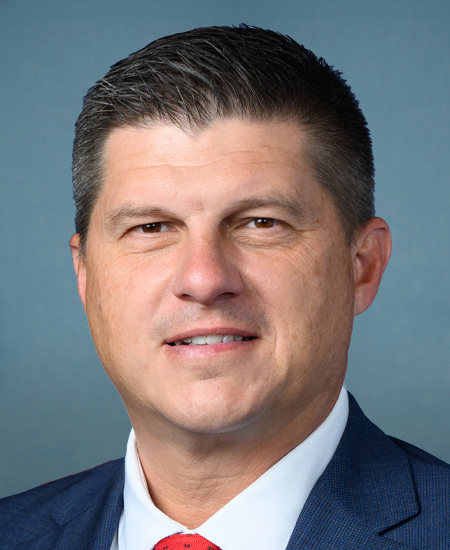
Rep. Brad Finstad
Sponsored bills
Maddy summaryThe 21st Century Workforce Partnerships Act creates two grant programs to strengthen connections between education and workforce development. It provides competitive grants to secondary schools for career pathways programs in high school or middle school, requiring partnerships with businesses and industry partners, and to colleges for programs leading to recognized credentials in high-demand fields. Both programs require matching funds from non-Federal sources, partnerships with employers, and alignment with existing workforce development strategies. The bill includes requirements for measuring job quality, employment outcomes, and program sustainability, with priority given to serving students with barriers to employment. It aims to improve educational pathways for students toward better employment opportunities in growing industries.
Maddy summaryHR 1425, the "No WHO Pandemic Preparedness Treaty Without Senate Approval Act," requires the U.S. Senate to approve any World Health Organization (WHO) pandemic preparedness treaty through a two-thirds vote. The bill deems any convention, agreement, or international instrument on pandemic prevention drafted by the WHO’s International Negotiating Body (INB) as a treaty subject to Senate ratification, rather than allowing it to take effect as an executive agreement. This directly affects U.S. foreign policy implementation regarding WHO agreements, ensuring Congress has a formal role in approving such binding international commitments. The bill stems from congressional concerns about WHO’s pandemic response and public skepticism toward the organization, as outlined in its findings.
Maddy summaryHR 705, the Veterans 2nd Amendment Protection Act, prohibits the Department of Veterans Affairs (VA) from automatically sending veterans' personal information to the national background check system solely because a fiduciary (like a guardian) manages their benefits. It specifically blocks the VA from sharing this data with the Justice Department without a court order finding the veteran a danger to themselves or others. This directly affects veterans who have a fiduciary appointed due to incapacity but are not deemed dangerous, preventing automatic barriers to firearm purchases based only on their fiduciary status. The bill amends 38 U.S.C. § 5501B to require judicial authorization before such data can be transmitted.
Maddy summaryHR 9561, the Pay Our Border Patrol and Customs Agents Act of 2025, ensures that U.S. Border Patrol Agents and Customs and Border Protection officers working during a government shutdown receive their salaries. It appropriates funds from the Treasury (not regular appropriations) to cover their pay during any lapse in discretionary funding in fiscal year 2025. This bill directly affects these specific federal employees who are required to work during shutdowns but would otherwise face pay delays. It is a procedural measure focused solely on payment mechanisms, not on changing work requirements or policy.
Maddy summaryThis bill creates a federal grant program to help law enforcement agencies recruit officers from underrepresented communities. It authorizes $50 million annually (2025-2029) for states and local agencies to fund recruitment campaigns and "Pathways to Policing" programs. These programs provide financial support during training for candidates facing education barriers, with no prior law enforcement experience, who are members of underrepresented groups or have nontraditional backgrounds. Grants prioritize agencies targeting underrepresented communities and officers who will serve or live near the communities they protect.
Maddy summaryHR 8282, the "Illegitimate Court Counteraction Act," imposes U.S. sanctions on foreign individuals or entities supporting the International Criminal Court (ICC) in investigating or prosecuting "protected persons." Protected persons include U.S. military personnel, officials, and allied personnel (from non-ICC member countries) who are not under ICC jurisdiction. The bill requires the President to block assets and deny visas to targeted foreign persons and their immediate family members within 60 days of the ICC attempting such actions. It mandates congressional notification of sanctions and allows termination if the ICC ceases all such efforts against protected persons. The law focuses on restricting U.S. economic and travel access to ICC supporters targeting specific U.S. and allied personnel.
Maddy summaryThis bill increases federal premium support for certain crop insurance plans used by farmers. It raises the subsidy rate to 77% for lower coverage levels and 68% for higher coverage levels under enterprise or whole-farm revenue/yield protection plans (previously 70% and 65%). It also adjusts coverage requirements, reducing the minimum supplemental coverage level from 14% to 10% and increasing the maximum from 86% to 90%, while raising the premium subsidy for this option from 65% to 80%. Additionally, it mandates a study to evaluate expanding supplemental coverage to larger counties with specific coverage tiers, requiring a report to Congress within one year.
Maddy summaryThis bill modernizes the Conservation Reserve Program (CRP) by updating eligibility rules and payment structures. It expands enrollment to include more grasslands, wetlands, and conservation buffers (like riparian buffers and prairie strips) that improve water quality and wildlife habitat, while setting new criteria for land based on soil capability classes. Rental payments are adjusted based on soil quality (e.g., 85% for high-quality soil, 115% for lower-quality soil), and re-enrollment payments decrease by 10 percentage points each renewal. Cost-sharing covers 50% of expenses for conservation practices like establishing vegetation, fencing, and water development to maintain enrolled land.
Maddy summaryHR 7923, the SOLAR Act, restricts USDA funding for solar energy projects that convert protected farmland. It prohibits financial assistance for projects converting "covered farmland" (agricultural land protected under existing law) for solar use, except for projects converting less than 1 acre or a small percentage of land (max 5 acres), and only if approved by local counties and municipalities. The bill requires applicants for exceptions to develop a plan protecting soil health during construction and operation, and fully restoring the land after the project ends. It also mandates that funds for decommissioning and land restoration must be secured before USDA disburses project funding.