

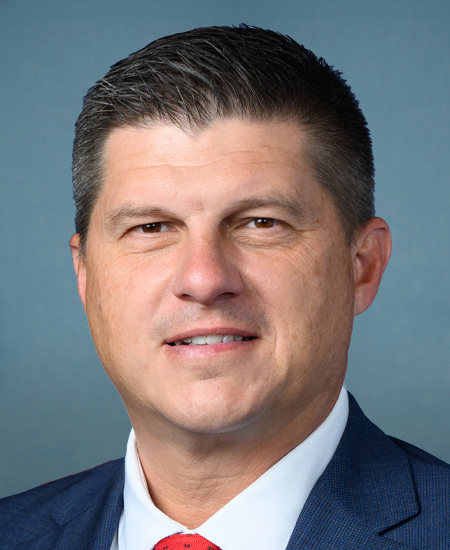
Photo of Brad Finstad
R United States House · District 1 · Minnesota On the 2026 ballot

Rep. Brad Finstad

Compare
Total votes
2,001
all sessions
Attendance
99%
17 missed
Higher than 78% of chamber peers
With party
96%
of cast votes
Higher than 83% of chamber peers
Bipartisan score
2%
crosses aisle rarely
Lower than 84% of chamber peers
Sponsored
815
bills & resolutions
Near the chamber average
Committees
11
assignments
815 bills and resolutions

Sponsored bills

Total
815
Primary
67
Co-sponsor
748
This page
815
matching current filters
Co-sponsor HR 1770
In committee · United States House · Co-sponsor
Equitable Community Access to Pharmacist Services Act

Maddy summaryThis bill expands Medicare Part B coverage to include specific pharmacist services, directly affecting Medicare beneficiaries and pharmacists who provide these services. It adds new coverage for pharmacist evaluations and treatments related to certain illnesses (like COVID-19, flu, or strep throat) and public health emergencies, requiring payment at 80% of the lesser of actual charge or 85% of physician payment rates (100% during emergencies). The bill also prohibits balance billing for these services, ensuring beneficiaries pay only the standard Medicare copayment. These changes aim to improve access to pharmacist care during health crises while aligning payment with existing physician service frameworks.

In committee Dec 17, 2024 1 co-sponsor
Co-sponsor HR 1666
In committee · United States House · Co-sponsor
Protecting Access to Ground Ambulance Medical Services Act of 2023

Maddy summaryHR 1666 extends deadlines for ambulance service reimbursement rules under Medicare. It amends Section 1834(l) of the Social Security Act by changing dates from 2025 to 2028 in two specific provisions: paragraph (12)(A) and paragraph (13)(A). This delay gives ambulance providers additional time to adjust to existing Medicare payment rules. The bill directly affects Medicare-certified ambulance services and the patients relying on ground ambulance care covered by Medicare.

In committee Dec 17, 2024 1 co-sponsor
Co-sponsor HR 1610
In committee · United States House · Co-sponsor
Chiropractic Medicare Coverage Modernization Act of 2023

Maddy summaryHR 1610 would modernize Medicare coverage for chiropractic care by removing the current restriction that limited beneficiaries to one chiropractic service per visit. It expands coverage to include all services provided by licensed chiropractors within their state-authorized scope, aligning Medicare with VA, military, and private insurance practices. The bill requires chiropractors to complete a Secretary-approved educational webinar to cover non-spinal services, while still allowing payment for spinal manipulation treatments without this requirement. This directly affects Medicare beneficiaries seeking chiropractic care and chiropractors seeking Medicare reimbursement for their services.

In committee Dec 17, 2024 1 co-sponsor
Co-sponsor HR 589
Passed · United States House · Co-sponsor
MAHSA Act

Maddy summaryHR 589, the MAHSA Act, imposes U.S. sanctions on Iran's Supreme Leader, President, and affiliated entities responsible for human rights abuses and terrorism. It targets the Supreme Leader's Office, the President's cabinet, security forces involved in the crackdown following Mahsa Amini's death, and entities financing abuses. The bill requires the President to annually determine and apply existing sanctions - like property blocking and visa bans - against these individuals and entities. This directly affects Iran's top leadership and security apparatus, aiming to hold them accountable for abuses including the Morality Police's role in Amini's detention and the subsequent violent suppression of protests.

Passed Dec 17, 2024 1 co-sponsor
Co-sponsor HR 549
In committee · United States House · Co-sponsor
Metastatic Breast Cancer Access to Care Act

Maddy summaryHR 549, the Metastatic Breast Cancer Access to Care Act, removes waiting periods for disability and Medicare coverage for people diagnosed with metastatic breast cancer. Specifically, it amends Social Security Act sections to allow immediate eligibility for disability insurance benefits (eliminating the standard waiting period) and immediate Medicare coverage (waiving the 24-month waiting period) for these patients. The bill directly affects individuals with metastatic breast cancer who would otherwise face delays in accessing critical benefits. These changes apply to applications filed or benefits beginning after the bill's enactment date. The law makes no other policy changes beyond these specific eligibility adjustments.

In committee Dec 17, 2024 1 co-sponsor
Co-sponsor HR 7
In committee · United States House · Co-sponsor
No Taxpayer Funding for Abortion and Abortion Insurance Full Disclosure Act of 2023

Maddy summaryThis bill bans federal funding for abortions in most cases, prohibiting the use of taxpayer money for abortion services or health insurance plans covering abortion. Exceptions allow funding for abortions resulting from rape, incest, or when a pregnancy endangers a woman's life. It requires health insurance plans sold through the Affordable Care Act (ACA) marketplaces to clearly disclose any separate costs for abortion coverage and prohibits ACA subsidies from being used for plans that cover abortion (except in the specified exceptions). The law directly affects federal programs like Medicaid, ACA marketplace plans, and insurers offering health coverage to individuals using federal subsidies.

In committee Dec 17, 2024 1 co-sponsor
Co-sponsor HR 152
In committee · United States House · Co-sponsor
Hearing Protection Act

Maddy summaryHR 152, titled the "Hearing Protection Act," actually addresses firearm silencers (suppressors), not hearing protection. The bill removes federal registration requirements for silencers by directing the Attorney General to destroy all existing silencer records within 365 days. It also preempts state laws that tax, register, or impose recordkeeping requirements on silencers, making such state rules unenforceable. Additionally, the bill updates tax codes to include silencers as taxable items and clarifies their definition in firearm laws.

In committee Dec 17, 2024 1 co-sponsor
Co-sponsor HJRES 142
In committee · United States House · Co-sponsor
Providing for congressional disapproval under chapter 8 of title 5, United States Code, of the rule submitted by the Department of Labor relating to "Retirement Security Rule: Definition of an Investment Advice Fiduciary".

Maddy summaryHJRES 142 is a congressional disapproval resolution targeting a Department of Labor rule issued on April 25, 2024. It seeks to block the "Retirement Security Rule: Definition of an Investment Advice Fiduciary" (89 Fed. Reg. 32122), which defined standards for financial advisors handling retirement accounts. If passed, this resolution would make the Labor Department's rule ineffective, directly affecting retirement plan advisors and financial institutions subject to the regulation. The bill uses a specific procedural mechanism under Title 5, U.S. Code, to nullify the rule without creating new law.

In committee Dec 16, 2024 1 co-sponsor
Co-sponsor HR 8932
Signed into law · United States House · Co-sponsor
FAFSA Deadline Act

Maddy summaryThe FAFSA Deadline Act changes the deadline for processing the Free Application for Federal Student Aid (FAFSA) from January 1 to October 1 prior to a student's planned college enrollment year. This requires students and families to submit their FAFSA applications earlier each year, potentially allowing for faster financial aid decisions. The bill also mandates that the Secretary of Education certify by September 1 whether the October 1 deadline will be met, and if not, testify by September 30 about the reasons and financial impact on students and families. These changes apply directly to all students and families seeking federal financial aid for higher education.

Signed into law Dec 11, 2024 1 co-sponsor
Co-sponsor HR 5536
Signed into law · United States House · Co-sponsor
Grant Transparency Act of 2023

Maddy summaryThe Grant Transparency Act of 2023 requires federal agencies to clearly disclose how they evaluate competitive grant applications in their funding notices. Specifically, agencies must describe their rating systems, explain any weighted scoring methods (including how much each criterion is weighted), and detail other merit-based evaluation approaches. The law also mandates standardized reporting of basic application data, including the number of applications received and the city/state locations of all submitting organizations. This applies only to future notices of funding opportunity issued after the law takes effect (120 days post-enactment), does not create new funding, and does not override existing legal requirements for specific grant programs.

Signed into law Dec 11, 2024 1 co-sponsor
Showing 391 to 400 of 815 bills
Previous 1 … 39 40 41 … 82 Next