

Maddy summaryThis bill establishes the United States-Israel Defense Technology Cooperation Initiative to accelerate joint development and integration of defense technologies between the two countries. It directs the U.S. Secretary of Defense, with Israel’s agreement, to identify Israeli-origin technologies for rapid adoption into U.S. military systems, focusing on areas like counter-drone systems, missile defense (including "Golden Dome for America"), AI, cyber defense, and directed energy. The initiative requires annual congressional reporting on progress, partnerships with industry, and technology transitions, while authorizing $150 million annually for fiscal years 2027-2029. It aims to strengthen bilateral defense innovation and streamline the use of Israeli technologies within U.S. military programs.
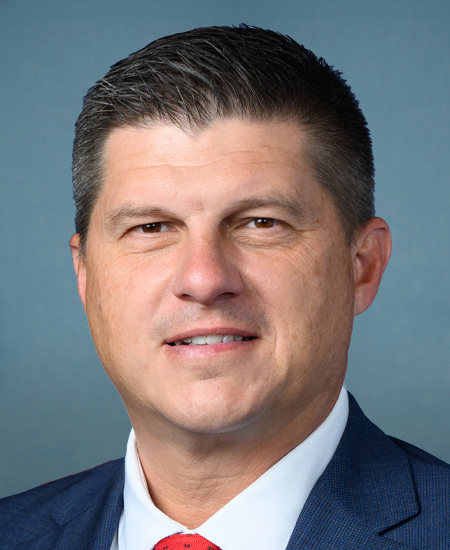
Rep. Brad Finstad
Sponsored bills
Maddy summaryThis bill prevents state or local governments from banning or restricting energy connections (like installation, modification, or access) based on the type or source of energy, such as electricity, natural gas, or renewable fuels. It directly affects consumers choosing energy providers and energy companies seeking to offer services. The key provision prohibits local laws, regulations, or policies that limit energy services sold in interstate commerce, covering all energy types listed in the bill’s definitions. It does not create new programs but limits regulatory authority at the state or local level. The law aims to ensure open access to diverse energy sources without source-based restrictions.
Maddy summaryThis bill requires Medicare plans (including Medicare Advantage and prescription drug plans) to base coverage decisions on medical necessity and evidence-based standards. It mandates that plans seek input from practicing physicians when creating or changing coverage rules, post all preauthorization requirements online in plain language, and publicly share statistics on approvals and denials. The bill also requires that adverse coverage decisions be made by licensed, board-certified physicians and prohibits denying coverage solely due to lack of evidence-based standards when none exist for a service. These changes aim to reduce unnecessary delays in care for Medicare beneficiaries by increasing transparency and clinical input in coverage decisions.
Maddy summaryHR 7320, the Minnesota Voter Integrity Act of 2026, requires the Minnesota Secretary of State to submit specific voting records to the Attorney General before the state can receive federal funds under the Help America Vote Act of 2002. It mandates the submission of records related to same-day voter registrations, votes cast under those registrations, and other specified voting records under Minnesota law. This bill does not change voting procedures but ties federal funding eligibility to the disclosure of these administrative records. The requirement directly affects Minnesota's state election administration by imposing a documentation condition for accessing federal election funds.
Maddy summaryThe Make Elections Great Again Act (HR 7300) would require voters to present photo identification to cast ballots in person or by mail for federal elections, with limited exceptions for religious objections or military voters. It would establish new requirements for proving U.S. citizenship during voter registration, including documentary proof of citizenship and proof of state residency. The bill would change mail-in ballot procedures by requiring voters to request mail-in ballots (rather than universal mail-in voting), implementing barcode tracking for mail-in ballots, and setting strict deadlines for ballot receipt. These provisions would apply to all states for federal elections held in 2027 or later, affecting how voters register, vote in person, and submit mail-in ballots for federal office elections.
Maddy summaryThis bill exempts certain less-than-lethal projectile devices from federal sales taxes and National Firearms Act restrictions. It directly affects manufacturers, importers, and producers of these devices, which are defined as non-lethal tools (like rubber bullets or beanbag rounds) designed not to cause serious injury and unable to be easily converted to use standard firearm ammunition. Key mechanisms include a 90-day classification process for manufacturers seeking exemption, an annual public list of approved devices, and annual congressional reports on devices excluded from the exemption. The policy change applies to devices meeting specific safety criteria, such as projectile velocity limits and design features preventing misuse as conventional weapons.
Maddy summaryThis bill requires the U.S. Citizenship and Immigration Services (USCIS) Director to review all approved immigration benefit requests linked to Presidential Proclamation 10998 (Restricting Entry of Foreign Nationals) that were approved between January 20, 2021, and the bill's enactment date. USCIS must complete this review, then provide an in-person briefing to congressional Judiciary Committees and publish a public report by September 15, 2026. The bill does not change immigration rules but mandates a retrospective examination of past decisions related to a specific security-focused proclamation. It directly affects USCIS operations and the immigration benefit requests reviewed under the specified timeframe.
Maddy summaryHRES 375 is a symbolic resolution designating May 2025 as "Renewable Fuels Month" to recognize renewable fuels' role in reducing carbon emissions, lowering consumer fuel prices, supporting rural economies, and decreasing reliance on foreign energy sources. The resolution expresses the House's support for this designation without creating new laws or funding. It highlights renewable fuels' economic contributions (e.g., jobs, GDP impact) and environmental benefits as context for the recognition, but does not alter existing policies. As a non-binding resolution, it has no direct legal effect on consumers, industries, or government programs.
Maddy summaryThis bill creates a tax credit for businesses selling products made with U.S.-grown cotton. The credit equals 24% of the cotton's market value if processed only in the U.S. or in countries with U.S. trade deals, or 18% for other processing locations. To qualify, cotton must be digitally traced from U.S. farms to finished products and certified by the USDA as meeting origin requirements. It directly affects clothing and textile manufacturers selling qualifying products in the U.S. market.
Maddy summaryHR 7156, the SCAM Act, would expand grounds for revoking U.S. citizenship (denaturalization) for naturalized citizens who commit specific offenses within 10 years of becoming citizens. It targets individuals convicted of defrauding federal, state, or local governments (e.g., $10,000+ in public benefit fraud), affiliating with foreign terrorist organizations, or committing aggravated felonies or espionage. If convicted in these categories, the government could automatically revoke citizenship retroactively (as if it never existed) based on evidence that the person lacked good moral character or loyalty to the U.S. at the time of naturalization. This bill directly affects naturalized citizens who commit these offenses within a decade of gaining citizenship, with revocation triggering immediate deportability.