

Maddy summaryHRES 401 is a non-binding resolution recognizing the 60th anniversary of SkillsUSA, a national organization focused on career and technical education (CTE). It does not create new laws or funding but formally acknowledges SkillsUSA’s role in preparing students for skilled careers through CTE programs. The resolution encourages stakeholders - including students, educators, and employers - to support SkillsUSA’s mission of closing the skills gap and strengthening the workforce. This ceremonial resolution has no direct policy impact, as it solely expresses congressional recognition of the organization’s work.
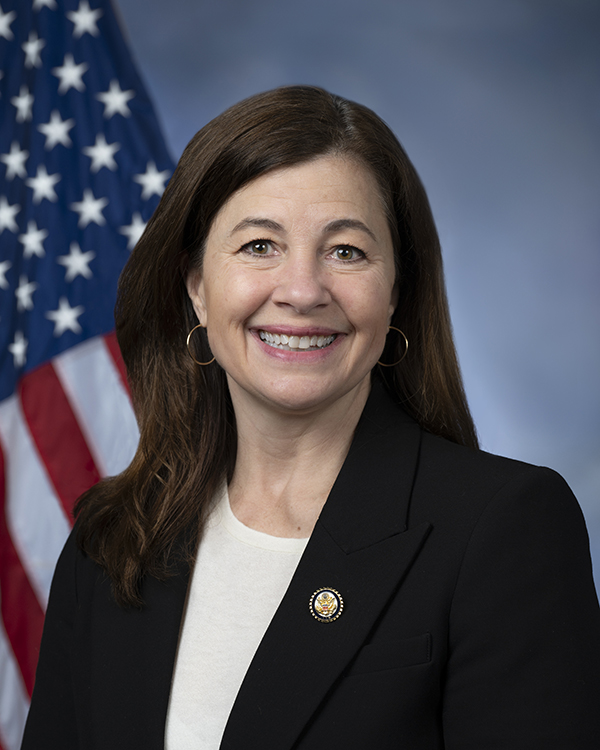
Rep. Kristen McDonald Rivet
Sponsored bills
Maddy summaryHR 3270, the Air Traffic Control Workforce Development Act of 2025, aims to strengthen the pipeline of air traffic controllers by improving training programs and retention. It provides $20 million annually (2026-2031) for colleges to develop specialized curricula and equipment through the Enhanced-Collegiate Training Initiative program, allowing graduates to be hired noncompetitively as controllers. The bill also establishes a committee to modernize training curricula and the Air Traffic Skills Assessment exam, while creating retention bonuses for certified controllers and mental health training for medical examiners. These changes directly affect colleges offering air traffic control programs, prospective controllers, and current FAA air traffic controllers.
Maddy summaryThe LEO Fair Retirement Act of 2025 allows federal law enforcement officers to include unpaid overtime hours in their retirement benefit calculations. Currently, pay caps prevent officers from being compensated for all overtime worked, meaning they miss out on retirement credit for those hours. To qualify, officers must make a lump-sum payment (or choose a reduced monthly annuity) to cover the retirement contributions they would have made if paid, based on their actual overtime hours. This applies to officers covered by the Civil Service Retirement System (CSRS) or Federal Employees Retirement System (FERS), and the bill also provides a tax credit for the lump-sum payment.
Maddy summaryThe Fiscal Commission Act establishes a 16-member commission to address the federal government's fiscal challenges, including reducing debt and deficit while aiming for a debt-to-GDP ratio of 100% by 2039. The commission must educate the public about fiscal issues, identify policy recommendations, and submit a detailed report with legislative language by November 2026 (with possible extension to April 2027). This report requires bipartisan approval, needing at least two Republican and two Democratic members for majority support. If approved, the recommended legislation would become an "implementing bill" considered under expedited procedures in both congressional chambers. The commission's work directly affects federal budget decisions and public awareness of fiscal policy, with hearings required to gather input from experts and government officials.
Maddy summaryHR 3277, the Ensuring Lasting Smiles Act, requires group health plans and health insurance issuers to cover medically necessary outpatient and inpatient treatments for congenital anomalies or birth defects primarily affecting the eyes, ears, teeth, mouth, or jaw. This includes reconstructive procedures, dental/orthodontic support during treatment, and follow-up care, but excludes purely cosmetic surgery not tied to a medical diagnosis. Cost-sharing (like copays) for these services must not be stricter than for other medical benefits. The law takes effect for plan years beginning January 1, 2026, and mandates insurers to provide notice about this coverage to beneficiaries.
Maddy summaryThis bill amends the tax code to change how small business owners calculate a deduction for pass-through business income. It caps the deduction at $25,000 annually for eligible small businesses (defined as those with qualified business income under $25,000), while raising the income threshold for phaseout to $200,000 ($400,000 for joint filers). The changes simplify rules around loss carryovers and wage calculations for this deduction. The bill takes effect for tax years beginning after December 31, 2025.
Maddy summaryThis bill grants federal recognition to the Grand River Bands of Ottawa Indians of Michigan, a tribe that has sought recognition since filing a petition in 2000. It affirms their status as a federally recognized tribe, making them eligible for all federal services and benefits (including social services, education, housing, and elder care) regardless of reservation status or member location. Key provisions include requiring the tribe to submit a membership roll within 18 months and authorizing the Secretary of the Interior to acquire land in specified Michigan counties for the tribe’s trust. The bill addresses decades-long delays in recognition that prevented the tribe from accessing federal resources.
Maddy summaryThe Law Enforcement Officers Equity Act expands federal retirement benefits to include specific non-traditional law enforcement roles, such as IRS tax collection officers, U.S. Postal Inspection Service employees, Department of Veterans Affairs police, and certain U.S. Customs and Border Protection seized property specialists. It directly affects current and future federal workers in these positions who were previously excluded from law enforcement retirement benefits under the Federal Employees Retirement System and Civil Service Retirement System. The bill allows current employees (incumbents) to elect to count prior service toward retirement by paying a deposit covering the difference in retirement contributions, with government contributions made over 10 years. It also temporarily exempts law enforcement officers from mandatory separation for three years after enactment.
Maddy summaryHR 3184, the PFAS Alternatives Act, funds research to develop turnout gear (firefighter safety clothing) without harmful PFAS chemicals, directly affecting firefighters who wear this gear. It authorizes $25 million annually (2025-2029) for grants to eligible organizations to research and test PFAS-free gear, requiring partnerships with firefighting groups to translate findings into practice. The bill also allocates $2 million yearly (2027-2031) for training programs on safe gear use and decontamination. Its goal is to reduce firefighters' exposure to chemicals linked to occupational illnesses during operations.
Maddy summaryHR 3198 establishes a new intergovernmental task force to address U.S. reliance on foreign supply chains for critical minerals, which Congress identifies as a national security risk. The task force, composed of federal agency representatives, tribal and state governments, and private sector stakeholders, will assess vulnerabilities in mineral supply chains (especially dependence on China and other "covered countries"), recommend strategies for domestic production and recycling, and develop international partnerships with allies like NATO members. Key duties include evaluating how to boost environmentally responsible domestic mining and processing, identify alternative sources, and strengthen supply chain security without duplicating existing efforts. The task force must submit a final report to Congress within two years and terminates 90 days after completing its work, with no new funding authorized for its operations.