

Maddy summaryHR 4611 (EACH Act of 2025) requires all federally funded health programs - including Medicaid, Medicare, military health plans, and the Indian Health Service - to cover abortion services without restrictions, repealing the Hyde Amendment's long-standing ban on federal funding for most abortions. This directly affects millions of people enrolled in these programs, particularly low-income women, women of color (including 25% of Black women and 22% of Hispanic women on Medicaid), and young people. The bill mandates coverage in all federally administered health plans and prohibits state or private insurers from restricting abortion coverage in health insurance. It aims to eliminate current federal and state barriers that deny abortion access to people who rely on government health programs.
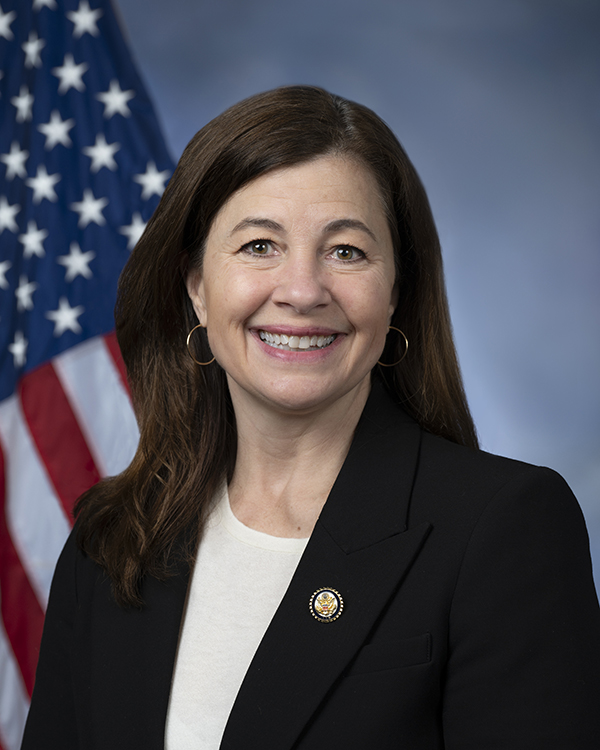
Rep. Kristen McDonald Rivet
Sponsored bills
Maddy summaryThe RELIEVE Act modifies veterans' access to emergency care reimbursement under VA law. It removes the requirement for veterans to have previously received VA care before qualifying for emergency treatment reimbursement during the first 60 days after enrolling in the VA healthcare system. This change directly affects new VA enrollees seeking emergency medical care within that initial 60-day window, eliminating a prior barrier to immediate coverage. The amendment applies to emergency treatment provided one year after the bill's enactment date.
Maddy summary# Summary of Proposed Tax Code Amendment This document is a comprehensive proposal for tax code amendments, primarily focused on extending, modifying, and creating new tax credits related to clean energy, energy efficiency, and environmental initiatives. The key components include: ## Housing and Residential Credits - **First-Time Homebuyer Tax Credit**: A refundable credit for first-time homebuyers (Section 13001) - **Renter Tax Credit**: A refundable credit for renters paying more than 30% of their adjusted gross income in rent (Section 13002) ## Clean Energy Credits (Sections 21001-21007) - Extended clean energy production credit with a new phase-out date (2032 or when greenhouse gas emissions reach 25% of 2022 levels) - Extended clean electricity investment credit for wind and solar facilities - Restored credit for wind and solar leasing arrangements - Extended clean hydrogen production credit (construction date reverted to 2033) - Extended residential clean energy credit (termination date moved to 2034) - Reinstated special rate for sustainable aviation fuel (35 cents/ gallon for certain facilities) ## Energy Efficiency Credits (Sections 22001-22004) - Restored product identification number requirement for energy-efficient home improvements - Extended new energy efficient home credit (acquisition date moved to 2032) - Repealed termination of new energy efficient commercial buildings deduction - Restored cost recovery for energy property ## Electric Vehicle and Charging Infrastructure Credits (Sections 23001-23005) - Extended previously-owned vehicle credit (acquisition date moved to 2032) - Extended clean vehicle credit (placement in service date moved to 2032) - Extended commercial clean vehicles credit (termination date moved to 2032) - Extended alternative fuel vehicle refueling property credit (termination date moved to 2032) - Created a new credit for electric bicycles (30% of cost, up to $5,000 per bicycle) ## Clean Infrastructure and Resiliency Credits (Sections 24001-24007) - Created qualifying water reuse project credit (30% of qualified investment) - Created recycling property investment credit (30% of qualified investment with phase-out) - Excluded amounts received from State-based catastrophe loss mitigation programs from gross income - Expanded exclusion for certain emergency agricultural assistance - Created credit for disaster mitigation expenditures (30% of qualifying mitigation activities) - Created qualifying electric power transmission line credit (30% of qualified investment) - Created qualifying advanced battery project credit (30% of qualified investment with $3 billion cap) The proposed amendments generally extend existing credits through 2032-2037, with some credits having phase-out schedules and others having specific termination dates. The document also includes numerous conforming amendments to other sections of the tax code to accommodate these changes.
Maddy summaryThe Reproductive Coercion Prevention and Protection Act of 2025 defines reproductive coercion as controlling a person's reproductive choices through force, threats, sabotage of contraception, or pressure to become pregnant or terminate a pregnancy. It creates a federal civil right of action, allowing victims to sue in court for damages if the coercion involved interstate activities - such as travel across state lines, interstate communication (e.g., email or phone), or payments. The bill does not override state laws or court jurisdictions, preserving existing state definitions of domestic violence and reproductive coercion. It specifically targets cases where abusers sabotage mail-order birth control or force victims to travel for reproductive health care, addressing gaps in current protections.
Essential Caregivers Act of 2025 This bill prohibits certain health care facilities from limiting the access of essential caregivers to residents of those facilities, including during designated emergency periods. Specifically, the bill generally prohibits Medicare skilled nursing facilities, Medicaid nursing facilities, Medicaid intermediate care facilities, and associated inpatient rehabilitation facilities from restricting the access of essential caregivers to residents of the facilities, including during emergency periods in which visitation rights are otherwise restricted. During emergency periods, facilities may restrict access for an initial period of up to seven days and for one additional maximum seven-day period (if the additional period is approved by the state health department). Facilities may restrict access for a total of 7 days (or 14 days with the approval of the state health department) during an emergency period. Essential caregivers must agree to comply with any safety protocols set by the facility, which may be no more stringent for caregivers compared to those for staff. Caregivers who fail to comply with these requirements may be denied access, subject to an appeals process.
Maddy summaryThe Protect America's Workforce Act cancels an executive order issued on March 27, 2025, that excluded certain groups from federal labor-management relations programs, making it legally unenforceable. It also ensures that all collective bargaining agreements between federal agencies and labor unions, which were active as of March 26, 2025, remain fully effective until their agreed terms expire. This directly affects federal agencies, labor unions, and the employees covered by these agreements. The bill prevents federal funds from being used to implement the canceled executive order while preserving existing labor agreements.
Maddy summaryThis bill requires the Government Accountability Office (GAO) to conduct a study within 18 months of enactment. The study will examine barriers to child care access caused by state income limits, waitlist lengths for child care services, payment rates for providers (including centers and family child care), and how inflation affects affordability. It does not change existing laws but aims to gather data to inform future policy decisions. The findings will be reported to Congress, directly affecting how child care policy might evolve.
Maddy summaryHR 6259, the "No Fentanyl on Social Media Act," requires the Federal Trade Commission (FTC) to produce a detailed report within one year of enactment. The report must examine how minors access fentanyl (including pressed pills) through social media platforms, covering sellers' methods, health risks, platform design impacts, and current measures by platforms, law enforcement, and medical professionals. It specifically asks for recommendations to reduce this access and mandates consultation with stakeholders like parents and medical experts. The bill does not ban fentanyl sales or create new penalties; it solely focuses on gathering information to inform future policy.
Maddy summaryHRES 942 is a symbolic resolution designating September 2025 as "National Childhood Cancer Awareness Month" to raise public awareness about childhood cancer. It does not create new laws or funding but encourages federal, state, local governments, and nonprofits to observe the month with educational programs. The resolution highlights that over 14,500 U.S. children under 19 are diagnosed with cancer annually and emphasizes the need for ongoing care for survivors, who often face long-term health challenges. It acknowledges childhood cancer as a leading cause of disease-related death in children while recognizing the bravery of affected children and their families.
Maddy summaryThis bill recognizes the service of individuals who were members of the U.S. Cadet Nurse Corps between July 1, 1943, and December 31, 1948, by treating that service as active duty for specific burial-related benefits. It requires the Secretary of Defense to issue an honorable discharge to eligible individuals within one year of the bill's enactment, designating their discharge date. The bill allows for commemorative items like service medals or plaques but clarifies that recipients will not receive most VA benefits (only headstones/markers under specific chapters of law). It directly affects living cadet nurses from that era and their families for burial purposes.