

Growing Renewable Energy and Efficiency Now Act of 2021 or the GREEN Act of 202 1 This bill provides tax incentives for investment in renewable energy resources and energy efficiency programs. Among other provisions, the bill extends for five years the tax credit for production of electricity from certain renewable resources (e.g., wind facilities, biomass, landfill trash facilities), allows an election to treat certain tangible property as energy property for purposes of the energy tax credit, and modifies certain provisions of the energy tax credit and expands the credit for four years; expands the 30% energy tax credit to include energy storage technology or qualified biogas property; extends for one year the tax credit for carbon oxide sequestration; allows elective payments in lieu of certain energy-related tax credits; modifies the phaseout provisions of the income and excise tax credits for biodiesel and renewable diesel and alternative fuels and extends the termination date for such credits; extends and increases the tax credits for nonbusiness energy property and the new energy efficient home tax credit; extends for five years the residential energy efficient property tax credit; increases the tax deduction for energy efficient commercial buildings; modifies the limitations on new qualified plug-in electric drive motor vehicles tax credit and allows a new credit for such vehicles that are previously-owned; allows a new tax credit for zero emission heavy vehicles (vehicles with a gross weight rating of not less than 14,000 pounds and not powered by an internal combustion engine); extends for five years the tax credits for qualified fuel cell motor vehicles and alternative fuel cell refueling property; provides for additional allocations of the advanced energy project tax credit; allows a new tax credit for the labor costs of installing mechanical insulation property; allows a new tax credit to promote environmental justice programs (programs to improve health and economic outcomes of individuals residing in low-income areas or areas populated disproportionately by racial or ethnic minorities); and requires the Department of the Treasury to report on the utility of data from the Greenhouse Gas Reporting Program for determining the amount of greenhouse gases emitted by taxpayers for purposes of imposing a fee on them for such emissions.
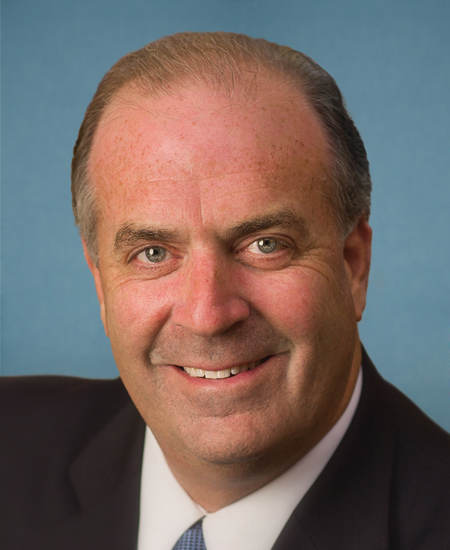
Rep. Daniel T. Kildee
Sponsored bills
Scientific Integrity Act This bill revises provisions regarding the release of scientific research results by federal agencies. Each agency that funds, conducts, or oversees scientific research must (1) adopt and enforce a scientific integrity policy that includes requirements such as that scientific conclusions are not based on political considerations, and (2) submit such policy to the Office of Science and Technology Policy (OSTP) for approval. Each agency must make such policy available to the public and submit such policy to Congress. Agencies and the OSTP must periodically review the policies. The Government Accountability Office shall review implementation of the policies. Each agency shall (1) appoint a Scientific Integrity Officer, (2) establish a process for dispute resolution consistent with the scientific integrity policy, and (3) establish a specified training program for current and new employees.
Sustainable Aviation Fuel Act This bill establishes targets and standards for reducing greenhouse gas emissions from airplane flights and provides incentives for the production and use of sustainable aviation fuel. Specifically, this bill establishes a national goal to achieve a net 35% reduction in greenhouse gas emissions from flights by 2035 and net zero emissions by 2050. The Environmental Protection Agency (EPA) must establish a low carbon fuel standard for aviation fuels. Under the standard, the EPA must set annual targets in order to reduce certain greenhouse gas emissions associated with aviation fuel by at least (1) 20% by 2030, and (2) 50% by 2050. Beginning in FY2023, the Department of Defense must make a bulk purchase of an amount of sustainable aviation fuel that is not less than 10% of the total amount of aviation fuel procured for operational purposes. Additionally, the Department of Transportation must implement a program that offers grants and cost-sharing agreements for projects to produce, transport, blend, or store sustainable aviation fuel. The projects must be located in the United States. Finally, the bill provides tax credits for the production of sustainable aviation fuel.
Medical Debt Relief Act of 2021 This bill modifies requirements related to the reporting of medical debt. Specifically, a consumer reporting agency is prohibited from adding medical debt information to a consumer credit report if the debt was fully paid or settled, or is less than a year old. Additionally, a debt collector must notify the consumer prior to reporting medical debt to a consumer reporting agency.
USPS Fairness Act This bill repeals the requirement that the U.S. Postal Service annually prepay future retirement health benefits.
COVID–19 Price Gouging Prevention Act This bill makes it unlawful for any person to sell or offer for sale a consumer good or service during a public health emergency resulting from COVID-19 (i.e., coronavirus disease 2019) at a price that (1) is unconscionably excessive, and (2) indicates that the seller is using the circumstances related to the public health emergency to increase prices unreasonably. The bill provides authority for the Federal Trade Commission and state attorneys general to enforce the requirements of this bill.
Advancing Connectivity during the Coronavirus to Ensure Support for Seniors Act or the ACCESS Act This bill provides funding to increase access to telehealth services and virtual visits in skilled and other nursing facilities during the COVID-19 (i.e., coronavirus disease 2019) emergency. The bill designates the funding as emergency spending, which is exempt from discretionary spending limits. Specifically, the bill provides additional funding for FY2021, to remain available through FY2022, to the Telehealth Resource Center Program to address barriers to telehealth faced by skilled and other nursing facilities. The Office for the Advancement of Telehealth within the Federal Office of Rural Health Policy in the Health Resources and Services Administration manages this program. In addition, the bill provides funding for FY2021, to remain available through one month after the emergency period ends, to the Department of Health and Human Services (HHS) for grants to nursing facilities to support virtual visits for residents during the COVID-19 emergency. HHS must develop relevant guidance for these grants within 15 days. HHS must also coordinate with the Federal Communications Commission to ensure grantees have access to telecommunications and broadband services.
Stop COVID-19 Test Surprise Medical Bills Act of 2021 This bill modifies provisions requiring health insurance plans to cover COVID-19 (i.e., coronavirus disease 2019) diagnostic testing services at no cost, without prior authorization, and without medical management requirements. The bill specifies that a plan may not make determinations about the circumstances surrounding individuals' tests, such as why they sought testing or whether they showed symptoms of COVID-19. The bill also specifies that plans may encourage individuals to obtain tests from lower priced providers as long as such efforts do not delay, or impede access to, testing. The bill also requires the Department of Health and Human Services (HHS) to survey and report on the cash prices of testing services and the compliance of providers with the requirement to publish such prices. Additionally, HHS, jointly with the Department of the Treasury and the Department of Labor, must issue guidance clarifying the process for submitting claims for testing services.
Emergency Water is a Human Right Act This bill creates a grant program, administered by the Department of Health and Human Services, to provide funds to states and Indian tribes to assist low-income households that pay a high proportion of household income for drinking water and wastewater services. Further, any entity receiving financial assistance under this grant program must ensure that no home energy service or public water system service is or remains disconnected or interrupted during the COVID-19 (i.e., coronavirus disease 2019) public health emergency.
Improving Social Determinants of Health Act of 2021 This bill requires the Centers for Disease Control and Prevention (CDC) to establish a program to improve health outcomes and reduce health inequities by, for example, coordinating activities across the CDC. As part of the program, the CDC must award grants to eligible organizations to build capacity to address social determinants of health. The CDC shall provide for an independent evaluation of certain grants and report findings to Congress.