

Maddy summaryHR 4424, the Vietnam Veterans Liver Fluke Cancer Study Act, directs the Department of Veterans Affairs to study the rate of cholangiocarcinoma (a type of bile duct cancer) among veterans who served in the Vietnam theater during the Vietnam era. The bill requires the VA, working with the CDC, to analyze existing cancer registry data to compare cancer rates between these veterans and the general U.S. population, breaking down results by age, gender, race, ethnicity, and location. The VA must report its findings and recommendations to Congress within one year of completing the study, with ongoing periodic updates. This study aims to identify patterns and inform potential future actions for affected veterans, without changing current benefits or eligibility.
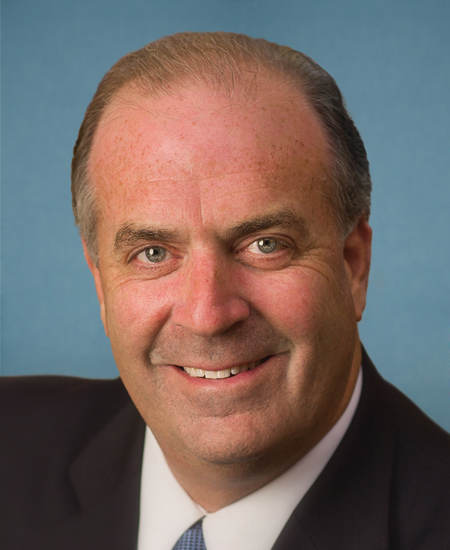
Rep. Daniel T. Kildee
Sponsored bills
Maddy summaryHR 9639, the AI Ads Act, amends the Federal Election Campaign Act to prohibit using AI-generated content (like deepfakes or synthetic media) in campaign materials as fraudulent misrepresentation of campaign authority or fraudulent fund solicitation. It directly affects political campaigns, candidates, committees, and anyone creating campaign ads by requiring that AI-generated content cannot falsely claim to represent a candidate, party, or committee. The bill updates existing rules to explicitly include "content generated in whole or in part with artificial intelligence" within the definitions of fraud under Sections 322(a)(1) and 322(b)(1). This ensures that misleading AI-generated ads - such as those falsely attributing a statement to a candidate - would be treated as illegal fraud under current campaign finance law.
Maddy summaryHRES 1445 is a symbolic resolution designating the week of September 15-21, 2024, as "Community School Coordinators Appreciation Week." It expresses the House's support for recognizing community school coordinators, who help build partnerships between schools and communities to support student success. The resolution thanks these coordinators for their work in improving student attendance, academic outcomes, and community well-being. It encourages schools, families, and officials to participate in events celebrating this week, but does not create new policies or funding.
Maddy summaryHRES 1448 is a non-binding House resolution stating that the House believes every person has the right to emergency health care, including abortion care, during medical emergencies. It specifically addresses concerns that abortion restrictions force medical providers to choose between treating patients in life-threatening situations or risking criminal charges. The resolution highlights that such restrictions disproportionately harm Black, Indigenous, people of color, immigrants, low-income individuals, and LGBTQI+ patients. It does not change existing laws but expresses congressional support for ensuring access to emergency care without legal barriers. The resolution was introduced by multiple House members and referred to the Energy and Commerce Committee.
Maddy summaryThis bill creates a federal grant program to help law enforcement agencies recruit officers from underrepresented communities. It authorizes $50 million annually (2025-2029) for states and local agencies to fund recruitment campaigns and "Pathways to Policing" programs. These programs provide financial support during training for candidates facing education barriers, with no prior law enforcement experience, who are members of underrepresented groups or have nontraditional backgrounds. Grants prioritize agencies targeting underrepresented communities and officers who will serve or live near the communities they protect.
Maddy summaryHRES 1432 designates September 10, 2024, as "National Firearm Suicide Prevention Day" to raise public awareness about firearm suicides and promote safe storage practices. The resolution encourages healthcare professionals to discuss safe firearm storage with patients and supports the day's goals of reducing firearm suicides through education. It directly affects the general public and healthcare providers by highlighting evidence that safe storage lowers suicide risk, referencing statistics like 54.6% of U.S. suicides in 2022 involving firearms. The bill is symbolic, with no new legal requirements, and aligns with existing awareness efforts like Firearm Suicide Prevention Day.
Maddy summaryThis bill extends survivor benefits to spouses of veterans who die from amyotrophic lateral sclerosis (ALS). It revises eligibility rules so that veterans who die from ALS are treated as having met the required service duration for benefits, and surviving spouses must have been married for at least eight years prior to the veteran's death. The bill also requires the Department of Veterans Affairs to submit a report within 180 days identifying other service-connected disabilities with high mortality rates that might qualify for similar treatment. These changes apply to veterans dying from ALS on or after October 1, 2023.
Maddy summaryHRES 1429 is a non-binding House resolution that congratulates Michigan athletes who competed in the 2024 Paris Olympics and Paralympics. It specifically honors 20 athletes, including basketball player Devin Booker and track and field athlete Grant Fisher, by naming them in the resolution. The resolution does not create new laws or policies but serves as a symbolic gesture recognizing their achievements and the values of the Olympic movement.
This resolution supports the designation of National FFA Week. It also (1) recognizes the important role of the National FFA Organization (Future Farmers of America) in developing the next generation of globally conscious leaders who will change the world; and (2) celebrates the 10th anniversary of the Give the Gift of Blue program, which has donated more than 17,000 FFA blue jackets to FFA members in need.
Maddy summaryThe Preserving Rural Housing Investments Act clarifies tax rules for Fannie Mae and Freddie Mac by amending the Internal Revenue Code. It specifies that the U.S. government and its agencies are excluded from the definition of "tax-exempt entity" when applying certain tax provisions to these two government-sponsored enterprises. This change ensures that federal entities are not treated as tax-exempt under the relevant tax rules, affecting how Fannie Mae and Freddie Mac manage their tax obligations. The amendment applies to taxable years ending after July 30, 2008.