

Making Imperiled Communities Resistant to Outages with Generation that is Resilient, Islandable, and Distributed Act or the MICROGRID Act This bill allows a new tax credit for investment in qualified microgrid property. The bill defines qualified microgrid as an electrical system that incorporates a microgrid controller, includes equipment that is capable of generating not less that 4 kilowatts and not greater than 50 megawatts of electricity, is capable of operating in connection with the electrical grid and as a single controllable entity with respect to such grid, and is capable of operating independently (and disconnected) from such grid.
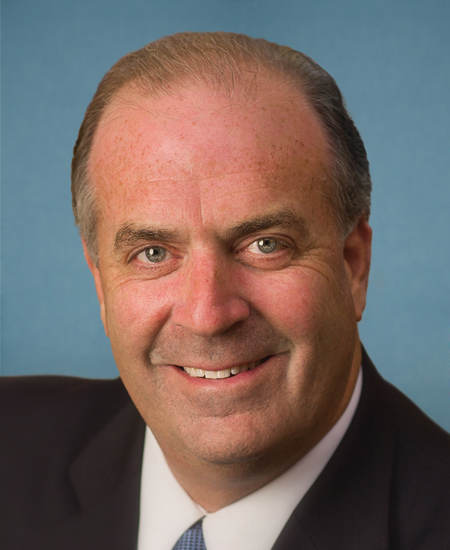
Rep. Daniel T. Kildee
Sponsored bills
Healthy Families Act This bill provides for paid and unpaid sick leave for employees to meet their own medical needs and those of their families. It requires employers with 15 or more employees to provide their employees with at least one hour of earned paid sick leave for every 30 hours worked, up to a maximum of 56 hours of paid sick leave in a year. An employer with fewer than 15 employees may also provide the same amount of paid sick leave, but may opt out of such requirement, in which case such employer must provide its employees at least 56 hours of unpaid leave in a year. An employee may use sick leave for absences (1) resulting from a physical or mental illness, injury or medical condition; (2) resulting from obtaining professional medical diagnosis or care, or preventive medical care; (3) to care for a child, parent, spouse, a domestic partner, or other blood or close relative; and (4) resulting from domestic violence, sexual assault, or stalking. The bill makes it unlawful for any employer to interfere with, restrain, or deny the exercise of an employee's right to accrue sick leave as provided by this bill. An employee may take legal action to enforce the right to sick leave granted by this bill and the Department of Labor must investigate complaints of violations of the requirements of this bill. Labor is authorized to conduct a public awareness campaign to educate and inform the public of the requirements for paid sick leave provided by this bill.
This resolution recognizes the Islamic faith as one of the great religions of the world, acknowledges the onset of Ramadan (the holy month of fasting and spiritual renewal for Muslims), and expresses respect to Muslims in the United States and throughout the world on this occasion.
Veterinary Medicine Loan Repayment Program Enhancement Act This bill modifies the requirements for calculating taxable income to exclude from gross income payments under the federal veterinary medicine loan repayment program or any state loan repayment or forgiveness program that is intended to provide for increased access to veterinary services in such state.
Taxpayer Research and Coronavirus Knowledge Act of 2021 This bill requires the Department of Health and Human Services (HHS) to coordinate with specified federal entities to compile a public database of federal contracts, tax benefits, and other support for COVID-19 (i.e., coronavirus disease 2019) biomedical research and development. HHS must develop the database within one month and update it every two weeks.
Student Loan Forgiveness for Frontline Health Workers Act This bill establishes temporary programs to provide federal and private student loan forgiveness to certain frontline health care workers. Frontline health care workers are those individuals who have made significant contributions to the medical response (e.g., patient care, medical research, or testing) to the COVID-19 (i.e., coronavirus disease 2019) national emergency. Specifically, the Department of Education (ED) must carry out a program to forgive the outstanding balance of principal and interest due on federal student loans for borrowers who are frontline health care workers. Additionally, the Department of the Treasury must carry out a program to repay in full the outstanding balance of principal and interest due on certain private student loans for borrowers who are frontline health care workers. ED and Treasury must coordinate to ensure that eligibility determinations are consistent across both programs and that frontline health care workers who are eligible for both programs may apply for loan forgiveness with a single application. Further, such programs must be available to frontline health care workers who were borrowers of eligible loans and who died as a result of COVID-19. The bill specifies the notification requirements related to the availability of these programs. ED, Treasury, and the Department of Health and Human Services must jointly establish an intergovernmental working group to assist with the administration of these programs, including the development of the application process. The bill also excludes discharged student loan debt under these programs from an individual's gross income.
Water Affordability, Transparency, Equity, and Reliability Act of 2021 This bill increases funding for water infrastructure, including funding for several programs related to controlling water pollution or protecting drinking water. Specifically, it establishes a Water Affordability, Transparency, Equity, and Reliability Trust Fund. The fund may be used for specified grant programs. The bill increases the corporate income tax rate to 24.5% to provide revenues for the fund. In addition, the bill revises requirements concerning the clean water state revolving fund (SRF) and the drinking water SRF. It also creates or reauthorizes several grant programs for water infrastructure.
Closing Loopholes for Oil and other Sources of Emissions Act or the CLOSE Act This bill repeals exemptions from the Clean Air Act under which (1) emissions from oil and gas wells and pipeline facilities are excluded from aggregation with emissions from other similar units for purposes of determining major sources, and (2) the Environmental Protection Agency (EPA) excludes oil and gas production wells from being listed as area sources. Additionally, the bill requires the EPA to issue a final rule adding hydrogen sulfide to the list of hazardous air pollutants under the Clean Air Act and revising such list to include categories and subcategories of major sources and area sources of hydrogen sulfide, including oil and gas wells.
Energy Innovation and Carbon Dividend Act of 2021 This bill imposes a fee on the carbon content of fuels, including crude oil, natural gas, coal, or any other product derived from those fuels that will be used so as to emit greenhouse gases into the atmosphere. The fee is imposed on the producers or importers of the fuels and is equal to the greenhouse gas content of the fuel multiplied by the carbon fee rate. The rate begins at $15 per metric ton of CO2-e in 2021, increases by $10 each year, and is subject to further adjustments based on the progress in meeting specified emissions reduction targets. The bill includes exemptions for fuels used for agricultural or nonemitting purposes, exemptions for fuels used by the Armed Forces, rebates for facilities that capture and sequester carbon dioxide, and border adjustment provisions that require certain fees or refunds for carbon-intensive products that are exported or imported. The fees must be deposited into a Carbon Dividend Trust Fund and used for administrative expenses and dividend payments to U.S. citizens or lawful residents. The fees must be decommissioned when emissions levels and monthly dividend payments fall below specified levels.
International Human Rights Defense Act of 2021 This bill establishes in the Department of State a permanent Special Envoy for the Human Rights of LGBTQI (lesbian, gay, bisexual, transgender, queer, or intersex) Peoples who shall serve as the principal State Department advisor regarding human rights for LGBTQI people and represent the United States in diplomatic matters relevant to the human rights of LGBTQI people. The special envoy shall periodically provide Congress with a U.S. global strategy to prevent and respond to criminalization, discrimination, and violence against LGBTQI people. The State Department and the U.S. Agency for International Development may provide assistance to prevent and respond to such activities against LGBTQI people. The bill also requires that annual country reports on human rights practices include information on criminalization, discrimination, and violence based on sexual orientation and gender identity.