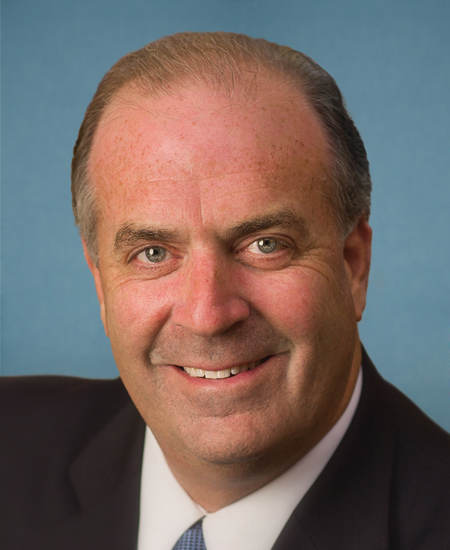
Photo of Daniel T. Kildee
D United States House · District 8 · Michigan

Rep. Daniel T. Kildee

Compare
Total votes
2,168
all sessions
Attendance
98%
46 missed
Near the chamber average
With party
97%
of cast votes
Near the chamber average
Bipartisan score
2%
crosses aisle rarely
Near the chamber average
Sponsored
981
bills & resolutions
Near the chamber average
Committees
0
assignments
981 bills and resolutions

Sponsored bills

Total
981
Primary
38
Co-sponsor
943
This page
981
matching current filters
Co-sponsor HR 2767
In committee · United States House · Co-sponsor
PEERS Act of 2021

Promoting Effective and Empowering Recovery Services in Medicare Act of 2021 or the PEERS Act of 2021 This bill specifies that peer support specialists may participate in the provision of behavioral health integration services with the supervision of a physician or other entity under Medicare. The bill defines peer support specialists as individuals who are recovering from a mental health or substance-use condition and have certain national or state credentials, as specified, to provide peer support services.

In committee Apr 23, 2021 1 co-sponsor
Co-sponsor HR 2828
In committee · United States House · Co-sponsor
DAIRY PRIDE Act

Defending Against Imitations and Replacements of Yogurt, milk, and cheese to Promote Regular Intake of Dairy Everyday Act or the DAIRY PRIDE Act This bill prohibits the sale of any food that uses the market name of a dairy product (such as milk , yogurt , or cream cheese ) unless the food (1) is the milk of a hooved animal, (2) is derived from such milk, or (3) contains such milk as a primary ingredient.

In committee Apr 23, 2021 1 co-sponsor
Co-sponsor HR 2810
In committee · United States House · Co-sponsor
Build America, Buy America Act

Build America, Buy America Act This bill requires federal infrastructure programs to provide for the use of materials produced in the United States. Each federal agency must submit to the Office of Management and Budget and to Congress a report that identifies each federal financial assistance program for infrastructure administered by the agency and (1) identify domestic content procurement preferences applicable to the assistance, (2) assess the applicability of such requirements, (3) provide details on any applicable domestic content procurement preference requirement, and (4) include a description of the type of infrastructure projects that receive funding under the program. Each agency shall ensure that none of the funds made available for such a program may be used for a project unless all of the iron, steel, and manufactured products used in the project are produced in the United States, subject to waivers where inconsistent with the public interest, where not produced in sufficient quantities or satisfactory quality, or where such inclusion will increase the cost of the project by more than 25%.

In committee Apr 23, 2021 1 co-sponsor
Co-sponsor HR 917
In committee · United States House · Co-sponsor
Kangaroo Protection Act of 2021

Kangaroo Protection Act of 2021 This bill establishes new federal crimes related to commercial activities involving kangaroos and kangaroo products. Specifically, the bill prohibits the import for commercial purposes, possession with intent to sell, or sale of a kangaroo; and the introduction into interstate commerce; manufacture for introduction into interstate commerce; sale, trade, or advertisement in interstate commerce; or offer to sell, or transport or distribute in interstate commerce, any kangaroo product. A violator is subject to civil and criminal penalties. Additionally, a kangaroo or kangaroo product used in a violation is subject to forfeiture.

In committee Apr 23, 2021 1 co-sponsor
Co-sponsor HR 959
In committee · United States House · Co-sponsor
Black Maternal Health Momnibus Act of 2021

Black Maternal Health Momnibus Act of 2021 This bill directs multi-agency efforts to improve maternal health, particularly among racial and ethnic minority groups, veterans, and other vulnerable populations. It also addresses maternal health issues related to COVID-19 (i.e., coronavirus disease 2019). The Department of Health and Human Services (HHS) and other specified departments must address the social determinants of maternal health, which include child care, housing, food security, transportation, and environmental conditions. The bill also extends to 24 months postpartum eligibility for the Special Supplemental Nutrition Program for Woman, Infants, and Children. Additionally, HHS and other agencies must take actions to grow and diversify the maternal health workforce. To increase access to maternity care, HHS and other agencies must (1) award specified grants; (2) test an alternative payment model for perinatal care under Medicaid and the Children's Health Insurance Program (CHIP); and (3) support training, technology, and telehealth initiatives. The bill also increases research and data collection on maternal morbidity and mortality, particularly among tribal populations and minority groups. The Bureau of Prisons and the Department of Justice must establish programs to improve maternity care for incarcerated populations. The Medicaid and CHIP Payment and Access Commission must also report on the impact of Medicaid ineligibility for pregnant and postpartum prisoners. Additionally, as a condition for certain grants, states and territories must have laws limiting the use of restraints on pregnant individuals in prisons. The bill also directs activities to mitigate adverse maternal health outcomes associated with climate change and to improve maternal vaccination rates.


In committee Apr 23, 2021 1 co-sponsor
Co-sponsor HR 2820
In committee · United States House · Co-sponsor
Growing Climate Solutions Act of 2021

Growing Climate Solutions Act of 2021 This bill authorizes the Department of Agriculture (USDA) to establish a voluntary Greenhouse Gas Technical Assistance Provider and Third-Party Verifier Certification Program to help reduce entry barriers into voluntary environmental credit markets for farmers, ranchers, and private forest landowners. A voluntary environmental credit market is a market through which agriculture and forestry credits may be bought or sold. Entities eligible to participate in the program are (1) providers of technical assistance to farmers, ranchers, or private forest landowners in carrying out sustainable land use management practices that prevent, reduce, or mitigate greenhouse gas emissions, or sequester carbon; or (2) third-party verifiers that conduct the verification of the processes described in the protocols for voluntary environmental credit markets. Among other requirements, USDA must publish (1) a list of protocols and qualifications for eligible entities; (2) information describing how entities may self-certify under the program; (3) information describing how entities may obtain the expertise to meet the protocols and qualifications; and (4) instructions and suggestions to assist farmers, ranchers, and private forest landowners in facilitating the development of agriculture or forestry credits and accessing voluntary environmental credit markets. USDA must also establish an advisory council to make recommendations regarding the list of protocols and qualifications, best practices, and voluntary environmental credit markets. The bill also rescinds certain funds provided in the American Rescue Plan Act of 2021 and makes the funds available for the certification program.

In committee Apr 22, 2021 1 co-sponsor
Co-sponsor HR 2817
In committee · United States House · Co-sponsor
Child Care for Working Families Act

Child Care for Working Families Act This bill provides funds and otherwise revises certain child care and early learning programs for low- to moderate-income families. Specifically, the bill provides funds for the Child Care and Development Block Grant program and reestablishes it as a child care and development assistance program. The bill also allocates program funds for states to provide services and supports to infants, toddlers, and children with disabilities. Further, the bill revises the program to require each state to create a tiered and transparent system for measuring the quality of child care providers, which must include evidence-based standards and payment rates that are based on a certain cost estimation model; ensure that copayments are based on a sliding scale and that no family receiving assistance pays more than 7% of its household income on child care; and use quality child care amounts for certain activities, such as increasing the supply of child care providers. The bill also provides funds and establishes grants for states to create preschool programs for low- to moderate-income children between the ages of three and five years. The Department of Health and Human Services (HHS) must make grants to Head Start agencies to provide children with access to full-school-year and full-school-day services, provide access to additional service hours for migrant and seasonal agencies, or enhance the quality of existing services. Finally, the bill requires, and provides funds for, HHS to assist Head Start agencies with ensuring their teachers and staff are paid a living wage.

In committee Apr 22, 2021 1 co-sponsor
Co-sponsor HR 2721
In committee Apr 22, 2021 1 co-sponsor
Co-sponsor HR 2731
In committee · United States House · Co-sponsor
Endless Frontier Act

Endless Frontier Act This bill establishes a Directorate for Technology and Innovation in the National Science Foundation (NSF) and establishes various programs and activities. The goals of the directorate shall be, among other things, the strengthening of U.S. leadership in critical technologies through basic research in key technology focus areas, such as artificial intelligence, high performance computing, and advanced manufacturing, and the commercialization of those technologies to businesses in the United States. The bill gives the NSF the authority to provide for the widest practicable and appropriate dissemination of information within the United States concerning the NSF’s activities and the results of those activities. The Office of Science and Technology Policy shall annually develop a strategy for the federal government to improve national competitiveness in science, research, and innovation to support the national security strategy. The Department of Commerce shall (1) establish a supply chain resiliency and crisis response program to address supply chain gaps and vulnerabilities in critical industries, (2) designate regional technology hubs to facilitate activities that support regional economic development that diffuses innovation around the United States, and (3) award grants to facilitate development and implementation of comprehensive regional technology strategies. The bill extends through FY2026 the Manufacturing USA Program and expands such program to support innovation and growth in domestic manufacturing.

In committee Apr 22, 2021 1 co-sponsor
Co-sponsor HR 1333
Passed · United States House · Co-sponsor
NO BAN Act

National Origin-Based Antidiscrimination for Nonimmigrants Act or the NO BAN Act This bill imposes limitations on the President's authority to suspend or restrict aliens from entering the United States. It also prohibits religious discrimination in various immigration-related decisions, such as whether to issue an immigrant or nonimmigrant visa, unless there is a statutory basis for such discrimination. The President may temporarily restrict the entry of any aliens or class of aliens after the Department of State determines that the restriction would address specific and credible facts that threaten U.S. interests such as security or public safety. The bill also imposes limitations on such restrictions, such as requiring the President, State Department, and the Department of Homeland Security (DHS) to (1) only issue a restriction when required to address a compelling government interest, and (2) narrowly tailor the suspension to use the least restrictive means to achieve such an interest. Before imposing a restriction, the State Department and DHS shall consult with Congress. The State Department and DHS shall report to Congress about the restriction within 48 hours of the restriction's imposition. If such a report is not made, the restriction shall immediately terminate. Individuals or entities present in the United States and unlawfully harmed by such a restriction may sue in federal court. DHS may suspend the entry of aliens traveling to the United States on a commercial airline that failed to comply with regulations related to detecting fraudulent travel documents.

Passed Apr 22, 2021 1 co-sponsor
Showing 841 to 850 of 981 bills
Previous 1 … 84 85 86 … 99 Next