

Bridging Agency Data Gaps and Ensuring Safety for Native Communities Act or the BADGES for Native Communities Act This bill revises federal policies and procedures related to information sharing, reporting, and investigating cases of missing, unidentified, or murdered Indians. Among other elements, the bill requires the Department of Justice to (1) establish a grant program for specified entities (e.g., tribes) to implement changes to enhance their responses to missing person cases and death investigations of interest to tribes, and (2) work with the Department of Health and Human Services to ensure that federal training resources and culturally appropriate mental health and wellness programs are available to tribal and Bureau of Indian Affairs (BIA) law enforcement officers experiencing occupational stress. The Department of the Interior must establish a five-year demonstration program for the purpose of conducting or adjudicating personnel background investigations for applicants for law enforcement positions in the BIA. The bill also requires the Government Accountability Office to conduct specified studies, including a study on the evidence collection, handling, and processing procedures and practices of federal law enforcement agencies.
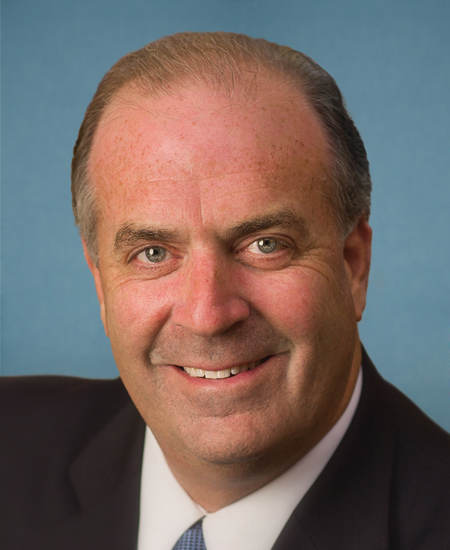
Rep. Daniel T. Kildee
Sponsored bills
Governing Unaccredited Representatives Defrauding VA Benefits Act or the GUARD VA Benefits Act This bill imposes criminal penalties and/or fines on individuals for directly or indirectly soliciting, contracting for, charging, or receiving any unauthorized fee or compensation with respect to the preparation, presentation, or prosecution of any claim for Department of Veterans Affairs benefits. The attempted commission of such offenses is also punishable by fine or imprisonment.
Parity for Tribal Law Enforcement Act This bill treats certain tribal law enforcement officers as federal law enforcement officers under specified circumstances. Specifically, the bill authorizes the law enforcement officers of any Indian tribe that has contracted or compacted any or all federal law enforcement functions through the Indian Self-Determination and Education Assistance Act to enforce federal law within the tribe's jurisdiction if those officers meet certain qualifications. These qualifications include completing training and passing an adjudicated background investigation. Further, the bill deems a tribal law enforcement officer who is acting under an authorized contract or compact as a federal law enforcement officer for the purposes of certain federal laws, including for injury and death, retirement, and pension benefits. The Department of the Interior must (1) develop procedures for credentialing tribal officers to confirm these officers meet minimum certification standards and training requirements for Indian country peace officers, and (2) promulgate guidance to implement this bill. The bill also requires the Department of Justice to coordinate and provide oversight for its functions and programs to ensure a coordinated approach for public safety in Indian communities.
Fighting Post-Traumatic Stress Disorder Act of 2022 This bill requires the Office of Community Oriented Policing Services within the Department of Justice to report on one or more proposed programs to make treatment or preventative care available to public safety officers and public safety telecommunicators for job-related post-traumatic stress disorder or acute stress disorder. The report must also include draft legislative language related to each proposed program, as well as the estimated cost for administering each proposed program.
Pathways to Policing Act This bill authorizes the Office of Community Oriented Policing Services within the Department of Justice to award grants to states, local governments, and law enforcement agencies to support recruitment of law enforcement officers. In particular, these grants may be used for (1) marketing and recruitment campaigns to encourage candidates to seek careers in law enforcement; and (2) developing, operating, or expanding Pathways to Policing programs (e.g., programs that facilitate entry into full-time law enforcement positions for certain candidates).
Border Security and Migrant Safety Act of 2022 This bill establishes within U.S. Customs and Border Protection a dedicated intelligence cell focused on sharing information related to (1) concentrated surges of migrants arriving at a U.S. land border, and (2) illicit smuggling and trafficking that may pose a threat to a U.S. land border. The bill also makes permanent the authority of the Department of Homeland Security to establish departmental joint task forces for various purposes.
Emergency Migration Response Act of 2022 This bill authorizes the President to declare an extraordinary migration event that is of such magnitude that the existing infrastructure, including Department of Homeland Security (DHS) staffing levels and relevant government resources, is unable to provide an appropriate government response. Such a declaration authorizes DHS to take various actions to respond to the migration event, such as (1) utilizing the capabilities of the Southwest Border Coordination Center, (2) reassigning U.S. Citizenship and Immigration Services asylum officers and interpreters to U.S. Customs and Border Protection border facilities, and (3) surging resources to process migrants in their countries of origin.
Retain COPS Act of 2022 This bill allows funds under the Community Oriented Policing Services grant program to be used for salary increases to retain law enforcement officers.
Latonya Reeves Freedom Act of 2022 This bill prohibits government entities and insurance providers from denying community-based services to individuals with disabilities that require long-term service or support that would enable such individuals to live in the community and lead an independent life. Specifically, these entities may not discriminate against such individuals in the provision of community-based services by such actions as imposing prohibited eligibility criteria, cost caps, or waiting lists or failing to provide a specific community-based service. Additionally, community-based services must be offered to individuals with such disabilities prior to institutionalization. Institutionalized individuals must be notified regularly of community-based alternatives. The bill requires the Department of Justice to issue regulations requiring government entities and insurance providers to offer community-based long-term services to individuals with such disabilities who would otherwise qualify for institutional placement. Government entities must ensure sufficient availability of affordable, accessible, and integrated housing that is not a disability-specific residential setting or a setting where services are tied to tenancy. Regulations shall also (1) require government entities and insurance providers to perform self-evaluation on current services, policies, and practices and concerning compliance with requirements of this bill; and (2) require government entities to submit a transition plan. The bill provides funds for FY2022 for the Department of Health and Human Services to provide technical assistance with respect to transition plans. The bill allows civil actions by individuals subjected to, or about to be subjected to, a violation of its requirements.
Election Worker and Polling Place Protection Act This bill addresses certain protections for election workers and polling places. In particular, the bill prohibits, with enhanced penalties for certain types of threats and harms (1) intimidation of poll watchers, election officials, and election agents, vendors, and contractors involving violence or threats of harm; and (2) physical damage to or threats to physically damage a polling place, tabulation center, or other election infrastructure.