

Maddy summaryHRES 132 is a non-binding House resolution expressing condolences for the over 36,000 earthquake victims in Türkiye and Syria and commending humanitarian response efforts. It specifically condemns the Assad regime for obstructing aid delivery and exploiting the disaster, urging the Biden administration to open all UN border crossings for aid and prevent U.S.-funded assistance from being diverted to Syria’s government. The resolution also calls for continued enforcement of the Caesar Syria Civilian Protection Act to protect Syrian civilians. As a symbolic resolution, it does not create new law but formally directs the administration’s diplomatic approach to the crisis.
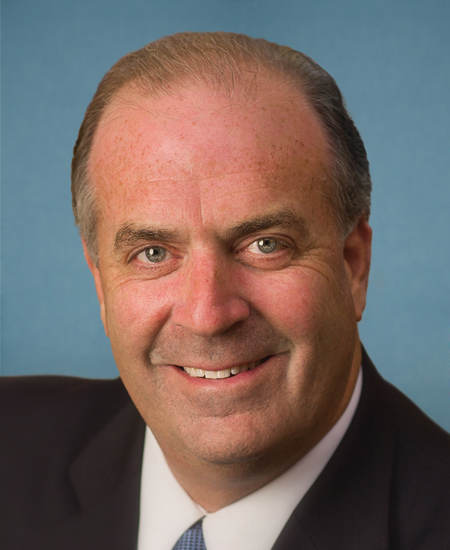
Rep. Daniel T. Kildee
Sponsored bills
Maddy summaryHRES 150 is a ceremonial House resolution honoring the late civil rights leader John Robert Lewis (1940-2020). It formally recognizes his lifelong commitment to nonviolent activism, including his leadership in the Civil Rights Movement, the 1965 Selma voting rights march ("Bloody Sunday"), and his 30+ years serving as a U.S. Representative from Georgia. The resolution specifically commends his "towering achievements in the nonviolent struggle for civil rights" and his dedication to building the "Beloved Community" through justice and equality. As a commemorative resolution, it has no policy impact but serves as an official tribute to Lewis's legacy for the public and Congress.
Safe Guns, Safe Kids Act This bill establishes federal statutory requirements to regulate the storage of firearms on residential premises. Specifically, the bill requires firearms on residential premises to be safely stored if (1) a minor is reasonably likely to gain access without permission, and (2) a minor obtains the firearm and uses it in a crime or causes injury or death to themselves or another individual. An individual who violates the requirements is subject to criminal penalties.
Maddy summaryThe PREP Civics and Government Act (HR 1133) amends the National Foundation on the Arts and the Humanities Act of 1965 to explicitly include "civics and government" as a subject within the humanities. This change allows the National Foundation on the Arts and the Humanities to fund educational programs focused on civics and government through existing grant programs. The bill directly affects the Foundation’s funding priorities and organizations applying for humanities grants, such as schools, museums, and community groups offering civics education. It does not create new funding but expands eligibility for current humanities grants to cover civics and government content.
Boundary Waters Wilderness Protection and Pollution Prevention Act This bill withdraws approximately 234,328 acres of federal land and waters in a specified area in the Rainy River Watershed of Superior National Forest in Minnesota from entry, appropriation, and disposal under the public land laws; location, entry, and patent under the mining laws; and operation of the mineral leasing, mineral materials, and geothermal leasing laws. The area is adjacent to the Boundary Waters Canoe Area Wilderness and the Boundary Waters Canoe Area Wilderness Mining Protection Area. Land or interest in land within such area that is acquired by the United States shall be immediately withdrawn in accordance with this bill. The Forest Service is authorized to permit the removal of sand, granite, iron ore, and taconite from national forest system lands within such area if the removal is not detrimental to the water quality, air quality, and health of forest habitat within the Rainy River Watershed.
Maddy summaryHR 1088, the Shirley Chisholm Congressional Gold Medal Act, authorizes a posthumous Congressional Gold Medal to honor Congresswoman Shirley Chisholm, the first African-American woman elected to Congress (1968) and the first Black candidate for a major party's presidential nomination (1972). The bill directs the Treasury Secretary to design and strike a gold medal featuring Chisholm's image, which will be presented by Congress and then permanently displayed at the Smithsonian Institution. Duplicate bronze medals may be sold to the public to cover production costs, with proceeds deposited into the U.S. Mint fund. This bill commemorates Chisholm's legacy and achievements without creating new laws or affecting any current policies.
Maddy summaryThe HELP Copays Act (HR 830) changes how health insurance plans calculate patient cost-sharing. It requires that payments made by third parties (like pharmacies, charities, or discount programs) toward medical costs count toward a patient's deductible, copay, or out-of-pocket limit. This directly affects insured individuals who receive financial assistance, discounts, or product vouchers for healthcare expenses. The law ensures these external payments reduce the patient's actual out-of-pocket costs more quickly, aligning with existing Affordable Care Act and Public Health Service Act requirements.
Maddy summaryThis bill expands health care coverage under TRICARE for military dependents. It eliminates a separate premium for young adults aged 21-26 enrolled in the TRICARE Young Adult Program, meaning they will no longer pay an extra fee for coverage. The bill also removes an eligibility restriction that previously limited coverage for some dependents in this age group. These changes directly affect military service members' adult children and spouses who rely on TRICARE Young Adult coverage. The policy update simplifies enrollment and reduces out-of-pocket costs for these beneficiaries.
Maddy summaryThis bill authorizes a single Congressional Gold Medal to honor all U.S. Army Dustoff crews who served during the Vietnam War (1962-1973). It recognizes their critical role in evacuating nearly 900,000 wounded personnel, including U.S., South Vietnamese, and allied forces, under extreme combat conditions. The medal, designed with input from the Secretary of Defense, will be presented to the U.S. Army Medical Department Museum for permanent display. Duplicate bronze medals may be sold to cover costs, but the primary action is the commemorative recognition of these crews' service.
Maddy summaryThis concurrent resolution expresses Congress's view that all government support for sugar production and exports by major global producers (like Brazil, India, the EU, and Mexico) should be eliminated. It directs the President to work toward ending these subsidies and report to Congress on progress, followed by proposals for U.S. sugar policy reforms. The resolution does not create new laws but urges diplomatic action to address what Congress describes as market-distorting subsidies affecting the global sugar market. It directly concerns international sugar trade policies and U.S. agricultural competitiveness.