

EITC Age Parity Act of 2023 This bill modifies the age requirement for the earned income credit. Under current law, an individual taxpayer must have attained age 25, but not age 65, to claim the credit. This bill reduces the base year to age 18 and eliminates the age 65 cap on the credit.
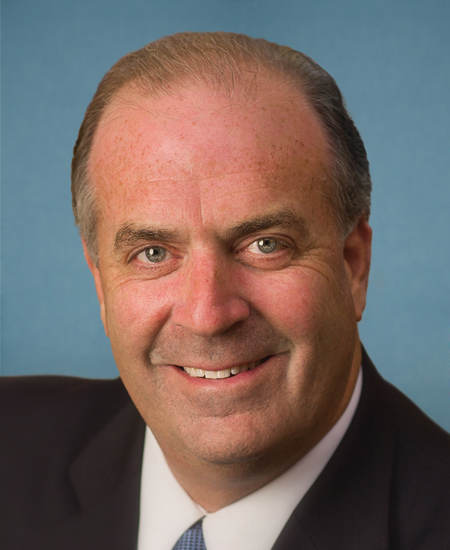
Rep. Daniel T. Kildee
Sponsored bills
Maddy summaryThis bill requires federal agencies to mandate that auto manufacturers bidding on vehicle assembly contracts disclose detailed workforce information for each plant involved. Specifically, contractors must provide average and range of hourly wages, temporary worker counts, and any OSHA or National Labor Relations Act violations at each manufacturing location. It also requires written agency permission - and additional disclosures - if a contractor seeks to shift production to a new plant, with notification to affected labor unions. The law directly affects auto manufacturers competing for federal vehicle assembly contracts and aims to increase transparency around labor practices.
Maddy summaryThis bill amends the Higher Education Act to require all U.S. colleges and universities receiving federal financial aid to create detailed anti-harassment policies covering physical, online, and institution-sponsored settings. It mandates policies prohibiting harassment based on race, sex (including sexual orientation and gender identity), disability, religion, and other protected characteristics, including harassment via institutional email, computers, or electronic messaging. The bill also establishes a $50 million annual grant program to fund colleges developing prevention programs, victim support services, and training for students and staff on recognizing and addressing harassment. These policies and grants must comply with existing civil rights laws like Title IX but add specific requirements for reporting and prevention.
Maddy summaryThis bill provides federal retirement benefits to educators at tribal schools. It makes employees of tribally controlled schools eligible for the same federal retirement pension (FERS) and Thrift Savings Plan (TSP) as other federal employees. The Bureau of Indian Affairs will pay the government's share of these contributions. This directly affects educators working at tribal schools operating under specific federal contracts or grants, such as those under the Indian Self-Determination Act or Tribally Controlled Schools Act.
Maddy summaryHR 5566, the *Supreme Court Tenure Establishment and Retirement Modernization Act of 2023*, establishes an 18-year term limit for all Supreme Court justices. It requires the President to nominate one new justice every two years (during first and third years after presidential elections), with Senate confirmation within 90 days, and prohibits lifetime appointments. Current justices are automatically retired in order of service length as new justices are appointed, while retired justices may temporarily fill vacancies through a randomized process. The bill directly affects all sitting and future Supreme Court justices by restructuring appointments and retirement timelines.
Maddy summaryThe Schedules That Work Act (HR 5563) requires employers in retail, food service, cleaning, hospitality, and warehouse sectors to provide workers with at least 14 days' advance notice of their work schedules and to pay predictability pay for last-minute schedule changes. It allows employees to request schedule modifications for caregiving, health conditions, education, or second jobs, with employers required to grant such requests unless they have a bona fide business reason for denial. The bill also prohibits scheduling shifts less than 11 hours apart without employee consent and mandates employers to provide estimates of monthly work hours for the following year. These provisions aim to address the widespread problem of unpredictable schedules that disproportionately impact low-wage workers, particularly women and workers of color, who often lack control over their work hours.
Maddy summaryThe Better CARE for Animals Act of 2023 amends the Animal Welfare Act to strengthen enforcement of animal welfare standards. It gives the Attorney General authority to bring civil cases for violations, including seeking penalties up to $10,000 per day per violation and injunctions to remove or relocate animals. The bill also requires the Secretary of Agriculture and Attorney General to coordinate through a new Memorandum of Understanding, focusing on repeat violators. These changes directly affect dealers, exhibitors, and enforcement agencies by expanding civil enforcement tools and clarifying jurisdiction over rule violations.
Maddy summaryHR 4845, the Food Secure Strikers Act of 2023, amends the Food and Nutrition Act to remove a restriction that previously disqualified workers from the Supplemental Nutrition Assistance Program (SNAP) if they were on strike. The bill changes eligibility rules so that striking workers are no longer automatically ineligible for SNAP benefits solely because they are participating in a labor strike. This change directly affects workers involved in strikes who rely on SNAP for food assistance, ensuring they can access benefits during labor disputes. The key provision removes specific language from Section 6(d) of the Food and Nutrition Act that had barred strike participants from SNAP enrollment.
Maddy summaryThe John R. Lewis Voting Rights Advancement Act of 2023 would strengthen the Voting Rights Act of 1965 by updating the criteria for which states and localities must obtain federal preclearance before changing voting practices. It would establish new standards for proving vote dilution and vote denial by requiring courts to consider historical discrimination, racial polarization in voting, and whether voting practices disproportionately burden minority voters. The bill would also require states and localities to provide public notice of voting changes and share demographic data about polling locations. These changes would primarily affect jurisdictions with a history of voting rights violations, aiming to prevent discriminatory voting practices before they take effect.
Maddy summaryHRES 691 is a symbolic resolution designating September 17-23, 2023, as "Community School Coordinators Appreciation Week." It does not create new laws or affect any policies; instead, it formally recognizes community school coordinators who help build partnerships between schools and communities. The resolution thanks these coordinators for their work supporting students and families, and encourages public participation in events during that week. This is purely a gesture of appreciation, not a policy change.