

Maddy summaryHR 738, the Universal Right To Vote by Mail Act of 2025, would require all states to allow any voter to request and cast a mail-in ballot for federal elections without needing to provide a reason, directly affecting all voters in states holding federal elections. The bill prohibits states from adding extra conditions beyond ballot request and return deadlines, and mandates that election officials must notify voters of signature discrepancies or missing information within one business day, giving them three days to correct errors before ballots are rejected. It explicitly preserves states' ability to maintain in-person polling places and applies to federal elections starting in 2026. The bill cites findings that universal mail-in voting increases participation, reduces poll wait times, and has no proven fraud risk, while eliminating requirements for personal justification or notarization.
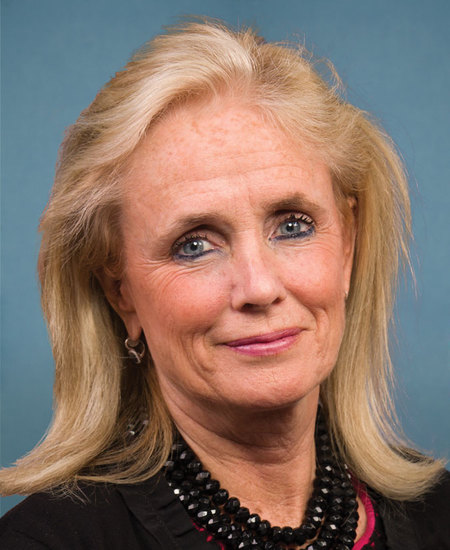
Rep. Debbie Dingell
Sponsored bills
Maddy summaryHRES 61 is a symbolic resolution designating January as "Muslim-American Heritage Month" to celebrate the contributions of Muslim Americans to U.S. society. It does not create new laws or affect specific groups legally, but formally recognizes their historical and cultural impact through non-binding support. The resolution highlights Muslim Americans' roles in fields like business, science, military service, and the arts, while acknowledging challenges like religious discrimination. It urges the public to observe the month with ceremonies celebrating their heritage.
Maddy summaryHR 712, the Child and Animal Abuse Detection and Reporting Act, amends federal law to require the national clearinghouse tracking child abuse and neglect data to also collect information on animal abuse incidents connected to child abuse cases. Specifically, it expands the existing data collection framework to include "the incidence of any such cases related to animal abuse," such as when a family's pets are harmed during a child abuse situation. This means state child welfare agencies reporting to the federal clearinghouse must now include animal abuse data tied to child abuse incidents, without requiring separate animal cruelty reports. The bill directly affects the federal agency managing the clearinghouse (within the Department of Health and Human Services) and state child welfare systems that provide this data.
Maddy summaryHR 646, the Build Housing with Care Act of 2025, establishes a HUD grant program to fund the co-location of affordable housing developments with child care facilities. It directly affects housing developers, child care providers, and residents of affordable housing by requiring grants to support projects in "child care deserts" (areas with severe child care shortages), prioritizing low-income, rural, or Head Start-serving providers. Key provisions mandate that projects must not evict residents, include resident engagement plans, and ensure child care providers serve low-income families or dual-language learners. The bill authorizes $100 million annually (2025-2030) and requires annual reports tracking child care slots created, resident usage, and demographic data.
Maddy summaryHR 609, the Assuring Medicare's Promise Act of 2025, directs revenue from the net investment income tax (currently applied to investment income) into the Medicare Hospital Insurance Trust Fund. It expands the tax base to include certain business income for high-income individuals with modified adjusted gross income exceeding $400,000 ($500,000 for joint filers), with a phase-in to limit the tax increase. The bill ensures this tax revenue directly supports Medicare's hospital insurance program, applying to taxable years beginning after December 31, 2025. The changes do not alter the tax rate but broaden the income types subject to the tax for high earners.
Maddy summaryThe Close the Medigap Act of 2025 would prohibit Medigap insurance issuers from denying coverage or charging higher premiums based on health status, pre-existing conditions, genetic information, or other factors. It requires insurers to spend a minimum percentage of premiums on health care claims and improves the Medicare Plan Finder website to provide clearer information about coverage options, out-of-pocket costs, and guaranteed issue requirements. The bill applies to Medigap policies effective January 1, 2026, with full implementation by 2031, and requires Medigap brokers to disclose payments they receive from insurers. These changes would directly affect Medicare beneficiaries, particularly those with pre-existing conditions who have historically faced barriers to obtaining affordable supplemental coverage.
Boundary Waters Wilderness Protection and Pollution Prevention Act This bill protects and preserves approximately 225,504 acres of federal land and waters in a specified area in the Rainy River Watershed of Superior National Forest in Minnesota from certain mining, such as sulfide-ore copper mining. (The area is upstream from the Boundary Waters Canoe Area Wilderness.) Specifically, the bill withdraws those acres from entry, appropriation, and disposal under the public land laws; location, entry, and patent under the mining laws; and operation of the mineral leasing, mineral materials, and geothermal leasing laws. However, the Forest Service is authorized to permit the removal of sand, granite, iron ore, and taconite from national forest system lands within such area if the removal is not detrimental to the water quality, air quality, and health of forest habitat within the Rainy River Watershed. Land or interest in land within such area that is acquired by the United States must be immediately withdrawn in accordance with this bill.
Maddy summaryHR 485, the Muhammad Ali Congressional Gold Medal Act, authorizes Congress to award a gold medal in recognition of Muhammad Ali's lifetime contributions to sports, civil rights, and humanitarian causes. The bill directs the Treasury Secretary to strike the medal and present it to Ali's widow, Lonnie Ali, following his death in 2016. It also permits the sale of bronze duplicates to cover costs, with proceeds going to the U.S. Mint. This is a commemorative measure with no policy impact, solely honoring Ali's legacy through a symbolic medal.
Maddy summaryHR 500, the Medicare Hearing Aid Coverage Act of 2025, removes Medicare's longstanding exclusion of hearing aids and related examinations from coverage. This change would directly affect Medicare beneficiaries with hearing loss by allowing them to receive coverage for hearing aids starting January 1, 2026. The bill amends the Social Security Act to eliminate the specific exclusion, making hearing aid coverage a standard Medicare benefit. Additionally, it requires the Government Accountability Office (GAO) to study existing hearing aid programs and submit a report with recommendations to Congress within 18 months of the effective date.
Maddy summaryHR 429, the Rosie the Riveter Commemorative Coin Act, authorizes the U.S. Treasury to mint and sell three types of commemorative coins ($5 gold, $1 silver, and half-dollar) to honor women who worked on the U.S. home front during World War II. The coins will be sold at face value plus surcharges ($35 for gold, $10 for silver, $5 for half-dollar), with all surcharge revenue directed to the Rosie the Riveter Trust to support the Rosie the Riveter WWII Home Front National Historical Park and related educational programs. The coins must be issued between January 1, 2028, and December 31, 2028, in specified quantities (50,000 gold, 400,000 silver, 750,000 half-dollar), with all costs covered by the sales revenue to avoid net government expense.