

Maddy summaryHRES 98 is a symbolic resolution designating February 4, 2025, as "National Cancer Prevention Day." It expresses the House's support for raising public awareness about cancer prevention efforts, emphasizing the importance of reducing cancer risks to improve health outcomes. The resolution recognizes cancer's significant impact on families and communities while highlighting ongoing initiatives like the Cancer Moonshot. This procedural resolution does not create new laws or allocate funding - it serves only to formally acknowledge and promote awareness of cancer prevention.
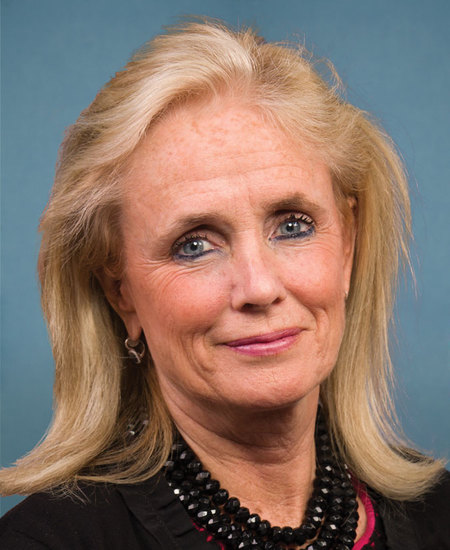
Rep. Debbie Dingell
Sponsored bills
This resolution supports federal investment in public K-12 schools, affirms that the Department of Education (ED) plays a vital role in the public education system, and states that public education funding should not be diverted (e.g., through the use of vouchers) to privately run K-12 schools. The resolution also rejects any claim that the executive branch has the legal authority to (1) dismantle or relocate ED or any of its major offices; or (2) reduce federal funding for public education, block federal grants for education, or transfer funding burdens for education to state and local governments.
Stop the Wait Act of 2025 This bill phases out the initial waiting period for Social Security Disability Insurance (SSDI) benefits and eliminates the waiting period for certain disabled individuals to become eligible for Medicare. Under current law, individuals generally must wait five months after the onset of disability to begin receiving SSDI benefits. The bill would gradually reduce this waiting period before eliminating it entirely in the year 2030. Further, the bill would eliminate the 24-month waiting period for certain disabled workers and other individuals to become eligible for Medicare. Under current law, individuals under the age of 65 may generally enroll in Medicare after they have been eligible for SSDI or Social Security child’s, widow’s, or widower’s benefits by reason of disability for 24 months. The bill would eliminate this waiting period for individuals for whom the annual cost of certain medical insurance would exceed a specified percentage of their household income (i.e., those who cannot afford minimum essential coverage). Medicare eligibility for these individuals must be available retroactively to the first month that an individual qualified for SSDI or Social Security child’s, widow’s, or widower’s benefits by reason of disability.
Maddy summaryThis bill reauthorizes the Dr. Lorna Breen Health Care Provider Protection Act, extending mental health support programs for healthcare professionals through 2030 (previously ending in 2024). It requires funded programs to specifically address reducing administrative burdens on healthcare workers while continuing to promote access to mental health and substance use disorder services. The legislation directly affects healthcare providers across the U.S. who may access these federally supported resources. Key provisions include extending funding periods and mandating that grant recipients focus on easing workplace administrative tasks, alongside maintaining existing awareness initiatives. The bill does not create new programs but continues and refines existing mental health support for the healthcare workforce.
Maddy summaryThe HOPE Act of 2025 creates tax-advantaged "HOPE Accounts" for individuals to pay qualified medical expenses. These accounts allow tax-free savings with annual contribution limits of $4,000 for self-only coverage or $8,000 for family coverage, and employers can contribute up to 50% of these limits. Distributions for qualified medical expenses are tax-free, but amounts used for non-medical purposes are taxed at ordinary rates plus a 30% penalty. The bill would take effect for taxable years beginning after December 31, 2025, and applies to individuals with minimum essential health coverage who don't participate in other similar accounts like HSAs or FSAs.
National Origin-Based Antidiscrimination for Nonimmigrants Act or the NO BAN Act This bill imposes limitations on the President's authority to suspend or restrict aliens from entering the United States. It also prohibits religious discrimination in various immigration-related decisions, such as whether to issue an immigrant or nonimmigrant visa, unless there is a statutory basis for such discrimination. The President may temporarily restrict the entry of any aliens or class of aliens after the Department of State determines that the restriction would address specific and credible facts that threaten U.S. interests such as public safety. The bill also imposes limitations on such restrictions, such as requiring the President, State Department, and the Department of Homeland Security (DHS) to (1) only issue a restriction when required to address a compelling government interest, and (2) narrowly tailor the suspension to use the least restrictive means to achieve such an interest. Before imposing a restriction, the State Department and DHS shall consult with Congress. The State Department and DHS shall report to Congress about the restriction within 48 hours of the restriction's imposition. If such a report is not made, the restriction shall immediately terminate. Individuals or entities present in the United States and unlawfully harmed by such a restriction may sue in federal court. The bill transfers the authority to suspend the entry of aliens traveling to the United States on a commercial airline that failed to comply with regulations related to detecting fraudulent travel documents from the Department of Justice to DHS.
This bill provides for the presentation of a Congressional Gold Medal to the Freedom Riders, in recognition of their contribution to civil rights by fighting for equality in interstate travel.
Maddy summaryHR 964, the Rosa Parks Day Act, would designate Rosa Parks Day as a legal public holiday for federal employees and institutions. The bill amends Title 5 of the U.S. Code to add "Rosa Parks Day" to the list of recognized federal holidays, following Thanksgiving Day. This change would establish a new annual observance on the day designated by the President, requiring federal offices to close and employees to receive paid time off. The bill directly affects federal operations and employees, creating a new standard for federal holiday observance.
Maddy summaryThis bill requires the National Suicide Prevention Lifeline (9-8-8 hotline) program to address cybersecurity vulnerabilities and report incidents. It mandates that the program’s network administrator and participating local crisis centers must report identified security weaknesses or cyber incidents to federal officials within a reasonable time, while protecting user privacy. The law also requires a study by the Comptroller General within 180 days to evaluate cybersecurity risks specific to the 9-8-8 system. These changes directly affect the federally funded 9-8-8 hotline program and its local crisis centers.
Maddy summaryHJRES 32 is a symbolic congressional resolution expressing support for designating February 3-7, 2025, as "National School Counseling Week." It does not create new laws or funding but honors school counselors' roles in supporting students' academic, social-emotional, and career development. The resolution encourages public recognition of counselors' contributions, including helping students navigate challenges like mental health, bullying, and college readiness. It specifically references the American School Counselor Association's designation of this week and aims to raise awareness about the importance of school counseling services. The resolution has no binding effect on schools or budgets.