

Maddy summaryHR 2033, the Military Spouse Hiring Act, expands the Work Opportunity Tax Credit to include spouses of active-duty military personnel. It adds "qualified military spouse" as an eligible category for the tax credit, meaning employers who hire such spouses can claim the credit. A "qualified military spouse" is defined as someone certified by a local agency as married to an active-duty service member at the time of hire. The credit applies to hires occurring after the bill's enactment date. This directly affects military spouses seeking employment and employers hiring them, providing a tax incentive to encourage their hiring.
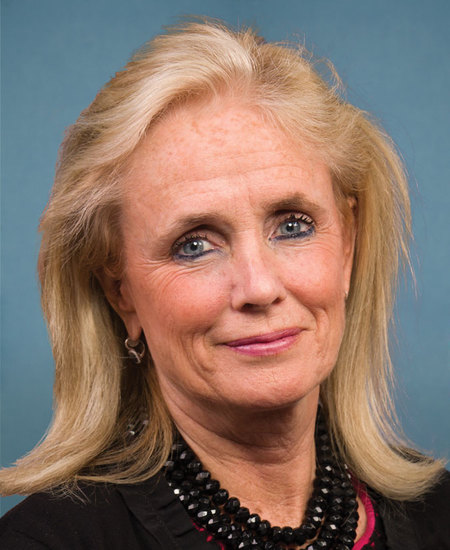
Rep. Debbie Dingell
Sponsored bills
American Teacher Act This bill establishes grants to increase the minimum salary of public elementary and secondary school teachers. It also authorizes a national campaign regarding the value of the teaching profession. First, the bill directs the Department of Education (ED) to award four-year grants to state educational agencies (SEAs) and, through them, subgrants to local educational agencies to establish a minimum annual salary of $60,000 (to be adjusted annually for inflation) for these teachers. Second, the bill directs ED to award grants to eligible SEAs to provide cost-of-living adjustments to the annual base salary of teachers. Finally, the bill authorizes ED to carry out a national campaign to (1) increase awareness about the importance of teachers and the value of the teaching profession, (2) encourage secondary school and college students to consider teaching as a professional career, and (3) diversify the pool of individuals who enter the teaching profession.
Maddy summaryThis bill mandates that all new $20 U.S. currency printed after December 31, 2028, must prominently feature Harriet Tubman's portrait on the front. It requires the Treasury Secretary to release a preliminary design for this updated $20 bill by December 31, 2026. The bill directly affects the U.S. Treasury Department, codifying a 2016 announcement to feature Tubman on the $20 note (replacing Andrew Jackson) and ending a historical pattern where no woman had appeared on U.S. paper money.
Maddy summaryThis bill (HR 1988) provides unemployment benefits eligibility for certain federal workers and military members during government shutdowns. It deems eligible employees - such as military personnel, NOAA Commissioned Corps members, and excepted civilian workers performing emergency duties - as "totally separated from federal service" during funding gaps. This allows them to access unemployment benefits immediately, without waiting periods, for weeks of unemployment starting March 14, 2025. The bill directly affects federal employees who remain on duty but are unpaid due to shutdowns.
Maddy summaryThis bill prohibits the non-consensual sharing of digitally manipulated intimate images (deepfakes) of identifiable people. It creates a civil right for victims to sue individuals who distribute such images without consent, allowing claims for actual damages, $150,000 in liquidated damages, or punitive damages, plus attorney fees. Criminal penalties up to 10 years in prison apply for malicious disclosure intended to harass, harm reputation, or facilitate violence. Exceptions include disclosures to law enforcement for investigations, legitimate public interest matters (excluding mere public figure status), or efforts to assist the victim. The law specifically defines "intimate digital depictions" to include explicit body parts, sexual fluids, or sexual conduct in manipulated images.
Maddy summaryHR 1954, the "Do No Harm Act," amends the Religious Freedom Restoration Act (RFRA) to clarify that RFRA does not override specific federal laws protecting against harm. It explicitly exempts provisions related to anti-discrimination (like the Civil Rights Act), workplace protections (wages, leave, collective activity), child safety, and healthcare access from RFRA's requirements. The bill ensures RFRA cannot be used to challenge government programs or contracts that provide these essential protections. It also clarifies that RFRA applies only to disputes involving government as a party, not private disputes between individuals. This change preserves existing legal safeguards while modifying RFRA's scope.
Maddy summaryThis symbolic resolution (HRES 194) designates March 6, 2025, as "Great Lakes Day" to honor the Great Lakes region. It does not create new laws or funding but expresses non-binding support for the designation and recognizes the lakes' importance to the region's environment, economy (serving 40 million people, supporting $3.1 trillion in GDP), and cultural heritage. The resolution calls for continued preservation efforts through existing programs like the Great Lakes Restoration Initiative. It directly affects the eight Great Lakes-bordering states (MI, WI, MN, OH, IN, IL, PA, NY) and their residents.
Maddy summaryHR 1892 establishes a federal grant program to fund wireless electric vehicle (EV) charging infrastructure across the U.S. The program, authorized with $250 million, provides competitive grants (capped at $25 million per project) to states, transit agencies, and other eligible entities to build or improve wireless charging systems for vehicles - prioritizing fleets (like buses and trucks), underserved communities, and projects that reduce range anxiety. Grants cover up to 80% of project costs, require adherence to Davis-Bacon wage standards, and mandate Buy America rules for equipment. This directly affects local governments and transit providers implementing EV charging networks while aiming to expand EV adoption through accessible, grid-friendly infrastructure.
Protecting Americans’ Social Security Data Act This bill prohibits political appointees and special government employees from accessing Social Security data systems that contain personally identifiable information about Social Security beneficiaries. Specifically, political appointees and special government employees may not access systems maintained by the Social Security Administration (SSA) that issue or record Social Security account numbers, that are used to determine eligibility for or to pay Social Security benefits, or that otherwise contain personally identifiable information about individuals receiving or applying for benefits. The bill also establishes a civil right of action for an individual whose information was negligently accessed or disclosed in violation of these provisions. The individual may bring suit against the United States if the violator was a U.S. employee or officer, or against the violator if they were not a U.S. employee or officer. Such a claim must be brought within two years of the affected individual’s discovery of the violation. Upon a finding of liability, defendants are liable for specified monetary damages. If an individual is criminally charged or subject to proposed disciplinary or adverse action by a federal or state agency for having accessed or disclosed information in violation of these provisions, SSA must notify the individual whose information was accessed or disclosed of the violation as soon as practicable. Finally, the bill requires the SSA Office of the Inspector General to investigate and report to Congress on any unauthorized access to or disclosure of information in a beneficiary data system.
Maddy summaryHR 1876, the "Keeping Our Field Offices Open Act," prevents the Social Security Administration (SSA) from closing, consolidating, or restricting access to its field offices, hearing offices, or resident stations for 180 days after enactment, with exceptions for emergencies. The bill requires the SSA Commissioner to submit a detailed report to Congress by January 2029, analyzing closure criteria, transportation burdens for elderly/disabled users, cost-benefit impacts, and plans to replace lost services. For future closures, it mandates 120 days of public notice, two public hearings, and a final report to Congress, while ensuring total office numbers don’t fall below 2025 levels. This directly affects SSA field offices, their users (including elderly and disabled individuals), and employees. The bill’s key mechanism is a procedural safeguard to ensure transparency and minimize disruption before any office changes take effect.