

Maddy summaryThe Fair Warning Act of 2025 requires employers with 50 or more employees (or $2 million+ annual payroll) to provide 90 days' written notice before site closings or mass layoffs. This notice must include details about the layoff, recall dates, available benefits, and job opportunities at other locations, and must be provided to affected employees, state workforce agencies, and local governments. Exceptions include natural disasters, terrorist attacks, public health emergencies, and situations where new business or financing would be jeopardized by the notice. The bill creates a public database tracking all notices and increases penalties for non-compliance, including liquidated damages equal to 30 days of back pay.
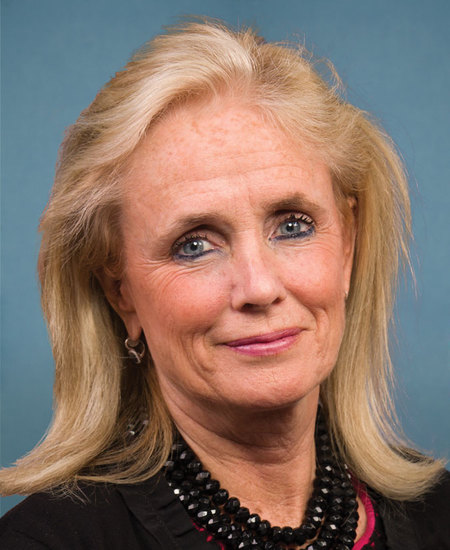
Rep. Debbie Dingell
Sponsored bills
Keep Air Travel Safe Act This bill provides continuing appropriations for the Transportation Security Administration (TSA) during any period in which there is a lapse in appropriations for TSA. It also requires the continuing appropriations to be funded using certain unobligated funds that were provided to U.S. Immigration and Customs Enforcement by the One Big Beautiful Bill Act. The bill provides the appropriations for TSA to continue all programs, projects, or activities (including the costs of direct loans and loan guarantees) that were funded in the preceding fiscal year. The appropriations provided by this bill are available from the first day of a lapse in appropriations for TSA until the earlier of the date on which the applicable regular appropriations bill for the fiscal year becomes law or a joint resolution making continuing appropriations becomes law, or the date that is 180 days after the first day of a lapse in appropriations.
Maddy summaryThis bill makes federal funding for the WIC program mandatory by requiring Congress to appropriate necessary funds annually for fiscal year 2026 and each subsequent year. It removes discretionary language from WIC funding requirements and clarifies that eligible participants must be served without participation limits. The bill directly affects low-income pregnant women, new mothers, and young children who rely on WIC for nutrition assistance, ensuring continued access to critical food, health, and education services.
Maddy summaryHR 5705 requires the federal government to reimburse state agencies for funds they use to maintain participation in the WIC program during a government shutdown. It directly affects states that cover WIC costs using their own money when federal funding lapses. The bill establishes a process where states can seek reimbursement from the federal government after the shutdown ends. This ensures states aren’t burdened with costs for a federal funding gap that impacts nutrition assistance for women, infants, and children.
Maddy summaryThis concurrent resolution designates September 2025 as "Gynecologic Cancers Awareness Month" to promote public education about cervical, ovarian, endometrial, vaginal, and vulvar cancers. It supports raising awareness of these cancers - highlighting that 118,920 new cases and 34,630 deaths occur annually - with a focus on early detection, prevention (like cervical cancer vaccines), and research. The resolution urges the public to learn about risk factors and encourages efforts to improve health outcomes, but does not create new laws or funding. It is a symbolic measure intended to align with existing awareness efforts by groups like the Foundation for Women’s Cancer.
Maddy summaryHRES 785 is a non-binding resolution expressing support for designating October 4-10, 2025, as "World Space Week," an annual event established by the UN in 1999 to celebrate space science. It encourages U.S. schools, agencies, and the public to participate in events focused on space technology's contributions to education, sustainable living in space (via the 2025 theme "Living in Space"), and economic innovation. The resolution does not create new laws or funding but formally recognizes the educational and collaborative goals of World Space Week. It aims to boost public awareness of space science's role in daily life and inspire student engagement in STEM fields.
Maddy summaryThis bill requires Medicare, Medicaid, CHIP, and federal employee health plans to cover medically necessary specialized foods, vitamins, and amino acids for people with specific digestive and metabolic conditions. It defines "medically necessary food" as prescribed formulas, vitamins, and amino acids designed for conditions like inherited metabolic disorders, inflammatory bowel disease, and severe food allergies that cannot be managed through regular diet. The bill mandates coverage of these items and necessary equipment for administration (like feeding tubes), with Medicare covering 80% of costs. This would directly benefit thousands of patients who rely on these specialized treatments to avoid serious health complications like malnutrition, hospitalizations, and developmental issues.
Maddy summaryThis bill adds Medicare coverage for multi-cancer early detection screening tests (blood or biological tests analyzing cell-free DNA) starting January 1, 2028. It directly affects Medicare beneficiaries aged 68 and older (starting in 2028, with the age limit increasing by 1 year annually), requiring tests to be FDA-cleared and deemed reasonable/necessary by the Secretary for early cancer detection across multiple organ sites. Payment will initially match current stool DNA test rates before 2031, then shift to a lower rate or new payment system after 2031, with limits preventing more than one test per year. The bill explicitly states it does not alter coverage for existing cancer screenings like breast, colorectal, or prostate cancer tests.
Fair Pay for Federal Contractors Act of 2025 This bill provides back pay to employees of federal contractors who lost pay due to a lapse in appropriations (i.e., government shutdown) in FY2026. Specifically, the bill provides appropriations for federal agencies that are subject to a lapse in appropriations in FY2026 to adjust the price of contracts to compensate federal contractors for providing back pay to employees who were affected by the lapse in appropriations. The agencies must adjust the price of any contract for which the contractor stopped, suspended, delayed, or interrupted all or part of the work under the contract due to the lapse in appropriations. The price adjustment must compensate the contractor for reasonable costs incurred to (1) compensate employees who were furloughed or laid off, were not working, or experienced a reduction of hours or compensation due to the lapse in appropriations; or (2) restore paid leave taken by employees during the lapse in appropriations if the contractor required or permitted employees to use paid leave as a result of the lapse in appropriations. The maximum amount of weekly compensation of an employee for which an adjustment may be made under this bill may not exceed the lesser of (1) the employee's actual weekly compensation, or (2) $1,442 (or a lesser amount pro-rated for an employee who works less than 40 hours per week). The bill also requires the Office of Federal Procurement Policy to submit a report to Congress on the adjustments made under this bill.
Physical Therapist Workforce and Patient Access Act of 2025 This bill expands certain health professional programs and Medicare covered services to include physical therapists. Specifically, the bill expands the National Health Service Corps to include physical therapists and provides for the designation of specific health professional target areas for physical therapists under the program. The bill also expands covered services of rural health clinics and federally qualified health centers under Medicare to include physical therapy services. The bill increases funds for FY2025 for the corps and requires a certain amount of funds to be used for student loan repayments for participating physical therapists in the National Health Service Corps Loan Repayment Program.