

Maddy summaryHR 6114 prohibits using federal funds from previous appropriations to the Department of Health and Human Services for any activity that automatically enrolls Medicare beneficiaries in Medicare Advantage (MA) plans without their active choice. Specifically, it blocks the use of these funds to implement a system where individuals who fail to select a plan are deemed enrolled in MA by default. This directly affects Medicare beneficiaries who might otherwise be automatically enrolled in MA plans without actively choosing them. The bill’s key mechanism is a funding restriction that prevents HHS from using appropriated money to operate this default enrollment process under Medicare Part C. The policy change ensures beneficiaries must actively elect an MA plan to enroll, rather than being enrolled automatically.
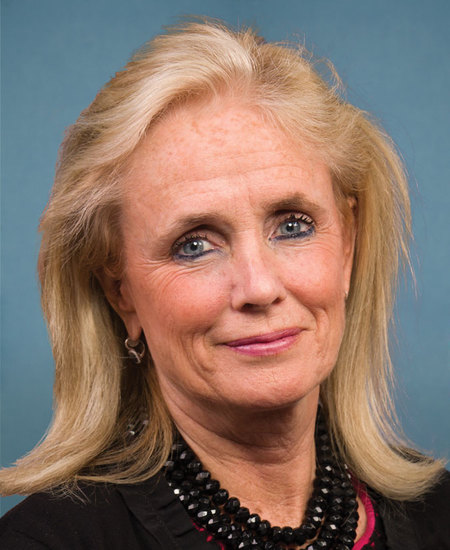
Rep. Debbie Dingell
Sponsored bills
Maddy summaryThis bill requires Medicare Advantage plans to have average monthly payments from the government that don't exceed the average cost of original Medicare (Parts A and B) for the same year. If a plan's payments exceed this cost, the government cannot allow new enrollments or re-enrollments in that plan for the following year. It directly affects Medicare Advantage plans and their enrollees, creating a financial check on plan pricing. An exception applies to specialized Medicare Advantage plans designed for individuals with specific health needs. The provision takes effect one year after the bill's enactment.
Maddy summaryThis bill (HR 6115) requires the U.S. Department of Health and Human Services to create and maintain a website for Medicare beneficiaries. The website would allow current and prospective Medicare users to search for healthcare providers participating in either Medicare Advantage (MA) plans or traditional Medicare (Parts A and B). Key features include searching for providers by name or location and identifying which providers are in each plan's network. The website must be operational within one year of the bill's enactment. This directly affects millions of Medicare beneficiaries seeking clear information about provider availability.
Maddy summaryHRES 877 is a non-binding resolution expressing the U.S. House of Representatives' support for designating November as "Prematurity Awareness Month." It does not create new laws or allocate funds but calls on the public, interest groups, and communities to observe the month through events, promote awareness, and support preterm birth prevention programs. The resolution references statistics on preterm birth rates (over 370,000 babies born preterm in 2022) and health disparities, but its core action is symbolic advocacy. It directly affects the public by encouraging community engagement in awareness efforts during November. This resolution is procedural, focusing solely on recognition, not policy change.
Maddy summaryThis bill authorizes $500 million over 10 years (2026-2035) to combat invasive mussels in the Great Lakes. It directs the Great Lakes Fishery Commission, in coordination with federal agencies (like the Fish and Wildlife Service and NOAA), to develop and implement strategies targeting invasive mussel species. The funding is specifically for efforts under the Great Lakes Fishery Act of 1956 and must be used in addition to existing appropriations. This directly affects the Great Lakes ecosystem and the Commission's management of invasive species.
Maddy summaryThe Elijah E. Cummings Family Asthma Act authorizes $70 million over five years (2025-2029) to expand the CDC’s National Asthma Control Program. It requires the CDC to collaborate with state health departments to develop state asthma control plans, collect and publish annual data on asthma hospitalizations, emergency visits, and mortality rates disaggregated by race, ethnicity, age, and sex, and identify disparities affecting Black Americans, Native individuals, Puerto Ricans, and low-income populations. The law mandates biennial congressional reports with recommendations to reduce asthma-related hospitalizations, mortality, and economic costs, including strategies to improve care access and address environmental triggers. This bill focuses on enhancing public health surveillance and targeted interventions to reduce asthma’s burden, particularly for disproportionately impacted communities.
Maddy summaryHR 6056, the International Human Rights Defense Act of 2025, establishes a permanent Special Envoy at the State Department to lead U.S. foreign policy efforts addressing discrimination and violence against LGBTQI+ people globally. The bill requires the U.S. government to develop and update a biannual global strategy to prevent criminalization and violence against LGBTQI+ individuals, mandate detailed reporting on such abuses in annual country reports, and ensure all U.S. foreign assistance programs include inclusive nondiscrimination policies. This legislation directly affects U.S. foreign policy implementation, federal agencies receiving funding, and LGBTQI+ communities facing persecution worldwide. The bill aims to coordinate U.S. government efforts across departments and with international partners to advance LGBTQI+ rights globally through concrete policy mechanisms.
Maddy summaryThis resolution designates the week of November 10-16, 2025, as "National Caregiving Youth Week" to highlight young people under 18 who provide regular care for family members with health conditions, such as chronic illness, disability, or aging. It aims to raise public awareness and encourage recognition of these youth, who often balance caregiving with school while facing challenges like mental health risks and reduced educational opportunities. The resolution urges educators, policymakers, and community leaders to better support this group but does not create new programs or funding. It focuses on symbolic recognition, not legislative action.
Maddy summaryHRES 875 is a symbolic resolution recognizing the 75th anniversary of The Arc of the United States, a national organization dedicated to advancing the rights of people with intellectual and developmental disabilities. It honors The Arc’s historical advocacy, including its role in landmark cases and legislation like the Individuals with Disabilities Education Act (IDEA). The resolution does not create new policy or affect any individuals or programs - it solely expresses the House’s recognition of The Arc’s contributions to inclusion and civil rights. This is a ceremonial gesture, not a substantive legislative action.
Maddy summaryThis resolution (HRES 869) commemorates the 50th anniversary of the November 10, 1975, sinking of the Great Lakes freighter S.S. Edmund Fitzgerald, which resulted in the loss of all 29 crew members. It honors the memory of the 29 crew members who died in the tragedy and recognizes the enduring contributions of Great Lakes shipping to the U.S. economy and cultural heritage. The resolution also acknowledges efforts by historians, museums, and communities to preserve the ship's legacy and promote maritime education. As a commemorative resolution, it has no binding policy impact and serves solely to mark this historical event.