

Maddy summaryHR 6259, the "No Fentanyl on Social Media Act," requires the Federal Trade Commission (FTC) to produce a detailed report within one year of enactment. The report must examine how minors access fentanyl (including pressed pills) through social media platforms, covering sellers' methods, health risks, platform design impacts, and current measures by platforms, law enforcement, and medical professionals. It specifically asks for recommendations to reduce this access and mandates consultation with stakeholders like parents and medical experts. The bill does not ban fentanyl sales or create new penalties; it solely focuses on gathering information to inform future policy.
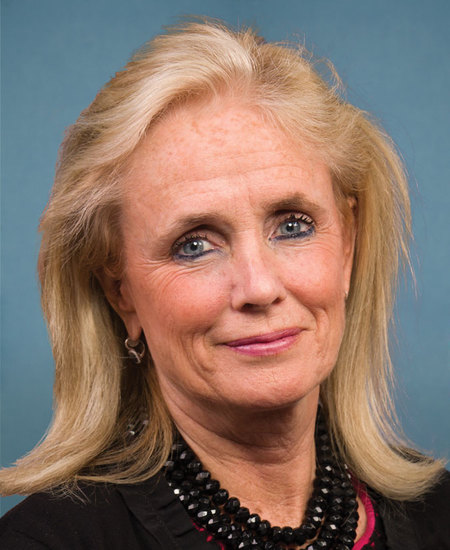
Rep. Debbie Dingell
Sponsored bills
Maddy summaryHRES 942 is a symbolic resolution designating September 2025 as "National Childhood Cancer Awareness Month" to raise public awareness about childhood cancer. It does not create new laws or funding but encourages federal, state, local governments, and nonprofits to observe the month with educational programs. The resolution highlights that over 14,500 U.S. children under 19 are diagnosed with cancer annually and emphasizes the need for ongoing care for survivors, who often face long-term health challenges. It acknowledges childhood cancer as a leading cause of disease-related death in children while recognizing the bravery of affected children and their families.
Maddy summaryThis bill increases federal student loan limits for graduate and professional students. Starting July 1, 2026, it sets a $50,000 annual limit and a $200,000 total aggregate limit (beyond undergraduate borrowing) for unsubsidized Federal Direct Stafford loans. These changes directly affect graduate and professional students pursuing advanced degrees who rely on federal loans for education costs. The provisions aim to provide higher borrowing capacity for these students' educational expenses under the Higher Education Act.
Maddy summaryHR 6597, the LET’S Protect Workers Act, increases civil penalties for employers violating key labor laws to strengthen worker protections. It raises fines for child labor violations to up to $700,000 per incident causing death or serious injury, and doubles penalties for repeated wage/hour violations (up to $50,000 per violation). The bill also significantly boosts OSHA penalties (e.g., up to $800,000 for serious violations), adds new retaliation penalties for mine safety violations (up to $200,000 for repeat offenses), and clarifies that recordkeeping violations continue until corrected. These changes apply to employers across sectors, including manufacturing, agriculture, and mining, under the Fair Labor Standards Act, Occupational Safety and Health Act, and Mine Safety Act.
Maddy summaryThis bill authorizes the placement of a memorial honoring women who supported the U.S. war effort during World War II (including those working as pilots, engineers, and in factories) on federal land in Washington, D.C. It specifies two locations: Area I on the National Mall map or the National Mall Reserve, as defined in existing law. The memorial was previously authorized by Section 702 of the 2023 Consolidated Appropriations Act (Public Law 117-328), and this bill clarifies its permitted locations.
Maddy summaryHR 6524, the HIRE Act, extends the Work Opportunity Tax Credit (WOTC) through 2030 and adds a new provision to incentivize hiring individuals receiving Social Security disability benefits. The bill directly affects employers who hire people certified as eligible for disability insurance benefits under the Social Security Act within 60 days before employment. Key provisions include modifying the tax credit to cover "qualified social security disability insurance beneficiaries" and requiring certification by a local agency for eligibility. The changes apply to new hires beginning work after December 31, 2025, with the credit extension applying through 2030.
Maddy summaryHRES 933 is a non-binding House resolution expressing support for victim service providers who assist survivors of domestic violence, dating violence, sexual assault, and stalking. It acknowledges these providers - such as shelters, nonprofits, and community organizations - help survivors navigate legal, medical, and emotional challenges, including safety planning and connecting to resources. The resolution highlights their critical but often underfunded role and calls for meaningful investment to sustain their lifesaving work. (Note: As a resolution, it does not create new laws or funding but formally recognizes the need for support.)
Maddy summaryHRES 928 is a non-binding House resolution affirming support for aligning U.S. prescription drug prices with those in other developed nations, commonly called "most-favored-nation" pricing. It states that U.S. patients should not pay more for the same drugs than citizens in comparable countries, citing data showing U.S. drug prices are 2.78 times higher than in other nations and that 21% of adults skip prescriptions due to cost. The resolution supports policies to reduce drug costs, including aligning U.S. pricing with international benchmarks and expanding Medicare negotiation, but does not create new laws or alter existing programs. It directly addresses all U.S. patients affected by high drug costs, reflecting bipartisan interest in lowering prices as noted in President Trump’s 2025 executive order.
Maddy summaryThis bill, HR 6471 (Justice in Sentencing for Survivors Act of 2025), allows federal judges to impose sentences below mandatory minimums or choose probation for individuals convicted of crimes who are survivors of specific abuses - such as domestic violence, sexual assault, stalking, or trafficking - provided their trauma contributed to their offense. It applies to current and past federal cases, permitting courts to consider evidence like affidavits documenting trauma history, even if the abuse didn’t cause physical injury or occurred before the crime. The bill defines "victim offender" as someone who experienced qualifying abuse and has no sex offense conviction, while excluding cases involving sex offenses. It also directs the U.S. Sentencing Commission to update federal guidelines to include trauma considerations during sentencing.
Maddy summaryThe Dignity for Detained Immigrants Act establishes minimum standards for detention facilities operated by the Department of Homeland Security, requiring them to follow the American Bar Association's Civil Immigration Detention Standards. It mandates annual unannounced inspections by the DHS Inspector General, with penalties including fines for noncompliant private facilities and transfers of detainees from noncompliant facilities. The bill requires DHS to publicly report on facility compliance, phase out private detention facilities over three years, and prohibit solitary confinement. It also ensures detainees have access to legal orientation, counsel, and more frequent custody review hearings. The bill directly affects all individuals detained in DHS custody, including immigrants, asylum seekers, and refugees held in facilities operated by or contracted to DHS.