This resolution reaffirms the House of Representatives' commitment to media diversity and expresses its pledge to eliminate barriers to such diversity.
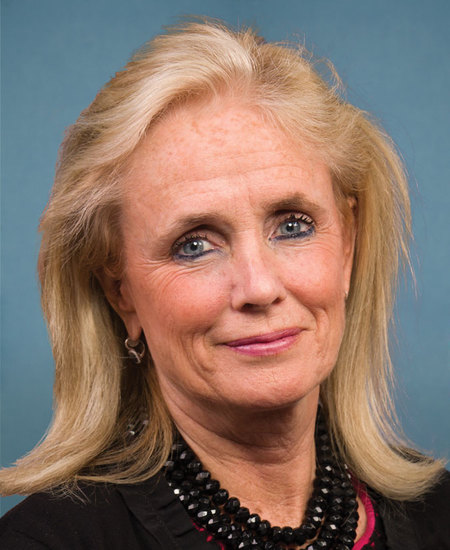
Rep. Debbie Dingell
Sponsored bills
Sport Fish Restoration, Recreational Boating Safety, and Wildlife Restoration Act of 2021 This bill reauthorizes through FY2025 the Sport Fish Restoration and Boating Trust Fund, which provides funding for, including fisheries conservation and management, water and boating infrastructure, and recreational boating safety, among other things. The bill modifies use of the Federal Aid to Wildlife Restoration Fund, which supports wildlife restoration, conservation, and hunter education and safety programs. Of the funds disbursed for the purposes of the Sport Fishing and Boating Partnership Council, a portion of such funds remaining unobligated prior to FY2020 shall be used to study (1) the impact of derelict recreational vessels on recreational boating safety and recreational fishing, and (2) the options and methods for recycling for recreational vessels. The Government Accountability Office (GAO) shall conduct a study on recreational boating access. In carrying out the study, the GAO shall consult with the Sport Fishing and Boating Partnership Council and the National Boating Safety Advisory Council on the design, scope, and priorities of such study.
This bill reauthorizes through FY2022 and otherwise revises the Centers for Disease Control and Prevention (CDC) national awareness campaign regarding gynecologic cancers. The CDC must target specified populations of women at higher risk for gynecologic cancers in the campaign. Additionally, the CDC may establish a grant program to evaluate different strategies to increase knowledge and awareness of gynecologic cancers among women and health care providers. In awarding these grants, the CDC must give preference to (1) grantees with expertise in gynecologic cancer education or treatment or expertise in working with groups of women at increased risk of such cancers; and (2) projects that will establish links between health care providers, hospitals, insurance companies, and state health departments.
Semiquincentennial Commemorative Coin Act This bill directs the Department of the Treasury to mint and issue $25.00 gold coins, $2.50 silver coins, 25 cent clad coins, and proof silver $2.50 coins in commemoration of the 250th anniversary of the establishment of the United States. The designs of the coins shall be emblematic of the semiquincentennial anniversary of the establishment of the United States of America and celebrate 250 years of our nation. On each coin there shall be a designation of the value of the coin; an inscription of the years 1776-2026; and inscriptions of the words Liberty , In God We Trust , United States of America , and E Pluribus Unum . Treasury may issue coins under this bill only during the period beginning on January 1, 2026, and ending on December 31, 2026. All sales of coins issued shall include a surcharge as prescribed by this bill. All surcharges received by Treasury from the sale of such coins shall be paid to the America 250 Foundation to fund the restoration, rehabilitation, and interpretation of units of the U.S. National Park System and its related areas, as a legacy of the semiquincentennial commemoration.

Repairing Existing Public Land by Adding Necessary Trees Act or the REPLANT Act This bill directs the Department of Agriculture (USDA) annually for each of the 10 years after enactment of this bill to transmit to Congress an estimate of the sums necessary to be appropriated, in addition to the funds available from other sources, to replant and otherwise treat an acreage equal to the acreage to be cut over that year, plus a sufficient portion of the backlog of lands found to be in need of treatment to eliminate the backlog within the 10-year period. After such 10-year period, USDA shall transmit annually to Congress an estimate of the sums necessary to replant and otherwise treat all lands being cut over and maintain planned timber production on all other forested lands in the National Forest System to prevent the development of a backlog of needed work larger than the needed work at the beginning of the fiscal year. Each reforestation activity included in a renewable resource assessment shall be carried out in accordance with applicable Forest Service management practices and definitions, including definitions relating to silvicultural practices and forest management. The Forest Service shall, based on recommendations from regional foresters, create a priority list of reforestation projects that primarily take place on priority land, promote effective reforestation following unplanned events, and may include activities to ensure adequate and appropriate seed availability. USDA shall give priority to projects on the priority list.
This resolution expresses support for the designation of Journeyman Lineworkers Recognition Day. (A journeyman lineworker is a person who builds and maintains electrical power systems.)
Safe Schools Improvement Act of 2021 This bill requires states to direct their local educational agencies (LEAs) to establish policies that prevent and prohibit bullying and harassment of elementary and secondary school students. In particular, these policies must prohibit bullying and harassment based on race, color, national origin, sex, sexual orientation, gender identity, disability, or religion. Further, LEAs must provide (1) students, parents, and educational professionals with annual notice of the conduct prohibited in their disciplinary policies; (2) students and parents with grievance procedures that target such conduct; and (3) the public with annual data on the incidence and frequency of that conduct at the school and LEA level. The Department of Education must conduct and report on an independent biennial evaluation of programs and policies to combat bullying and harassment in elementary and secondary schools. The National Center for Education Statistics must collect state data to determine the incidence and frequency of the conduct prohibited by LEA disciplinary policies.
Recreation Not Red-Tape Act This bill revises and sets forth provisions related to recreation areas and special recreation permits issued by the Department of the Interior and the Department of Agriculture (USDA) for individual or group use of federal recreational lands and waters. The bill makes permanent certain authorizations, including regarding such permits and the fees charged for them and for related administration, overhead, and indirect costs. Interior and USDA shall evaluate the special recreation permitting process and identify opportunities for eliminating duplicative processes, reducing costs, and decreasing processing times; establish categorical exclusions from environmental review requirements for special recreation permits if it would reduce processing times or costs without significantly affecting the human environment; authorize the issuance of temporary permits for new or additional recreational uses of federal lands and waters managed by the Forest Service and the Bureau of Land Management; allow online payment of certain federal passes and fees; develop initiatives to promote private-sector volunteer opportunities; and establish an interagency trail management plan. Permittees issued a special recreation permit may voluntarily and temporarily return one or more of their service days. The bill sets forth requirements for review by USDA of the renewal or adjustment of the allocations for the use of a special recreation permit. Interior and USDA may enter into agreements with states to allow the purchase of federal and state recreation passes in the same transaction. The bill establishes a National Recreation Area System.
National Infrastructure Bank Act of 2021 This bill creates the National Infrastructure Bank to facilitate the long-term financing of infrastructure projects. Specifically, the bank must provide loans to public and private entities for financing, developing, or operating eligible infrastructure projects. An eligible project must have a public sponsor as well as local, regional, or national significance. The bill treats the bank as a government corporation exempt from tax and treats contributions to the bank as charitable contributions. The bill also provides for criteria and preferences for deciding whether to provide a loan, such as whether a project promotes job creation or provides environmental benefits. Projects that receive a loan must (1) pay all laborers and mechanics locally prevailing wages, and (2) use only certain U.S.-produced construction materials unless a waiver is secured from the bank. The bank shall issue stock and may also issue bonds and maintain a discount line of credit with the Federal Reserve System. The bank must apply for a national bank charter and, once chartered, accept deposits from individuals, corporations, and public entities and pay interest on those deposits. The bill imposes requirements related to the bank's operation, such as minimum reserve requirements and requirements for handling loan losses. In addition, the bank must facilitate the organization of at least seven regional economic accelerator planning groups to, among other activities, identify infrastructure needs and priorities. Within five years, the Government Accountability Office must report on the bank's activities.
Medicare Dental, Vision, and Hearing Benefit Act of 2021 This bill provides for Medicare coverage of dental, vision, and hearing care. Coverage includes (1) routine dental cleanings and exams, basic and major dental services, emergency dental care, and dentures; (2) routine eye exams, eyeglasses, and contact lenses; and (3) routine hearing exams, hearing aids, and exams for hearing aids. With respect to such care, the bill establishes special payment rules, limitations, and coinsurance requirements.