

Equal Access to Abortion Coverage in Health Insurance Act of 2021 or the EACH Act of 2021 This bill requires federal health care programs to provide coverage for abortion services and requires federal facilities to provide access to those services. The bill also permits qualified health plans to use funds attributable to premium tax credits and reduced cost sharing assistance to pay for abortion services.
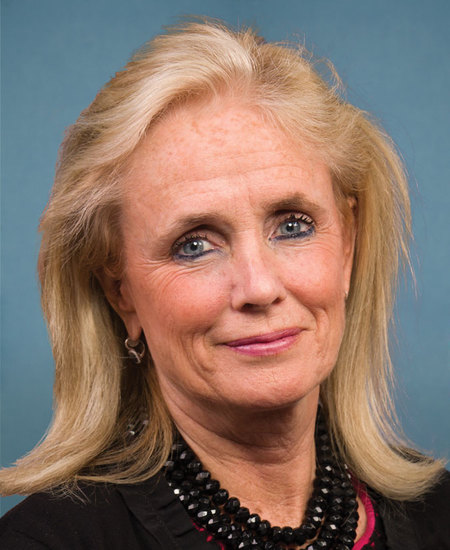
Rep. Debbie Dingell
Sponsored bills
This resolution calls for technology and application (app) development companies to create an app rating board that establishes new criteria for age-appropriate app ratings, and it calls on technology companies to manufacture internet-ready devices with user-friendly parental controls and default safety settings.
Lead Poisoning Prevention Act of 2021 This bill reauthorizes through FY2026 grants and programs carried out by the Centers for Disease Control and Prevention for screening and other public health activities to prevent childhood lead poisoning. Additionally, the bill changes the name of an advisory body that coordinates federal lead poisoning prevention efforts from the Interagency Task Force on the Prevention of Lead Poisoning to the Advisory Committee on Childhood Lead Poisoning Prevention. It also modifies the committee's membership, reporting requirements, and other duties.
Supply Chain Security and Resilience Act This bill establishes a Supply Chain Resiliency and Crisis Response Office within the Department of Commerce. The office must monitor the supply chains for critical goods or services and collaborate with various stakeholders to respond to disruptions in those supply chains. Additionally, the office must support the development of voluntary standards for manufacturers of critical goods or services to address the resilience, diversity, security, and strength of their supply chains.
Maddy summaryThis bill (HR 5430) would add wigs to Medicare's list of covered durable medical equipment. It directly affects Medicare beneficiaries who require wigs due to medical conditions like hair loss from cancer treatment, as certified by their doctor. The key provision requires a dermatologist, oncologist, or attending physician to provide written certification of medical necessity before Medicare covers the wig as part of rehabilitative treatment. This change expands existing coverage for cranial prostheses under Medicare's rules without altering the program's overall structure.
Veteran Families Health Services Act of 2021 This bill addresses fertility treatments, counseling, and other health-related programs for veterans and members of the Armed Forces. Specifically, the bill requires the Department of Defense (DOD) and the Department of Veterans Affairs (VA) to provide fertility treatments and counseling to covered veterans and active duty service members or a spouse, partner, or gestational surrogate of such veteran or service member. A covered veteran or service member is a former or current member of the Armed Forces who has an infertility condition, unless it is demonstrable that the individual was completely infertile prior to serving in the Armed Forces. In the case of in vitro fertilization treatment, DOD and the VA may not furnish more than three completed cycles or six attempted cycles, whichever occurs first. DOD must establish procedures related to gamete retrieval and storage. Additionally, DOD must provide service members with the opportunity to cryopreserve and store their gametes prior to deployment to a combat zone or a hazardous duty assignment. DOD and the VA must share best practices and facilitate referrals for the furnishing of fertility treatment and counseling to eligible individuals. Fertility counseling and treatment are included within authorized VA medical services. The VA may pay the adoption expenses (for up to three adoptions) for a covered member who is enrolled in the VA health care system. The VA must facilitate specified reproduction and infertility research conducted collaboratively by DOD and the Department of Health and Human Services.
Title IX Take Responsibility Act of 2021 This bill establishes statutory standards of liability for sexual harassment and a private right of action under Title IX of the Education Amendments of 1972, which prohibits discrimination on the basis of sex in federally funded education programs or activities. Currently, Title IX does not expressly provide for a private right of action for violations, prohibit sexual harassment, or establish standards of liability with respect to such conduct. The Supreme Court has interpreted the statute to cover sexual harassment and has determined that it provides an implied private right of action; the Court has also delineated standards of liability that generally require actual knowledge on the part of educational institutions with respect to such conduct. The bill specifically sets out standards of liability for sexual harassment with respect to covered entities under Title IX. Among other provisions, the bill specifies that a covered entity is liable for sexual harassment committed by an employee against a student that is enabled by the employee's authority and results in a hostile environment, regardless of whether the entity knew or should have known about such conduct. The bill also allows any person aggrieved by the failure of a covered entity to comply with Title IX to bring a civil action for damages.
Reclaiming the Solar Supply Chain Act of 2021 This bill requires the Department of Energy to establish a program to award grants and loans to support a solar component manufacturing supply chain. Under the program, grants and loans must be used for (1) the construction of new facilities that manufacture solar components; and (2) retooling, retrofitting, or expanding existing facilities that manufacture solar components.
Tyler Clementi Higher Education Anti-Harassment Act of 2021 This bill addresses harassment at institutions of higher education (IHEs). Specifically, the bill requires each IHE to include in its annual security report a statement of policy regarding harassment on the basis of a student's actual or perceived race, color, national origin, sex (including sexual orientation, gender identity, pregnancy, childbirth, a medical condition related to pregnancy or childbirth, and a sex stereotype), disability, or religion. In addition, the Department of Education may award grants to IHEs to initiate, expand, or improve programs to (1) prevent the harassment of students; (2) provide counseling or redress services to students who have been harassed or accused of subjecting other students to harassment; or (3) educate and train students, faculty, or staff to prevent harassment or address harassment if it occurs.
This resolution expresses support for the designation of Rail Safety Week.