

Maddy summaryHR 22, the *Protecting America’s Strategic Petroleum Reserve from China Act*, blocks the U.S. government from selling petroleum from the Strategic Petroleum Reserve to entities under Chinese Communist Party control or unless sellers guarantee the oil won’t be exported to China. It directly affects the Department of Energy’s management of the reserve and any foreign entities seeking to purchase reserve petroleum. The key mechanism requires the Secretary of Energy to prohibit sales to China-linked entities or impose strict export restrictions on any sale. This policy change aims to prevent strategic petroleum resources from reaching entities tied to China’s government.
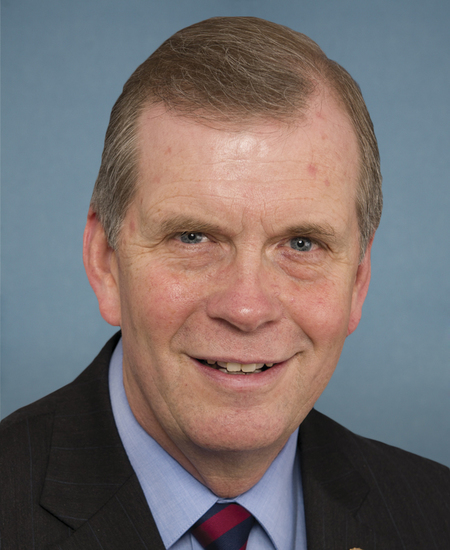
Rep. Tim Walberg
Sponsored bills
Maddy summaryHR 175, the Heartbeat Protection Act of 2023, prohibits physicians from performing abortions without first checking for a detectable fetal heartbeat using standard medical practice and informing the patient of the results. It allows exceptions only for abortions necessary to save a mother’s life due to physical conditions (not psychological ones), or for pregnancies resulting from rape or incest against an adult or minor, which require specific documentation like counseling records or police reports. Physicians violating the law face up to five years in prison, while patients cannot be prosecuted. The bill defines "unborn child" as beginning at fertilization and mandates detailed medical documentation for all exceptions. It explicitly excludes psychological conditions from life-threatening exceptions and requires physicians to retain records per federal health privacy rules.
Maddy summaryHCONRES 3 is a non-binding congressional resolution expressing support for pro-life facilities, groups, and churches targeted by vandalism and threats following the Supreme Court's Dobbs decision. It condemns specific incidents like graffiti, window-smashing, and arson at pregnancy centers and churches (e.g., in Frederick, MD, and Portland, OR), while recognizing the role of these organizations in supporting pregnant women. The resolution calls on the Biden Administration to use law enforcement to protect these facilities but does not create new laws or policies. As a symbolic measure, it has no legal effect on the incidents described.
Maddy summaryHRES 51 is a non-binding House resolution expressing support for designating the week of January 22-28, 2023, as "National School Choice Week." It encourages parents to learn about K-12 education options (including public, charter, private, and homeschooling) and urges public awareness events during that week. The resolution does not create new policies, funding, or legal requirements - it solely serves as a symbolic expression of support for parental choice in education. It directly affects no individuals or entities, as it is a procedural resolution with no legislative force.
Maddy summaryHR 252, the Inflation Prevention Act of 2023, would require Congress to block any new spending bill or amendment that could increase inflation above 4.5%, as measured by the Consumer Price Index (CPI). If current inflation exceeds 4.5%, the bill would prevent consideration of new spending measures unless a three-fifths Senate supermajority votes to override the rule. The Congressional Budget Office (CBO) would estimate the inflation impact of proposed spending and notify Congress if inflation rises above 4.5%. This rule applies to all spending bills, amendments, and conference reports in both the House and Senate, directly affecting how Congress processes budget-related legislation. The bill focuses on procedural rules for spending decisions, not on specific policies or affected groups.
Maddy summaryH.J.Res. 12 proposes a constitutional amendment requiring the federal government to balance its budget annually, meaning spending cannot exceed revenue except under specific circumstances. It would directly affect Congress and the President by mandating that annual budgets must not exceed revenue, with exceptions requiring a 3/5 vote in both chambers of Congress or a military conflict waiver approved by a joint resolution. Key provisions include prohibiting increases to the national debt without a 3/5 congressional vote, requiring the President to submit a balanced budget proposal each year, and defining "receipts" to exclude borrowing. The amendment would take effect five years after ratification by 38 states (three-fourths of states) and includes limited waivers for declared wars or imminent national security threats. This is a procedural constitutional change, not a spending bill, and would fundamentally alter federal budgeting processes.
Maddy summaryHJRES 8 proposes a constitutional amendment to permanently set the Supreme Court's size at nine justices. The bill would require any future changes to the Court's composition to follow this specific number, locking in the current structure. It does not alter the existing Court size (which has been nine since 1869) but aims to prevent future adjustments through legislative action. The amendment must be ratified by three-fourths of state legislatures within seven years to take effect. This is a procedural proposal focused on constitutional structure, not a direct policy affecting citizens or programs.
Maddy summaryHR 24, the Federal Reserve Transparency Act of 2023, requires a comprehensive audit of the Federal Reserve System's Board of Governors and Federal Reserve banks within 12 months of the bill's enactment. The Congressional auditor (Comptroller General) must then submit a detailed report to Congress within 90 days, including findings, conclusions, and recommendations for improving transparency. This bill directly affects the Federal Reserve System by mandating greater oversight of its operations and financial activities. The key provision repeals a prior limitation that prevented audits of certain Fed programs, aiming to clarify which activities are subject to audit under existing law.
FairTax Act of 2023 This bill imposes a national sales tax on the use or consumption in the United States of taxable property or services in lieu of the current income taxes, payroll taxes, and estate and gift taxes. The rate of the sales tax will be 23% in 2025, with adjustments to the rate in subsequent years. There are exemptions from the tax for used and intangible property; for property or services purchased for business, export, or investment purposes; and for state government functions. Under the bill, family members who are lawful U.S. residents receive a monthly sales tax rebate (Family Consumption Allowance) based upon criteria related to family size and poverty guidelines. The states have the responsibility for administering, collecting, and remitting the sales tax to the Treasury. Tax revenues are to be allocated among (1) the general revenue, (2) the old-age and survivors insurance trust fund, (3) the disability insurance trust fund, (4) the hospital insurance trust fund, and (5) the federal supplementary medical insurance trust fund. No funding is authorized for the operations of the Internal Revenue Service after FY2027. Finally, the bill terminates the national sales tax if the Sixteenth Amendment to the Constitution (authorizing an income tax) is not repealed within seven years after the enactment of this bill.
Maddy summaryThis bill establishes nationwide recognition for valid concealed carry permits. It allows permit holders from any state to carry concealed handguns in states that either issue such permits or don't ban concealed carry, provided they carry a photo ID and their valid permit. Key provisions include making presentation of a valid permit and ID prima facie evidence of compliance, shifting the burden of proof to prosecutors if challenged, and requiring courts to award attorney fees to successful defendants. It does not override state laws prohibiting concealed carry on private property or government lands, nor does it affect restrictions on federal lands like national parks.