

No Taxpayer Funding for Abortion and Abortion Insurance Full Disclosure Act of 2021 This bill modifies provisions relating to federal funding for, and health insurance coverage of, abortions. Specifically, the bill prohibits the use of federal funds for abortions or for health coverage that includes abortions. Such restrictions extend to the use of funds in the budget of the District of Columbia. Additionally, abortions may not be provided in a federal health care facility or by a federal employee. Historically, language has been included in annual appropriations bills for the Department of Health and Human Services (HHS) that prohibits the use of federal funds for abortions—such language is commonly referred to as the Hyde Amendment. Similar language is also frequently included in appropriations bills for other federal agencies and the District of Columbia. The bill makes these restrictions permanent and extends the restrictions to all federal funds (rather than specific agencies). The bill's restrictions regarding the use of federal funds do not apply in cases of rape, incest, or where a physical disorder, injury, or illness endangers a woman's life unless an abortion is performed. The Hyde Amendment provides the same exceptions. The bill also prohibits qualified health plans from including coverage for abortions. Currently, qualified health plans may cover abortion, but the portion of the premium attributable to abortion coverage is not eligible for subsidies.
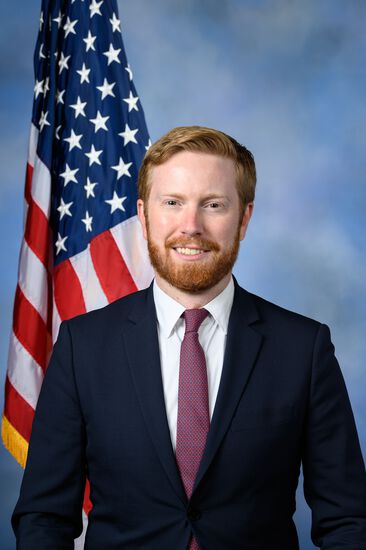
Rep. Peter Meijer
Sponsored bills
This resolution condemns the Russian government's criminal acts to intimidate and silence human rights and anti-corruption activists, including the attempted assassination of opposition leader Alexei Navalny. The resolution also condemns the Russian government's ongoing chemical weapons program, which violates international law and norms.
Growing Climate Solutions Act of 2021 This bill authorizes the Department of Agriculture (USDA) to establish a voluntary Greenhouse Gas Technical Assistance Provider and Third-Party Verifier Certification Program to help reduce entry barriers into voluntary environmental credit markets for farmers, ranchers, and private forest landowners. A voluntary environmental credit market is a market through which agriculture and forestry credits may be bought or sold. Entities eligible to participate in the program are (1) providers of technical assistance to farmers, ranchers, or private forest landowners in carrying out sustainable land use management practices that prevent, reduce, or mitigate greenhouse gas emissions, or sequester carbon; or (2) third-party verifiers that conduct the verification of the processes described in the protocols for voluntary environmental credit markets. Among other requirements, USDA must publish (1) a list of protocols and qualifications for eligible entities; (2) information describing how entities may self-certify under the program; (3) information describing how entities may obtain the expertise to meet the protocols and qualifications; and (4) instructions and suggestions to assist farmers, ranchers, and private forest landowners in facilitating the development of agriculture or forestry credits and accessing voluntary environmental credit markets. USDA must also establish an advisory council to make recommendations regarding the list of protocols and qualifications, best practices, and voluntary environmental credit markets. The bill also rescinds certain funds provided in the American Rescue Plan Act of 2021 and makes the funds available for the certification program.
American Border Rescue Plan Act This bill establishes that funds made available for certain COVID-19 recovery programs may also be available to eligible law enforcement agencies for border enforcement-related purposes. To be eligible to receive such funds, a law enforcement agency must be (1) located in a state with an international border, and (2) involved in an active and ongoing U.S. Customs and Border Protection operation coordinated through a sector office.
Finish the Wall Act This bill requires the Department of Homeland Security (DHS) to resume activities related to the construction of a barrier system along the U.S.-Mexico border and addresses other border-related issues. DHS must resume all such construction activities that were planned or underway prior to January 20, 2021. DHS must also expend all funds appropriated or explicitly obligated since October 1, 2016, for construction of this barrier system. DHS may not cancel contracts for activities related to such construction entered into on or before January 20, 2021. Furthermore, within 14 days of this bill's enactment, DHS must certify to Congress that U.S. Customs and Border Protection facilities that process adults taken into custody at the border are fully compliant with certain laws related to the collection of DNA. (Among other things, these laws allow for the collection of DNA samples from non-U.S. persons detained under U.S. authority.)
Countering Russian and Other Overseas Kleptocracy Act or the CROOK Act This bill requires various actions designed to combat public corruption in foreign countries. The bill establishes within the Department of the Treasury the Anti-Corruption Action Fund to help foreign states fight public corruption and develop rule-of-law-based governance structures. For certain fines and penalties imposed under the Foreign Corrupt Practices Act, an additional fine shall be imposed and deposited into the fund. The Department of State must (1) manage U.S. government efforts to fight foreign public corruption, and (2) establish an interagency task force to assist in coordinating such efforts. Each U.S. embassy must have a point of contact responsible for coordinating the embassy's anti-corruption efforts. The State Department must report to Congress on its anti-corruption activities and make various reports publicly available online.
This resolution states that the August 9, 2020, election in Belarus was neither free nor fair and, as such, the House of Representatives does not recognize Alyaksandr Lukashenka as the country's legitimate president. The resolution also states that the people of Belarus have the right to determine the country's future without unwelcome intervention from outside actors and condemns the human rights violations committed by Belarusian authorities.
Secure and Fair Enforcement Banking Act of 2021 or the SAFE Banking Act of 2021 This bill generally prohibits a federal banking regulator from penalizing a depository institution for providing banking services to a legitimate cannabis-related business. Prohibited penalties include terminating or limiting the deposit insurance or share insurance of a depository institution solely because the institution provides financial services to a legitimate cannabis-related business and prohibiting or otherwise discouraging a depository institution from offering financial services to such a business. Additionally, proceeds from a transaction involving activities of a legitimate cannabis-related business are not considered proceeds from unlawful activity. Proceeds from unlawful activity are subject to anti-money laundering laws. Furthermore, a depository institution is not, under federal law, liable or subject to asset forfeiture for providing a loan or other financial services to a legitimate cannabis-related business. The bill also provides that a federal banking agency may not request or order a depository institution to terminate a customer account unless (1) the agency has a valid reason for doing so, and (2) that reason is not based solely on reputation risk. Valid reasons for terminating an account include threats to national security and involvement in terrorist financing, including state sponsorship of terrorism. Finally, the bill decreases the cap on the surplus funds of the Federal Reserve banks. (Amounts exceeding this cap are deposited in the general fund of the Treasury.)
This resolution condemns the actions taken by the governments of China and Hong Kong to put in place national security legislation that violates the freedoms and rights guaranteed to the people of Hong Kong. (Hong Kong is a part of China but, by agreement, has operated a legal and economic system largely separate from China's.)
Time to Rescue United States Trusts Act of 2021 or the TRUST Act of 2021 This bill establishes congressional rescue committees to develop recommendations and legislation to improve critical social contract programs. A critical social contract program is a federal program for which a federal trust fund is established (e.g., Social Security, Medicare, and federal highway programs), with outlays of at least $20 billion during the year preceding the year in which this bill is enacted, and for which the amount of dedicated federal funds and federal trust fund balances will be inadequate to meet the total amount of outlays of the program that would otherwise be made. Each rescue committee may develop recommendations and legislation to improve the program for which it was established, including by (1) increasing the duration of positive balances of the federal trust fund established for the program, and (2) providing for the solvency of the federal trust fund established for the program during a 75-year period. Congress must use specified expedited legislative procedures to consider legislation that is approved and submitted by the rescue committees.