

Maddy summaryHR 7075 designates a specific triangular area in Washington, D.C. (bounded by 22nd Street NW, P Street NW, and Florida Avenue NW) as "Ukrainian Independence Park," including National Park Service reservations 57D and 360 (which contains the Taras Shevchenko Memorial). The bill updates all federal references to this area to use the new name and authorizes signage highlighting Ukraine's independence and U.S.-Ukraine solidarity. This is a procedural designation bill with no substantive policy changes, solely renaming a park area.
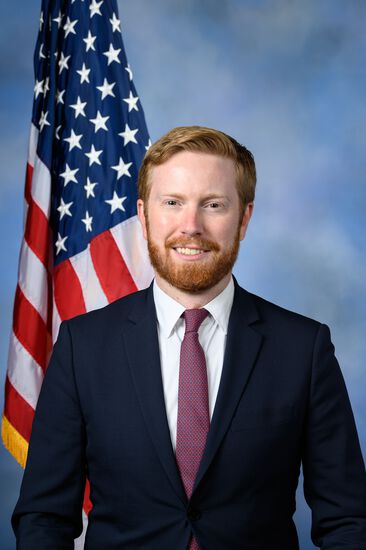
Rep. Peter Meijer
Sponsored bills
Uyghur Policy Act of 2021 This bill addresses human rights issues concerning the Uyghurs and other minority groups in the Xinjiang Uyghur Autonomous Region in China. The bill authorizes the establishment of a Special Coordinator for Uyghur Issues position within the Department of State. The State Department's Bureau of Educational and Cultural Affairs may, subject to appropriations, make certain funds available to human rights advocates working on behalf of Uyghurs and members of other ethnic and religious minority groups persecuted in China. The funds, if made available, shall be used to facilitate the presence of such human rights advocates at public diplomacy forums to speak on issues related to the human rights and religious freedoms of minority groups persecuted in China. The State Department must ensure that Uyghur language training is available to Foreign Service officers. It must also ensure that a Uyghur-speaking member of the Foreign Service is assigned to U.S. diplomatic and consular missions in China.
Homeland Procurement Reform Act or the HOPR Act This bill directs the Department of Homeland Security (DHS) to ensure that procurement of certain items, such as body armor and other protective gear, meets specified requirements, including that a fraction of procurement funds be used for items manufactured by U.S. small businesses. The bill sets forth requirements for waivers based on a national emergency. DHS shall (1) ensure that covered items are purchased at a fair and reasonable price, and (2) study the adequacy of uniform allowances provided to employees of frontline operational components (i.e., Customs and Border Protection and other listed agencies and entities). DHS must report to Congress with recommendations on how it could procure additional items from domestic sources and bolster the domestic supply chain for specified national security-related items, including personal protective equipment and other items necessary to respond to a pandemic such as that caused by COVID-19.
This resolution condemns the use of starvation of civilians as a weapon of warfare. It also calls on the U.S. government to prioritize diplomatic efforts to call out and address instances where hunger and intentional deprivation of food is being utilized as a weapon of war, including efforts to ensure that security operations do not undermine livelihoods of local populations to minimize civilian harm.
Integrity, Notification, and Fairness in Online Retail Marketplaces for Consumers Act or the INFORM Consumers Act This bill requires online marketplaces (e.g., Amazon) to collect and verify certain contact and financial information from third-party sellers whose transactions and related revenues exceed specified thresholds. Subject to certain exceptions, online marketplaces must clearly and conspicuously disclose the contact information of certain high-volume third-party sellers to consumers and must also provide consumers with methods to report suspicious activity on the marketplace. The bill provides the Federal Trade Commission and state attorneys general with the authority to enforce these requirements.
Lymphedema Treatment Act This bill provides for Medicare coverage of lymphedema compression treatment items. Specifically, the bill provides for coverage of standard and custom fitted gradient compression garments and other approved items that are prescribed by a physician or other specified health care professional to treat lymphedema.
Maddy summaryHRES 1114 is a non-binding House resolution expressing support for recognizing "National Police Week" as a way to honor law enforcement officers across the United States. The resolution acknowledges the service and sacrifices of law enforcement officers, particularly those who have died in the line of duty, and specifically references 619 officers who died in 2021 as listed in the resolution. This resolution does not create new laws or allocate funds but serves as a symbolic gesture to encourage public recognition of law enforcement personnel. It calls for Americans to observe National Police Week by honoring officers and raising awareness about their essential role in community safety. The resolution was introduced by multiple members of Congress and referred to the Committee on the Judiciary.
This resolution urges the Biden Administration to expeditiously restore the Migrant Protection Protocols, a policy requiring many asylum seekers arriving at the southern border to wait in Mexico while their cases are being adjudicated. It also urges the Administration to use certain public health powers, commonly referred to as Title 42 authority, to promptly expel migrants.
This resolution recognizes the sacrifices and bravery of the Afghan people in their struggle for democracy while enduring decades-long conflict and oppression by the Taliban. It also condemns the Taliban's continued human rights violations.
Afghan Adjustment Act This bill expands eligibility for special immigrant visas to certain Afghan nationals (and accompanying spouse and children) and addresses related issues. The Department of Homeland Security may provide such visas to Afghan nationals who provided qualifying service as a member of the Afghan Air Force or other specified entities and meet eligibility requirements, such as passing a background check. Currently, special immigrant visas for Afghan nationals are generally only available to those who were employed by or on behalf of the U.S. government in Afghanistan. Such visas shall also be available to an Afghan national who is a qualifying relative of a veteran or member of the U.S. Armed Forces. The bill also modifies procedures for providing lawful permanent resident status to certain classes of Afghan nationals, such as by (1) providing a streamlined process with specified vetting requirements for certain individuals, including those who provided support to the U.S. government in Afghanistan; and (2) preserving the eligibility of certain battered spouses whose eligibility for such status stemmed from a marriage that has terminated. Furthermore, the Department of State (1) must respond to inquiries from Members of Congress about specific applications from Afghan nationals seeking special immigrant or refugee status; and (2) establish an office in Afghanistan to perform certain tasks, such as issuing visas, if no U.S. embassies are operational in Afghanistan. The President must establish a task force to develop and implement a strategy to assist Afghan nationals who qualify for admission to the United States.