Veterans Equal Access Act This bill directs the Department of Veterans Affairs (VA) to authorize VA health care providers to (1) provide veterans with recommendations and opinions regarding participation in their state's marijuana programs, and (2) complete forms reflecting such recommendations and opinions.
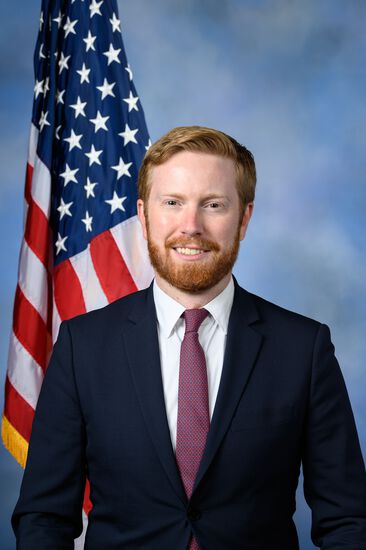
Rep. Peter Meijer
Sponsored bills
National Scenic Trails Parity Act This bill requires the North Country, Ice Age, and New England national scenic trails to be administered as units of the National Park System.
Hmong Congressional Gold Medal Act This bill provides for the award of a Congressional Gold Medal to the Hmong people in recognition of their highly distinguished service in the Vietnam War and the fight against communism.
This bill designates the facility of the United States Postal Service located at 202 Trumbull Street in Saint Clair, Michigan, as the Corporal Jeffrey Robert Standfest Post Office Building.
Wounded Warrior Bill of Rights Act This bill requires the Department of Defense to establish a policy (containing specified elements) to ensure accountability for actions taken under the authorities of the Defense Health Agency and the military departments concerning wounded, ill, and injured members of the Armed Forces during the integrated disability evaluation system process. The bill also specifies that each military department must maintain personnel authority over, and responsibility for, its members during medical evaluation board consideration.
Ukraine Invasion War Crimes Deterrence and Accountability Act This bill requires the President to report to Congress on atrocities committed during Russia's invasion of Ukraine since February 24, 2022. Specifically, the report must describe in detail (1) U.S. government efforts to collect, analyze, and preserve evidence related to war crimes and other atrocities committed during the invasion; (2) media, public diplomacy, and information operations to make the Russian people, including their military and political leaders, aware of efforts to identify and prosecute those responsible for such atrocities; and (3) the process for a domestic, foreign, or international court or tribunal to obtain information from the U.S. government related to such atrocities.
Stop Iranian Drones Act This bill expands existing provisions requiring sanctions against individuals or entities that provide certain types of weapons to Iran. Specifically, the bill modifies the provisions by adding unmanned combat aerial vehicles to the list of weapons covered by the sanctions. The bill also requires the Department of State to periodically report to Congress on the identities of any Iranian entity that has attacked a U.S. citizen using an unmanned combat aerial vehicle. The President must designate any such entity as a foreign terrorist organization.
Securing Our Students Act This bill authorizes local educational agencies and nonpublic schools to use certain COVID-19 emergency relief funds, services, or assistance for school safety uses, that is improving school conditions for student learning by planning and designing school buildings and facilities, installing infrastructure, providing safety education, and implementing technology or other measures that strengthen security on school premises.
Freight Rail Assistance and Investment to Launch Coronavirus-Era Activity and Recovery Act of 2022 or the Freight RAILCAR Act of 2022 This bill provides a new tax credit through 2024 for 10% of freight railcar fleet modernization expenses (i.e., railcar replacement and modernization expenses for meeting fuel efficiency and performance standards). The bill provides that no more than 2,000 freight railcars per taxpayer may be taken into account for purposes of determining the credit in a taxable year. The Department of the Treasury must report to Congress on the credit to provide information on the number of times the credit was claimed and the number of railcars scrapped or built as a result of the credit.
Transatlantic Telecommunications Security Act This bill directs the Department of State and other federal agencies to help certain countries improve the security of their telecommunications networks and addresses related issues. Assistance provided under this bill shall be available to projects in a country that falls below certain gross domestic product per capita thresholds and is (1) a NATO member state that shares a border with Russia, or (2) a European country that has not participated in or aided Russia's invasion of Ukraine. A project located in such a country shall be eligible for assistance if the project (1) improves telecommunications networks; (2) is inclusive, transparent, economically viable, sustainable, supplied only with secure equipment and services, and compliant with international standards and laws; and (3) does not use equipment or services from China or Russia or replaces such equipment or services. To support eligible projects, the State Department shall provide diplomatic and political support and shall also encourage international financial institutions to provide investment support. The U.S. Trade and Development Agency, the U.S. International Development Finance Corporation, and other specified federal agencies shall also provide project support, such as feasibility studies and finance-related support, as necessary. The State Department must also appoint, from among its existing personnel, an International Telecommunication Union Security Campaign Director. The director must, among other duties, lead efforts to promote candidates for elections at the International Telecommunication Union who will support and defend democratic values, internet freedom, and telecommunication security.