

Maddy summaryHR 2937, the PROTECT 911 Act, creates federal resources and grants to support the mental health of 911 operators (public safety telecommunicators). It requires the Secretary to develop evidence-based best practices for preventing and treating PTSD and related disorders among these workers, and to create educational materials for mental health professionals about their unique workplace stressors. The bill also authorizes grants for states and local emergency communications centers to establish or enhance evidence-based wellness programs, including peer-support initiatives, to address job-related mental health challenges. These programs aim to improve support for 911 operators who handle emergency calls in 911 centers.
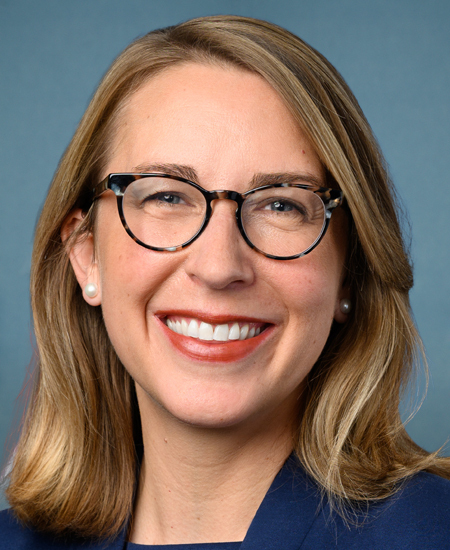
Rep. Hillary J. Scholten
Sponsored bills
Maddy summaryThis bill requires the Office of Management and Budget (OMB) to annually report all federal disaster spending to Congress, covering response, recovery, and mitigation efforts across all relevant agencies. The report must detail total spending, break it down by agency and disaster type, and distinguish between loans and grants, including costs from agencies like FEMA, USDA, and the Department of Housing and Urban Development. It aims to improve budget transparency and help Congress identify cost-saving opportunities by providing a single, public source of disaster spending data. The first report is due for fiscal year 2027, with data for the prior calendar year. This is a transparency measure, not a change to how disaster aid is delivered.
Maddy summaryHRES 328 is a non-binding House resolution expressing support for library staff and the essential services libraries provide to communities across the United States. It recognizes libraries as critical infrastructure for community access to information, internet, social services, and safe spaces - especially for underserved groups - and calls for full federal, state, and local funding to sustain these services. The resolution reaffirms the public’s right to free access to information, supports library workers’ rights to unionize and collectively bargain, and defends staff from threats like book bans or intimidation for upholding library missions. It specifically endorses National Library Week and urges protection of civil rights for library workers. (Note: As a procedural resolution, it does not create new law but formally expresses congressional support.)
Maddy summaryHR 2831, the Small Business Energy Loan Enhancement Act, doubles the maximum loan amounts for certain small business energy projects under the Small Business Investment Act of 1958, raising the cap from $5.5 million to $10 million for two specific loan categories. This directly affects small businesses seeking financing for energy-related investments, such as efficiency upgrades or renewable energy installations. The bill requires the Small Business Administration (SBA) to annually report to Congress on which industries and geographic areas receive these loans. These changes aim to increase access to capital for qualifying energy projects without altering eligibility criteria.
Maddy summaryHR 2888, the "Stopping a Rogue President on Trade Act," terminates specific executive orders imposing tariffs (EOs 14257, 14193, and 14194) and requires congressional approval for new tariffs or trade restrictions. It directly affects the President, who can no longer unilaterally impose or increase tariffs without Congress passing a joint resolution approving the action. Key mechanisms include mandating a formal joint resolution process for tariff decisions (with limited exceptions for existing antidumping duties and trade agreements) and applying expedited congressional procedures. This bill shifts authority from the executive branch to Congress for major trade policy changes.
Maddy summaryThis bill prevents the U.S. government from diverting, delaying, or reassigning federal funds specifically designated for the National Weather Service and Great Lakes programs without new congressional approval. It directly affects NOAA’s operations in these areas by requiring that existing appropriations cannot be altered without explicit new legislation referencing this bill. The law mandates annual certification from NOAA’s Administrator to five congressional committees confirming compliance with these funding protections. This is a procedural measure focused on safeguarding current funding streams, not creating new programs or altering weather service operations.
Maddy summaryThis bill requires FEMA to reimburse local governments and electric cooperatives for interest paid on disaster recovery loans. It covers interest calculated as the lesser of actual payments or what would have been paid at the current prime rate, for loans where at least 90% of funds were used for disaster-related projects. The reimbursement includes interest from the past nine years and mandates FEMA to process payments within one year of the bill's enactment.
Supplemental Oxygen Access Reform Act of 2025 or the SOAR Act of 2025 This bill establishes certain requirements with respect to the payment and provision of supplemental oxygen and related services under Medicare. For example, the bill provides for separate payments, indexed to inflation, of oxygen and related equipment, supplies, and services under Medicare (rather than under the competitive acquisition program). It also specifically covers services that are provided by respiratory therapists under Medicare and provides for an additional payment adjustment for these services. Additionally, the bill (1) requires the Centers for Medicare & Medicaid Services to develop an electronic template for providers to use when prescribing oxygen and related equipment, supplies, and services; and (2) establishes certain rights for beneficiaries receiving these items and services, such as the right to choose their suppliers and to receive clear communications and be informed about the services provided.
Maddy summaryHR 2897 expands eligibility for Small Business Administration disaster loans to cover damages from prolonged power outages. It defines a "prolonged power outage" as affecting at least 25 homes or businesses in a county (with 40% property damage) or requiring 48+ hours of power loss. Borrowers can use loan funds to purchase energy resilience systems (like solar panels or generators) or replace lost food/drinks due to the outage. This directly affects small businesses in areas impacted by extended power disruptions meeting the specified criteria.
Maddy summaryThe Adult Education WORKS Act establishes "college and career navigators" who provide personalized guidance to help individuals access education, job training, and workforce development services. These navigators help people identify career paths, connect to financial aid, and develop digital literacy and information literacy skills needed for success in education and employment. The bill requires state and local workforce boards to collaborate with adult education providers to promote these navigator positions and authorizes $135 million annually for library-based and community-based navigator programs. It updates definitions to include digital and information literacy skills as essential components of adult education. The bill directly affects adult education providers, workforce development systems, and individuals seeking to improve their job skills or educational opportunities.