

Maddy summaryHR 649, the Whole Milk for Healthy Kids Act of 2025, amends the National School Lunch Act to allow schools participating in the program to offer students both organic and non-organic whole milk, in addition to reduced-fat, low-fat, and fat-free options. Key provisions include clarifying that milk fat in whole milk should not count toward saturated fat limits for meal compliance, prohibiting schools from purchasing milk from Chinese state-owned enterprises, and ensuring schools cannot be barred from offering the full range of milk types listed. The bill directly affects public and private schools serving the National School Lunch Program by expanding their milk options for students. It focuses on concrete policy changes to dietary offerings and sourcing restrictions within the school nutrition program.
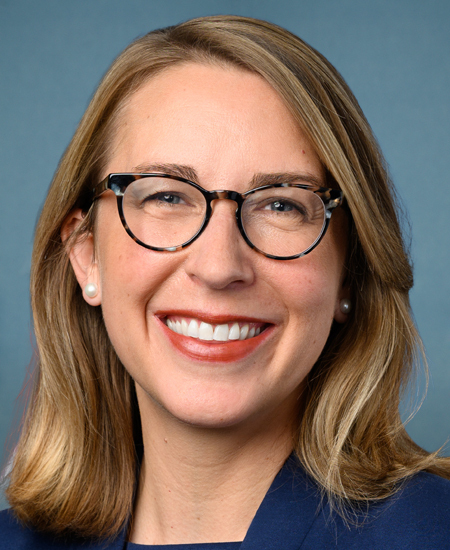
Rep. Hillary J. Scholten
Sponsored bills
Maddy summaryHRES 471, the "Restoring Integrity in Democracy Resolution," would amend House rules to prohibit current and future House members (including delegates and resident commissioners) from serving on the boards of for-profit companies. The key provision adds a new rule to the House's procedural rules, explicitly banning such board positions to address potential conflicts of interest. This change would directly affect all House members by restricting their outside business activities while in office. The resolution is a procedural rule change, not a law affecting the public, and aims to strengthen ethical standards within the House.
Maddy summaryThe BARK Act of 2025 protects donors, nonprofits, and local/government entities from liability when donating "apparently fit" pet food or supplies in good faith to help animals. It shields them from lawsuits related to minor issues like appearance, age, or packaging, as long as the items meet basic safety standards and aren’t defective. Donors must inform recipients about any flaws, and recipients must agree to recondition items to meet standards before distribution. This law does not cover cases of gross negligence or intentional harm, and it doesn’t override existing health regulations. The bill directly affects pet food donors, shelters, and animal welfare programs by reducing legal barriers to sharing surplus supplies.
Maddy summaryHR 3734, the Stop MUSK Act, amends federal ethics law to require high-level government officials to recuse themselves from decisions involving entities with which they had financial ties in the past four years. It directly affects executive branch leaders (including those in the Executive Schedule) and special government employees who previously worked for or had financial relationships with organizations like corporations, nonprofits, or consulting firms. The key provision expands the recusal requirement to cover any former employer or financial interest held during the preceding four years, including roles as an employee, contractor, consultant, or competitor. This aims to prevent conflicts of interest by mandating transparency when officials engage with entities tied to their prior careers.
Maddy summaryThis bill repeals key provisions of the Protection of Lawful Commerce in Arms Act (PLCAA), which previously shielded gun manufacturers and dealers from civil lawsuits. It allows gun trace data from the federal Firearms Trace System to be used as evidence in civil court cases involving gun violence. Victims of gun violence (or their families) who sue gun manufacturers, dealers, or distributors in state or federal court can now access and rely on this trace information. The bill directly changes the legal landscape by removing a major barrier to holding gun industry entities accountable in civil cases. It does not alter criminal proceedings or affect gun ownership rights.
Maddy summaryHR 3735, the IG Act of 2025, creates a new Inspector General (IG) position for the Executive Office of the President and strengthens protections for existing federal IGs. The bill requires the President to appoint an IG for the White House office within 90 days and prohibits removing any IG except for "inefficiency, malfeasance of office, or neglect of duty." It applies to IGs across most federal agencies but allows agency heads to remove IGs for independent agencies (like the Nuclear Regulatory Commission or Federal Trade Commission) under the same strict standards. The law aims to ensure IG independence by limiting political interference in their oversight roles.
Maddy summaryHR 3680, the "No Corporate Crooks Act," prohibits individuals convicted of specific serious financial crimes from serving in the U.S. executive branch. It directly affects corporate executives (like CEOs) who have been finally convicted of offenses including bribery, fraud, embezzlement, tax evasion, or wage theft. The bill makes such individuals ineligible for appointment to any executive branch position. The key provision is a mandatory ineligibility requirement triggered by a final conviction for any listed covered crime.
Maddy summaryThis non-binding resolution (HRES 456) expresses congressional support for designating May 2025 as "Progressive Supranuclear Palsy Awareness Month." It directly affects individuals living with progressive supranuclear palsy (PSP), a rare neurodegenerative brain disorder impacting movement, cognition, and daily functioning, along with their families and caregivers. The resolution aims to raise public awareness, encourage research funding, and support organizations working to improve care and find treatments for PSP. It does not create new laws or funding but formally recognizes the need for greater attention to this condition.
Maddy summaryHR 3635, the Foreign Adversary Investment Prohibition Act, bans Members of Congress (Senators and Representatives) from conducting certain financial transactions that benefit specific foreign adversaries during their term in office. It prohibits gifts, loans, investments in securities or commodities, and complex financial instruments (like derivatives) that directly or indirectly benefit countries listed as "foreign adversaries" (including China, Russia, Iran, North Korea, Cuba, and Venezuela under Maduro). Violations could result in civil penalties of up to $15,000 per offense, enforced by the Attorney General through civil court actions. The law directly affects sitting lawmakers by restricting their financial dealings with entities tied to these nations.
Maddy summaryThis bill prohibits the U.S. military from discriminating against service members or applicants based on gender identity. It bans policies that would deny service, involuntarily separate members, deny medically necessary healthcare, or require service in a gender different from one's identity. The law defines "gender identity" broadly to include a person's internal sense of gender, appearance, and mannerisms, regardless of sex assigned at birth. It directly affects transgender and gender-diverse individuals currently serving or seeking to serve in the Armed Forces.