

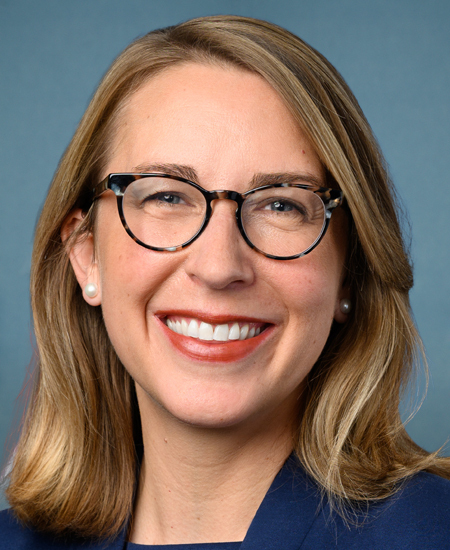
Photo of Hillary J. Scholten
D United States House · District 3 · Michigan On the 2026 ballot

Rep. Hillary J. Scholten

Compare
Total votes
1,879
all sessions
Attendance
98%
38 missed
Lower than 77% of chamber peers
With party
94%
of cast votes
Lower than 84% of chamber peers
Bipartisan score
3%
crosses aisle rarely
Higher than 83% of chamber peers
Sponsored
789
bills & resolutions
Near the chamber average
Committees
8
assignments
789 bills and resolutions

Sponsored bills

Total
789
Primary
62
Co-sponsor
727
This page
789
matching current filters
Co-sponsor HCONRES 68
Failed · United States House · Co-sponsor
To direct the removal of United States Armed Forces from Venezuela that have not been authorized by Congress.

Maddy summaryHCONRES 68 would require the President to remove U.S. military forces from Venezuela unless Congress has explicitly authorized their use through a declaration of war or a specific law. This applies to any U.S. Armed Forces currently stationed in Venezuela without such authorization. The resolution is based on the War Powers Resolution, which mandates congressional oversight of military deployments. It directs the immediate withdrawal of unapproved forces without adding new time limits or conditions.

Failed Jan 22, 2026 1 co-sponsor
Primary HR 7191
In committee · United States House · Lead sponsor
Fatigued Pilot Protection Act

Maddy summaryHR 7191, the Fatigued Pilot Protection Act, requires the Federal Aviation Administration (FAA) to update regulations within 180 days of enactment. It mandates that existing flight and duty limitations and rest rules (currently under FAA regulations at 14 CFR Part 117) apply universally to all airline pilots and operators conducting scheduled passenger flights (under FAA regulations at 14 CFR Part 121). This ensures consistent rest requirements for flightcrew members across all airlines operating under Part 121, directly affecting pilots and airlines. The bill does not create new rules but extends the applicability of current rest standards to all relevant airline operations.

In committee Jan 22, 2026 0 co-sponsors
Co-sponsor HR 7173
In committee · United States House · Co-sponsor
Follow the Science Act

Maddy summaryHR 7173, the Follow the Science Act, restricts political appointees from influencing National Institutes of Health (NIH) operations and grant decisions. It prohibits most political appointees (defined broadly as those in policy-making roles) from being employed by NIH or participating in grant reviews, funding selections, or policy implementation. The bill requires the NIH Director to report on past political appointee involvement in these activities to Congress within 30 days of enactment. These changes aim to ensure NIH decisions are based on scientific merit rather than political influence, with limited exceptions for other federal agencies.

In committee Jan 21, 2026 1 co-sponsor
Co-sponsor HR 7170
In committee · United States House · Co-sponsor
Language Access to Gun Violence Prevention Strategies Act of 2026

Maddy summaryThis bill requires the Department of Justice and Health and Human Services to translate key gun violence prevention materials - including extreme risk protection orders and safe storage guides - into the 10 most common non-English languages in the U.S. (like Mandarin, Spanish, and Korean) for limited English proficient populations. It mandates that community-based organizations review translations for cultural appropriateness before publication and prioritizes grant applications that include outreach plans for these communities. The bill also directs DOJ and HHS to create public awareness campaigns using in-language, culturally tailored messaging to promote gun violence prevention strategies. These provisions apply directly to federally funded programs and services aimed at reducing firearm-related harm.

In committee Jan 21, 2026 1 co-sponsor
Co-sponsor HR 6182
In committee · United States House · Co-sponsor
Find It Early Act

Maddy summaryThe Find It Early Act requires most health insurance plans, Medicare, Medicaid, TRICARE, and VA benefits to cover certain breast cancer screenings without cost-sharing for specific at-risk groups. It affects individuals at increased breast cancer risk (as determined by medical guidelines), those with dense breast tissue (as defined by the American College of Radiology), and others requiring screening due to factors like age, race, ethnicity, or family history. The bill mandates coverage for various screening methods including mammograms, ultrasounds, MRI, and other technologies at frequencies recommended by the National Comprehensive Cancer Network. This requirement takes effect for plan years beginning January 1, 2026, removing financial barriers to early detection.

In committee Jan 15, 2026 1 co-sponsor
Primary HR 7077
In committee · United States House · Lead sponsor
To amend the Research and Development, Competition, and Innovation Act to require a plan for data collection and analytical capability relating to the skilled technical workforce, and for other purposes.

Maddy summaryThis bill requires the National Center for Science and Engineering Statistics (NCSES) to create and update a plan for collecting and analyzing data about the skilled technical workforce. Specifically, it amends existing law to mandate that NCSES develop this data collection plan within one year of the bill's enactment, with updates required biennially thereafter. The plan must focus on gathering data through surveys specifically about the skilled technical workforce, replacing previous requirements for general workforce assessments. This change directly affects how federal data on technical workforce needs is systematically collected and analyzed.

In committee Jan 14, 2026 0 co-sponsors
Primary HR 7076
In committee · United States House · Lead sponsor
To require the Secretary of Defense to report on certain contracts and awards to small business concerns, and for other purposes.

Maddy summaryThis bill requires the Department of Defense to study how it awards small-value contracts (under $25,000) to ensure small businesses receive their designated share. The study will analyze contract spending patterns, reasons small businesses aren't awarded contracts when required, and trends in non-compliant awards. Within 180 days, the Defense Secretary must submit a report to Congress detailing findings and recommendations for improving small business contract practices.

In committee Jan 14, 2026 0 co-sponsors
Co-sponsor HR 7026
In committee · United States House · Co-sponsor
Fiscal State of the Nation Act

Maddy summaryThe Fiscal State of the Nation Act requires the chairs of the House and Senate Budget Committees to hold an annual joint hearing within 45 days after the Treasury submits its annual financial report. At this hearing, the Comptroller General must present a nonpartisan analysis of the federal government's financial condition, including budget deficits, surpluses, and long-term fiscal projections, based on the Treasury's report. The hearing must be open to the public and media, and all members of Congress may participate, regardless of committee membership. This requirement applies to financial reports submitted on or after the bill's enactment date.

In committee Jan 13, 2026 1 co-sponsor
Co-sponsor HR 6088
In committee · United States House · Co-sponsor
Restoring Food Security for American Families and Farmers Act of 2025

Maddy summaryHR 6088, the *Restoring Food Security for American Families and Farmers Act of 2025*, repeals specific sections (10101-10108) from a prior reconciliation law. This action revives previous provisions related to food security programs that were modified by those repealed sections. The bill directly affects federal food assistance and agricultural support programs by restoring their prior legal framework. It does not create new policies but reverses recent changes to existing food security measures.

In committee Jan 13, 2026 1 co-sponsor
Co-sponsor HR 4782
In committee · United States House · Co-sponsor
Local Farmers Feeding our Communities Act

Maddy summaryHR 4782, the Local Farmers Feeding our Communities Act, establishes a USDA program to connect local farmers with food distribution networks. It requires eligible entities (like state agriculture agencies) to use funds to purchase unprocessed or minimally processed local foods from covered producers - including at least 25% from small-size, mid-size, beginning, or veteran farmers - while providing technical assistance for food safety and supply chains. The bill allocates $200 million annually (2026-2030) from the Commodity Credit Corporation, mandating 10% for Tribal governments and 1% per state before distributing remaining funds. This directly supports regional food security by boosting economic opportunities for local farmers and improving access to fresh, nutritious food through established distribution channels.

In committee Jan 13, 2026 1 co-sponsor
Showing 131 to 140 of 789 bills
Previous 1 … 13 14 15 … 79 Next