

Maddy summaryThe HALT Fentanyl Act (HR 27) creates a new category of Schedule I controlled substances for "fentanyl-related substances" defined by specific chemical modifications to fentanyl. This law directly affects researchers, medical professionals, and law enforcement by expanding the legal definition of fentanyl-related substances to include many structurally similar compounds. Key provisions include streamlined registration processes for research on these substances, allowing researchers to conduct studies with expedited procedures if related to FDA-approved drug development or government-funded research. The bill requires the Attorney General to issue implementing rules within six months and includes penalties for violations involving these substances.
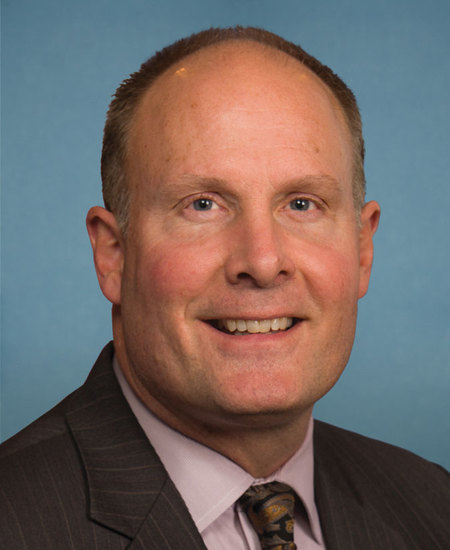
Rep. John R. Moolenaar
Sponsored bills
Maddy summaryHR 1131 exempts certain family farms and small businesses from being counted as assets when calculating financial need for federal student aid under the Higher Education Act. Specifically, it amends the law to exclude the net value of a family farm where the family resides and small businesses (with ≤100 employees) owned by the family from need analysis calculations. This change directly affects students from qualifying family farm or small business households when applying for federal financial aid. The exemption applies to need analysis conducted for award years beginning after the bill's enactment date. The bill modifies Section 480(f)(2) of the Higher Education Act of 1965 to implement this policy change.
Maddy summaryHR 1121, the "No DeepSeek on Government Devices Act," prohibits U.S. federal executive agencies from using the DeepSeek application (or any successor by High Flyer) on government information technology devices. It requires the Office of Management and Budget to develop removal standards within 60 days, directing agencies to remove the application while complying with existing security rules. Exceptions are permitted for national security, law enforcement, and security research activities, but agencies must document risk mitigation plans for any authorized use under these exceptions. The bill directly affects all executive agencies covered under federal information technology policies.
This bill allows a national of the Czech Republic to qualify for E-1 nonimmigrant status if the Czech Republic provides similar nonimmigrant status to U.S. nationals. E-1 classification allows nationals of certain countries (i.e., those with a treaty of commerce and navigation with the United States, those under a qualifying international agreement, or those deemed to qualify through statute) to be admitted solely to engage in international trade, along with their families and employees.
Maddy summaryThe HOUSE Act of 2025 would repeal a new federal energy efficiency standard for housing projects funded by the Department of Housing and Urban Development (HUD) and the Department of Agriculture (USDA), reverting to the previous energy efficiency requirements that were in place before the new rule was proposed. It also prohibits the Department of Veterans Affairs and the Federal Housing Finance Agency from implementing similar energy efficiency standards for their housing programs. This bill directly affects new housing developments receiving federal financing from HUD, USDA, VA, or FHFA, allowing them to follow less stringent energy efficiency standards previously required. The change would eliminate the need for builders to meet the updated federal benchmark, shifting compliance back to the older baseline.
Maddy summaryHR 1020 (BOOST Act) creates a tax credit for homeowners in rural unserved areas to improve broadband access. It allows a 75% credit (up to $400) for purchasing signal boosters, satellite customer equipment, or ground stations used in a primary residence. The credit applies only once per household and expires after 2029, targeting areas eligible for FCC's Rural Digital Opportunity Fund. This directly affects individual homeowners in designated rural broadband gaps seeking to enhance their internet connectivity.
Fair Access to Banking Act This bill places restrictions on certain banks, credit unions, and payment card networks if they refuse to do business with a person who complies with the law. Restrictions include prohibiting the use of electronic funds transfer systems and lending programs, termination of an institution's depository insurance, and specified civil penalties. Banks and other specified financial institutions are allowed to deny financial services to a person only if the denial is justified by a documented failure of that person to meet quantitative, impartial, risk-based standards established in advance by the institution. This justification may not be based upon reputational risks to the institution. The bill establishes the right for a person to bring a civil action for a violation of this bill.
Maddy summaryHR 1007, the Antisemitism Awareness Act of 2025, clarifies how the Department of Education enforces Title VI of the Civil Rights Act of 1964 to address discrimination against Jewish individuals. It requires the Department to consider the International Holocaust Remembrance Alliance (IHRA) definition of antisemitism when investigating complaints involving discrimination based on actual or perceived Jewish ancestry or ethnic characteristics. This affects Jewish students and communities in K-12 schools and colleges receiving federal funding, as it ensures antisemitism is assessed under existing civil rights protections. The bill does not create new laws but specifies that the IHRA definition - already used by the Department since 2018 - must be applied in Title VI enforcement cases.
Maddy summaryThis resolution allocates $10.7 million in funding for the House Select Committee on US-China Strategic Competition to cover staff salaries and operational expenses during the 119th Congress (2025-2027). The funds are split equally between two fiscal periods: $5.37 million for 2025-2026 and $5.37 million for 2026-2027. It does not create new policy but authorizes budgetary support for the committee's existing work.
Maddy summaryHR 954, the SOAR Permanent Authorization Act, permanently authorizes $75 million annually for D.C.'s Opportunity Scholarship Program, replacing previous annual funding limits. It increases the annual cap for student academic assistance from $2 million to $2.2 million and adds a new tutoring provision prioritizing students from the lowest-performing schools. The bill revises evaluation requirements to focus on students' academic progress (not standardized test scores) and mandates regular program assessments. These changes apply directly to D.C. students using opportunity scholarships and the schools participating in the program.