

Maddy summaryThis bill prohibits federal health programs (Medicare, Medicaid) and private health insurance from covering organ transplants originating in China or not procured through the U.S. Organ Procurement Network, effective January 1, 2026. It defines a "prohibited organ transplant" as one performed in China or using organs not sourced via the U.S. network, including follow-up care like lab tests or drugs. Exceptions only apply to life-saving services provided *after* such a transplant. The law also imposes criminal penalties (up to 2 years in prison) and civil penalties (three times the cost) for violations.
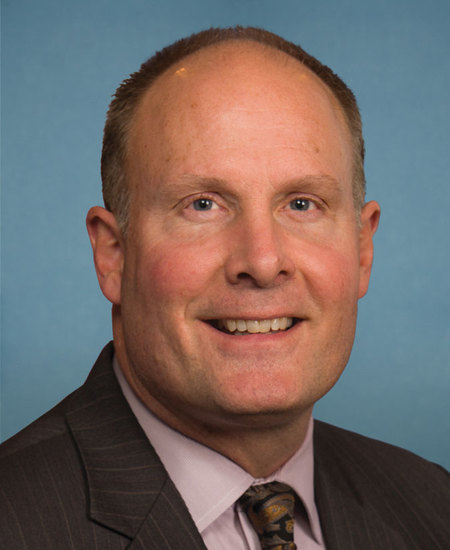
Rep. John R. Moolenaar
Sponsored bills
Maddy summaryThe FOCA Act of 2025 prohibits federal agencies from requiring or banning contractors from using union agreements in construction project bids or contracts. It directly affects federal agencies, contractors, and subcontractors working on federally funded or assisted construction projects (like buildings or infrastructure). The law requires bid documents to not favor or penalize contractors based on whether they have union agreements, aiming to promote open competition and prevent discrimination. This changes how agencies structure bids but does not affect union agreements themselves. The bill applies to all new contracts and subcontracts after enactment, with limited exemptions only for public health/safety emergencies or national security.
Maddy summaryThis bill requires the U.S. government to impose sanctions on Chinese police departments and related personnel operating in the United States. Specifically, it mandates freezing assets and blocking entry for: (1) provincial/municipal police departments in China (including Xinjiang and Fujian), their senior leaders, and entities linked to China's United Front Work Department operating covertly in the U.S.; and (2) employees of these entities, their immediate family members, or individuals aiding their U.S. presence. Key mechanisms include revoking all existing visas immediately, blocking new visas, and freezing U.S.-based assets under existing economic authority. The sanctions apply to both foreign entities and individuals, with limited 30-day national security waivers possible.
Resident Education Deferred Interest Act or the REDI Act This bill allows borrowers in medical or dental internships or residency programs to defer student loan payments until the completion of their programs.
Maddy summaryHR 2024 establishes the Joint Task Force to Counter Illicit Synthetic Narcotics (JTF-ISN), a federal coordination body uniting agencies like the DEA, FBI, Treasury, and Homeland Security to combat synthetic narcotics trafficking. It mandates the task force to share intelligence, develop joint operations against trafficking networks (particularly targeting Chinese involvement), and coordinate with state/local law enforcement. The bill explicitly prohibits the task force from targeting personal drug use or low-level dealers, focusing instead on disrupting large-scale trafficking and financial crimes related to illicit synthetic narcotics. The Director, appointed by the President, must report biannually to Congress on strategies, funding needs, and enforcement actions.
Maddy summaryHR 2067 (PARSA) prohibits retirement plan managers from investing in entities designated as national security threats, including foreign adversaries (like certain Chinese military-linked companies) and entities on U.S. sanctions lists. It requires plans to disclose all current investments in these entities, including their value, the specific entities involved, and the sanctions list they appear on. Existing investments can continue temporarily under new reporting rules but must be disclosed annually. The law aims to protect retirement savings by restricting ties to entities deemed risky by U.S. security standards.
Maddy summaryThe WISH Act would create a federal long-term care insurance program to help seniors cover costs of long-term care services. It would provide monthly benefits to seniors who have a serious disability lasting at least a year, have met coverage requirements (6 quarters of coverage in the base period starting in 2026), and have not exhausted their savings. Benefits would be calculated based on the median cost of personal assistance care and the individual's work history. The program would be funded through an initial $12 million appropriation for each of fiscal years 2026-2028, plus $50 million for public education. This would help seniors avoid exhausting their savings or becoming dependent on Medicaid for long-term care costs.
Maddy summaryHR 2039, the Protecting the Right to Keep and Bear Arms Act of 2025, prevents the President and Health Secretary from using emergency declarations (under the National Emergencies Act or Public Health Service Act) to implement gun control measures. It amends disaster relief law to explicitly prohibit future rules that would ban firearm possession, sales, or accessories during emergencies. The bill directly affects federal agencies and future emergency declarations, blocking them from being used as a tool for gun regulation. It does not change existing gun laws but restricts how emergency powers can be applied to firearms policy.
Maddy summaryHR 1166 prohibits the Department of Homeland Security (DHS) from using funds to buy batteries produced by specific Chinese companies, including CATL, BYD, and others listed in the bill, starting October 1, 2027. It directly affects DHS procurement for all its agencies, such as U.S. Customs and Border Protection, Immigration and Customs Enforcement, and the Transportation Security Administration. The bill defines "produced by" to include entities assembling final products or supplying most components of the batteries. DHS may waive the ban for national security reasons or research, but must report on cost and mission impacts within 180 days of enactment.
Maddy summaryHR 708, the SHIELD Against CCP Act, establishes a DHS working group to coordinate efforts against security threats posed by the Chinese Communist Party. The working group examines DHS programs targeting terrorism, cyber threats, border security, and transportation security, specifically focusing on the CCP's nontraditional tactics (like identity theft and visa exploitation), predatory economic practices, fentanyl trafficking, and illicit financial activity. It requires annual reports to Congress on these threats, identifies gaps in current responses, and ensures privacy compliance and coordination with federal and local partners. The working group expires seven years after its creation.