

This resolution expresses the sense of the House of Representatives that U.S. Postal Service employees are frontline essential workers and must be prioritized accordingly for purposes of COVID-19 (i.e., coronavirus disease 2019) vaccine distributions.
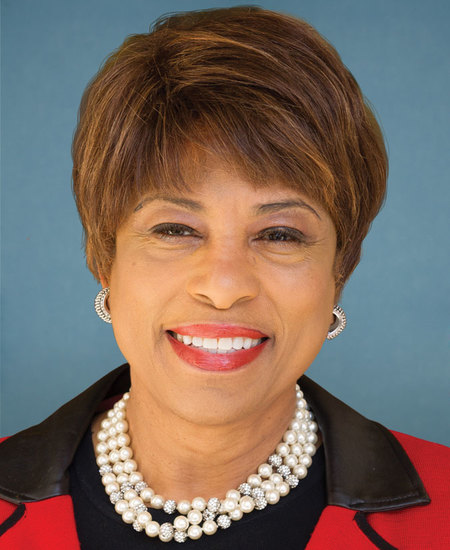
Rep. Brenda L. Lawrence
Sponsored bills
American Family Act of 2021 This bill modifies the child tax credit to (1) make the credit fully refundable, (2) increase the amount of the credit and allow an additional credit for children who are under six years of age, (3) require the amount of the credit to be adjusted annually for inflation, and (4) require the Department of the Treasury to establish a program for making advance payments of the credit on a monthly basis.
Small Business PPE Tax Credit Act This bill allows certain small businesses a tax credit for qualified personal protective equipment expenses, up to $25,000 in a taxable year. The entities eligible for such credit include farms, veterans organizations, and tribal business concerns. The bill defines qualified personal protective equipment expenses to include the cost of equipment for reducing the risk of coronavirus (i.e., the virus that causes COVID-19) transmission, including gloves, medical masks and protective gear, and cleaning supplies.
Gym Mitigation and Survival Act of 2021 or the GYMS Act of 2021 This bill establishes a grant program to provide economic support to eligible fitness facilities in response to the COVID-19 (i.e., coronavirus disease 2019) pandemic. Specifically, the bill authorizes the Small Business Administration to make initial and supplemental grants to privately owned fitness facilities that primarily provide health or fitness services and that do not offer golf, hunting, sailing, or riding facilities. The total amount of grant funds for a recipient may not exceed $25 million, and the recipient must use these funds for payroll costs, rent or mortgage obligations, and other ordinary and necessary business expenses.
Gun Violence Prevention Research Act of 2021 This bill authorizes the Centers for Disease Control and Prevention to conduct or support research on firearms safety or gun violence prevention.
Family and Medical Insurance Leave Act or the FAMILY Act This bill entitles every employee to a family and medical leave insurance (FMLI) monthly benefit payment of two-thirds of the employee's regular pay, limited to a maximum of $4,000, for not more than 60 days of qualified caregiving. The bill establishes the Office of Paid Family and Medical Leave within the Social Security Administration to administer the FMLI program. An FMLI benefit payment must be coordinated with any periodic benefits received under a state or local temporary disability insurance or family leave program. The bill imposes a tax on employers, employees, and self-employed individuals to fund FMLI benefits. It also establishes the Federal Family and Medical Leave Insurance Trust Fund to hold tax revenues.
Scientific Integrity Act This bill revises provisions regarding the release of scientific research results by federal agencies. Each agency that funds, conducts, or oversees scientific research must (1) adopt and enforce a scientific integrity policy that includes requirements such as that scientific conclusions are not based on political considerations, and (2) submit such policy to the Office of Science and Technology Policy (OSTP) for approval. Each agency must make such policy available to the public and submit such policy to Congress. Agencies and the OSTP must periodically review the policies. The Government Accountability Office shall review implementation of the policies. Each agency shall (1) appoint a Scientific Integrity Officer, (2) establish a process for dispute resolution consistent with the scientific integrity policy, and (3) establish a specified training program for current and new employees.
Restoring Communities Left Behind Act This bill directs the Department of Housing and Urban Development to establish a grant program for local partnerships to carry out neighborhood revitalization support activities in economically distressed areas. Eligible activities include weatherization and energy efficiency improvements; housing accessibility improvements for seniors and persons with disabilities; purchasing delinquent mortgages; purchasing and developing vacant or distressed properties to create affordable rental housing and for other purposes; and improving parks, sidewalks, and street lighting.
Health Care Affordability Act of 2021 This bill revises the tax credit for health care premium assistance to expand the eligibility of low-income taxpayers for such credit and reduce the cost of health care premiums.
USPS Fairness Act This bill repeals the requirement that the U.S. Postal Service annually prepay future retirement health benefits.