

Maddy summaryThe Right to Vote Act establishes legal protections against government actions that make it more difficult for citizens to vote in federal elections. It prohibits any rule or practice that diminishes voting ability unless the government proves it is the least restrictive way to achieve an important interest, and it similarly blocks substantial impairments unless they significantly further a specific government goal. The bill creates a new legal pathway for voters to challenge these restrictions in federal court, requiring judges to expedite these cases and shifting the burden of proof to the government to justify any voting barriers. These protections apply to all U.S. states, territories, and the District of Columbia for elections occurring on or after September 1, 2026.
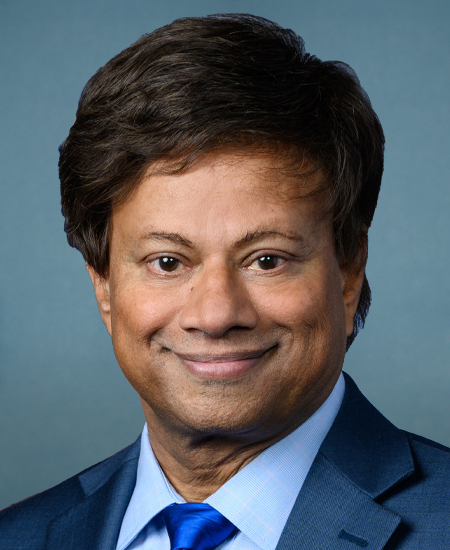
Rep. Shri Thanedar
Sponsored bills
Maddy summaryThis bill proposes changes to the Social Security system that would affect workers and retirees by allowing a portion of earnings above the current cap to be taxed and counted toward future benefits. It introduces a temporary mechanism where 80% of income exceeding the contribution base is taxable in 2026, with this percentage decreasing by 20 points annually until it reaches zero in 2030. Additionally, the legislation increases the benefit formula to include 5% of earnings above the cap and adjusts how cost-of-living increases are calculated by using a new index specifically for elderly consumers. These changes aim to expand the amount of income considered for benefit calculations while modifying how future benefit amounts are adjusted for inflation.
Maddy summaryThe Open Meetings Act of 2026 requires the Judicial Conference to publish notice of its meetings at least 30 days in advance on its official website. It mandates that these meetings be live-streamed with audio accessible to the public without charge or registration, and the recordings must be archived and published online within seven days. The bill allows for exceptions to public access when matters are legally prohibited from disclosure or when a majority vote determines a session should be closed for sensitive reasons, provided the reason is stated publicly. These changes directly affect the transparency and public accessibility of proceedings within the federal judicial system.
Maddy summaryThis resolution expresses the sense of the House of Representatives that the United States should recognize and encourage acts of kindness to foster community and build social resilience. It highlights the belief that kindness strengthens families, neighborhoods, and the nation by connecting people across differences and promoting a healthier society. The bill does not create new laws or funding but serves as a symbolic statement affirming the value of everyday compassionate actions.
Maddy summaryThe Protect Local Funding Act prohibits federal agencies from finalizing, implementing, or enforcing a specific proposed rule regarding federal financial assistance scheduled for publication in May 2026. This legislation directly affects the Office of Management and Budget and other federal agencies by legally blocking them from acting on that particular regulation. By preventing the enforcement of this rule, the bill aims to stop a specific administrative action that could impact how federal funds are distributed. The measure does not alter existing funding programs but rather serves as a procedural barrier to a future regulatory change.
Maddy summaryThe FAST Repairs for Wheelchairs Act prohibits Medicare Advantage plans from requiring prior authorization, prescriptions, or medical documentation for repairs to complex rehabilitation wheelchairs and their accessories. This change directly affects individuals who use these devices, allowing them to get necessary maintenance without waiting for plan approval. However, the law still permits plans to review the initial medical necessity of the equipment or approve replacements when the device is lost, damaged, or has been used for five years. By removing these specific barriers for repairs, the bill aims to ensure faster access to essential maintenance services for wheelchair users.
Maddy summaryThis bill strengthens child labor protections by expanding the definition of hazardous work for minors, particularly in dangerous industries like mining and explosives, and requires the government to update these regulations every five years. It imposes strict rules on companies with federal contracts, prohibiting them from using child labor in their supply chains and holding them jointly liable if their subcontractors violate these rules. The legislation also increases penalties for violations, including higher fines for serious injuries or deaths, allows for stop-work orders, and enables victims to seek significant compensatory and punitive damages. Additionally, the bill mandates training programs to help identify and prevent child labor abuses and requires the Department of Labor to report annually on work-related injuries and deaths.
Maddy summaryThis concurrent resolution directs the President to withdraw all U.S. military forces from active hostilities with Iran. The measure requires the President to remove troops unless they are needed to defend the United States or its allies from an immediate attack, and even then, such defensive actions must follow specific reporting rules. The directive applies unless Congress has explicitly authorized the use of force against Iran through a formal declaration of war or a specific legislative act.
Maddy summaryThis resolution expresses support for designating July 3 through July 10, 2026, as "National Extreme Heat Awareness Week" to educate the public on the dangers of extreme heat. The bill highlights how high temperatures threaten public safety, infrastructure, and agriculture, noting that heat is the leading weather-related cause of death in the United States. It encourages federal, state, and private entities to hold ceremonies and activities during this week to raise awareness about preventing heat-related illnesses and promoting community preparedness.
Maddy summaryThe BLANKET Act creates a new federal grant program to help states and local governments expand emergency shelter capacity during severe weather events like heat waves, cold snaps, and storms. This initiative directly affects people experiencing homelessness by providing funding for temporary warming and cooling centers, hotel vouchers, and essential supplies such as generators and medical equipment. To receive these funds, eligible entities must submit applications detailing their specific needs and plans for coordinating with local emergency services, with $750 million authorized for each fiscal year from 2027 to 2029. The legislation also requires a report to Congress five years after enactment to evaluate the program's effectiveness in reducing harm and strain on medical services.