

Maddy summaryHR 2910, the Youth Workforce Readiness Act of 2025, establishes a federal grant program to fund community-based organizations in creating after-school and out-of-school-time workforce readiness programs for youth aged 6-18. The bill authorizes $100 million annually (2026-2030) to support activities like career pathway planning, paid work experiences (including apprenticeships), occupational skill training aligned with local job needs, and employer partnerships. It directly affects eligible youth - particularly those in underserved communities - and requires grantees to coordinate with schools, employers, and local workforce boards, while mandating youth councils to advise on program design. The program emphasizes measurable outcomes, including improved school attendance, skill development, and transitions to postsecondary education or employment.
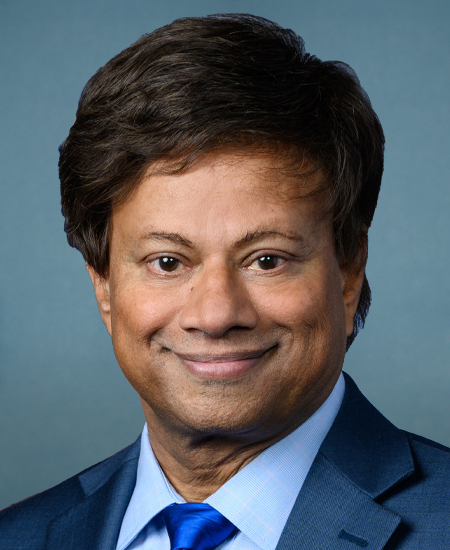
Rep. Shri Thanedar
Sponsored bills
Maddy summaryThe DRIVE Act of 2025 requires the Department of Veterans Affairs (VA) to set mileage reimbursement rates for veterans at the federal government's current standard rate for employees using personal vehicles on official business, replacing the previous fixed rate of 41.5 cents per mile. It also mandates that the VA process and pay these reimbursements within 90 days of a veteran's valid request. This directly affects veterans who travel for VA medical appointments or services using their personal vehicles. The bill aligns veteran travel reimbursements with federal employee standards and ensures timely payments.
This joint resolution nullifies requirements for persons effectuating decentralized financial (DeFi) transactions to report certain information regarding digital asset sales to the Internal Revenue Service (IRS). Specifically, the joint resolution nullifies the requirements included in the rule titled Gross Proceeds Reporting by Brokers That Regularly Provide Services Effectuating Digital Asset Sales and issued by the IRS on December 30, 2024. Decentralized finance refers to the suite of financial activities and services that are facilitated by cryptocurrency and intended to be conducted without any sort of reliance on traditional financial tools or intermediaries.
Maddy summaryThe SERVICE Act (HR 2829) modifies the Public Service Loan Forgiveness (PSLF) program to make it more accessible for borrowers. It reduces the required number of qualifying monthly payments from 120 to 96, expands what counts as a qualifying payment to include certain deferments and forbearances, and creates a "buyback" option to make up for missed payments. The bill also establishes an online portal for borrowers to track their progress toward forgiveness, clarifies that independent contractors can qualify for PSLF, and changes how consolidated loans are treated. This bill directly affects borrowers with federal student loans who work in public service jobs and are seeking loan forgiveness.
Working for Immigrant Safety and Empowerment Act or the WISE Act This bill expands eligibility for U nonimmigrant visas (victims of criminal activity) and prohibits immigration enforcement activities in specified areas. Generally, U visas are for victims of specified crimes (e.g., rape, trafficking, or domestic violence) who assist with the investigation or prosecution of the crime. The bill adds hate crimes, child abuse, and elder abuse as crimes that may qualify a victim for a U visa and removes criteria related to the victim's assistance with the investigation or prosecution of the crime. Furthermore, the Department of Homeland Security (DHS) must provide work authorization to U visa applicants, whereas currently DHS may grant work authorization but is not required to do so. The bill also eliminates the annual numerical cap on U visas. The bill establishes a rebuttable presumption that certain individuals, including U visa applicants and T visa (victims of human trafficking) applicants, shall not be detained while the application is pending. Additionally, the bill provides immigration-related protections, such as by extending the admission period and providing work authorization, to the spouse or child of a nonimmigrant visa holder who subjected that spouse or child to battery or extreme cruelty. Further, the bill prohibits, with some exceptions for exigent circumstances, U.S. Immigration and Customs Enforcement or U.S. Customs and Border Protection from conducting immigration enforcement actions within 1,000 feet of a school, health care facility, place of worship, or other location specified in the bill.
Maddy summaryThis bill amends the Homeland Security Act of 2002 to strengthen the role of the Department of Homeland Security (DHS) Officer for Civil Rights and Civil Liberties. It requires the DHS Secretary to assign permanent staff and dedicated resources to support the officer's duties, ensuring they have consistent capacity to address civil rights concerns. The bill directly affects DHS agencies and the public interacting with them, as it mandates structural support for the officer's oversight role. The key change is the requirement for permanent staffing and resources, moving beyond temporary arrangements to provide ongoing civil rights oversight within DHS.
Maddy summaryThe Pursuing Equity in Mental Health Act (HR 2904) aims to reduce mental health disparities affecting racial and ethnic minority groups by modifying federal grant programs, requiring research on disparities, and funding targeted initiatives. It directs the Health and Human Services Secretary to prioritize grants for community health organizations serving minority populations, mandates a National Institutes of Health study on mental health research gaps in these groups, and establishes training programs for health professionals to address cultural competency in mental health care. The bill also requires a public outreach strategy developed with community input to reduce stigma and improve access to culturally appropriate care, alongside $20 million annually (2026-2031) for this effort. Additional funding includes $150 million yearly for NIH mental health research and $750 million yearly for the National Institute on Minority Health.
Maddy summaryHR 2837 establishes an Advisory Council under the Department of Health and Human Services to improve access to existing resources for victims of gun violence. The council, composed of federal agency heads and appointed victims/support professionals, will assess needs, identify effective programs, and compile a public resource hub with contact information for medical, financial, mental health, legal, and government support services. It requires a detailed report within 180 days of enactment and a follow-up report within two years, focusing on gaps in current assistance and coordination. The bill directly affects individuals defined as victims of gun violence (including those wounded, threatened, witnessing incidents, or related to victims) and aims to connect them to existing federal, state, and nonprofit resources without authorizing new funding. The council will sunset after five years.
Maddy summaryHR 2888, the "Stopping a Rogue President on Trade Act," terminates specific executive orders imposing tariffs (EOs 14257, 14193, and 14194) and requires congressional approval for new tariffs or trade restrictions. It directly affects the President, who can no longer unilaterally impose or increase tariffs without Congress passing a joint resolution approving the action. Key mechanisms include mandating a formal joint resolution process for tariff decisions (with limited exceptions for existing antidumping duties and trade agreements) and applying expedited congressional procedures. This bill shifts authority from the executive branch to Congress for major trade policy changes.
Maddy summaryThis bill prevents the U.S. government from diverting, delaying, or reassigning federal funds specifically designated for the National Weather Service and Great Lakes programs without new congressional approval. It directly affects NOAA’s operations in these areas by requiring that existing appropriations cannot be altered without explicit new legislation referencing this bill. The law mandates annual certification from NOAA’s Administrator to five congressional committees confirming compliance with these funding protections. This is a procedural measure focused on safeguarding current funding streams, not creating new programs or altering weather service operations.