

Maddy summaryThis bill directs the Department of Health and Human Services to significantly increase federal research funding for uterine fibroids ($30 million annually from 2026-2030), expand coordination of NIH research, and establish a Medicaid data system to track treatment access and costs. It mandates public education on fibroid symptoms, prevalence (especially among Black women, who face higher risk and severity), and non-hysterectomy treatment options. The bill also requires disseminating evidence-based provider resources on managing fibroids while preserving fertility. These provisions directly affect the estimated 26 million U.S. women with fibroids - particularly women of color - and aim to address the current lack of research and treatment data.
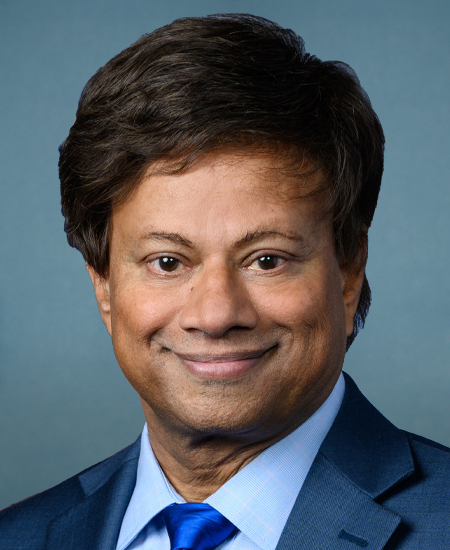
Rep. Shri Thanedar
Sponsored bills
Maddy summaryThis bill directs the Health and Human Services Secretary to fund research on early detection and intervention for uterine fibroids, aiming to develop evidence-based approaches for healthcare settings. It authorizes grants to states to support screening (including advanced imaging), patient navigation services, and public education campaigns focused on early detection, with priority given to areas with socially vulnerable populations at higher risk. The bill also funds research into disparities in pain management during fibroid surgery and conditions like Asherman’s Syndrome. These provisions directly affect women with uterine fibroids, particularly in underserved communities, by expanding access to early detection services and targeted research.
Maddy summaryHRES 579 is a non-binding resolution designating July as Uterine Fibroids Awareness Month. It supports raising public awareness about uterine fibroids - a condition affecting an estimated 80% of women by age 50 - particularly highlighting the disproportionate impact on Black and Hispanic women (3x and 2x higher rates than White women). The resolution recognizes the need for more research, treatment options, and education on fibroid prevention and symptoms. It urges the President to issue a proclamation encouraging nationwide awareness activities during July. This is a symbolic measure with no new funding or legal requirements.
Maddy summaryThis non-binding House resolution (HRES 577) demands that the current administration immediately release all unclassified federal documents related to Jeffrey Epstein, including flight logs, correspondence, and evidence. It specifically requires the release of materials involving Epstein, Ghislaine Maxwell, and known associates, with redactions only to protect minor victims' identities and ongoing prosecutions. The resolution also calls for the Department of Justice and FBI to submit a report on any delays or evidence suppression related to the case. As a resolution, it does not create new law but serves as a formal congressional demand for transparency regarding Epstein-related investigations.
Maddy summaryHR 4365, the Consumer Online Payment Transparency and Integrity Act, requires businesses to clearly disclose automatic renewal terms and cancellation procedures when selling goods or services with free trials or automatic renewal features. It mandates 7-day advance notice before charging consumers for renewals, requires express consent for each renewal (not just initial sign-up), and ensures cancellation is as easy as signing up (via online tools or toll-free numbers). The bill also prohibits "dark patterns" (manipulative design) from tricking consumers into unintended charges and voids automatic renewals if businesses violate these rules, requiring refunds for affected consumers. This directly affects consumers who encounter surprise charges from subscriptions or free trials that convert to paid services without clear consent.
Maddy summaryHR 4382 authorizes the U.S. Mint to produce commemorative coins for the 2028 Los Angeles Olympics/Paralympics and 2034 Salt Lake City Winter Olympics/Paralympics. It specifies gold, silver, and half-dollar coin designs with defined mintage limits (e.g., up to 100,000 $5 gold coins for each event), all bearing inscriptions like "2028" or "2034" and standard coin features. A surcharge ($5-$50 per coin) is added to sales, with all funds directed to the respective Olympic committees to support event hosting and legacy programs like youth sports. The bill ensures no net cost to the government by requiring surcharge revenues to cover all design, production, and marketing expenses before funds are disbursed.
Maddy summaryHCONRES 42 is a symbolic congressional resolution recognizing the persistent wage gap between Black women and White, non-Hispanic men in the U.S. It highlights that Black women earn 66 cents for every dollar earned by White, non-Hispanic men working full-time year-round, with the gap taking over 200 years to close at current rates. The resolution emphasizes how this disparity - rooted in both racial and gender discrimination - impacts Black women’s ability to afford essentials like education, childcare, and housing. It does not create new laws or policies but formally acknowledges the issue on Black Women’s Equal Pay Day (July 10, 2025) and reaffirms support for equal pay.
Maddy summaryHRES 569 is a non-binding House resolution affirming that diversity, equity, inclusion, and accessibility (DEIA) are fundamental U.S. values and emphasizing the need to address ongoing discrimination in workplaces, schools, government programs, the military, and society. It does not create new laws but calls on federal, state, local governments, educational institutions, and businesses to adopt DEIA initiatives to remove barriers faced by marginalized groups, including Black, Latino, AANHPI, Indigenous, women, LGBTQI+, and disabled individuals. The resolution cites data showing persistent discrimination - such as wage gaps, housing segregation, health care disparities, and underrepresentation in leadership - to underscore how systemic inequities cost the economy trillions and limit opportunity. It encourages organizations to foster inclusive environments where all people can achieve their potential, without prescribing specific policy changes.
Maddy summaryThis is a non-binding House resolution (HRES 568) that recognizes climate change as a critical public health threat in the U.S. It does not create new laws but expresses congressional support for coordinated action. The resolution specifically urges the Department of Health and Human Services (HHS) to improve climate resilience in healthcare systems, prioritize funding for underserved communities (including Tribal nations and rural hospitals), and reinstate climate-focused offices like the Office of Climate Change and Health Equity. It also recommends HHS develop better data tools on climate-health impacts and support worker protections against heat exposure. The resolution focuses on guiding federal agency actions, not mandating specific policy changes.
Maddy summaryHRES 575 is a symbolic resolution designating July 10th as "Journeyman Lineworkers Recognition Day." It honors lineworkers who face significant risks daily - working at heights near live wires and responding to disasters like hurricanes and wildfires. The resolution specifically references Henry Miller, an early leader of the International Brotherhood of Electrical Workers, who died on July 10, 1896, while troubleshooting an outage. It encourages the public to recognize these workers' contributions but does not create new laws or allocate funding.