

Maddy summaryHRES 764 is a symbolic House resolution recognizing persistent disparities in mental health access and treatment for Black youth. It cites alarming statistics, including a 149% rise in suicide rates among Black adolescents (2007-2023) and higher rates of suicide attempts among Black high school students. The resolution calls on the current administration to continue previous efforts addressing these disparities, incorporate recommendations from the Congressional Black Caucus’s "Ring the Alarm" report, and protect the Substance Abuse and Mental Health Services Administration (SAMHSA) as an independent agency. It does not create new laws or allocate funds but serves as a formal acknowledgment of the crisis and a request for policy continuity.
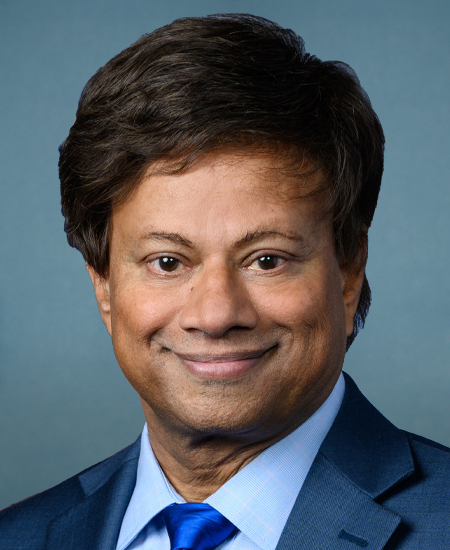
Rep. Shri Thanedar
Sponsored bills
Maddy summaryHR 5545, "Katie Meyer’s Law," requires colleges and universities receiving certain federal funds to provide students facing alleged violations of campus conduct codes with the option of having an adviser during disciplinary proceedings. Institutions must adopt policies allowing students to choose an outside adviser or request an independent adviser from the school, who must be trained on campus procedures and can participate in hearings as an advocate. The law also mandates that advisers may receive bi-weekly updates with student permission and ensures students are informed of their adviser options in written notifications. This directly affects students in disciplinary cases at participating higher education institutions across the U.S.
Maddy summaryThe Improving Child Care for Working Families Act of 2025 increases the tax exclusion limit for dependent care assistance from $7,500 to $10,500 annually for most taxpayers. This change directly benefits working families who receive employer-provided child care benefits by allowing them to exclude more of that assistance from their taxable income. Married couples filing separately would see their exclusion limit rise from $3,750 to $5,250. The amendment applies to amounts paid or incurred in calendar years starting after the bill's enactment.
Maddy summaryHR 5561, the Picket Line Protection Act of 2025, amends the tax code to exclude strike replacement wages from taxable income for union members. It directly affects members of labor organizations (501(c)(5) groups) who receive compensation from their union during a strike, making that income non-taxable. The key provision adds Section 139J to the Internal Revenue Code, removing this specific income from gross income calculations. This change applies to compensation received after January 1, 2025.
Maddy summaryThe Mental Health Services for Students Act of 2025 would establish a federal grant program to fund school-based mental health services for students in grades K-12, particularly those experiencing trauma, grief, suicide risk, or violence. It directly affects schools (including Bureau of Indian Education schools), students, and community mental health providers through partnerships that must include school districts and local mental health entities. Key provisions require services to be culturally appropriate, trauma-informed, and integrated with positive behavioral supports, with grants capped at $2 million per award for 5 years (renewable) and funded at $300 million annually for 2027-2028. Recipients must report annually on program outcomes, ensure equitable access across urban and rural areas, and comply with privacy laws like HIPAA and FERPA.
Maddy summaryThis bill removes time limits for victims to file civil and criminal cases related to child sexual abuse, exploitation, and sex trafficking. It requires states to eliminate statutes of limitations for these cases and revive previously time-barred claims, allowing victims a minimum of 2 years or until age 55 to pursue legal action (Section 3, Section 4). The bill provides federal grants to states that adopt these reforms, with funding tiers based on how many changes they implement (e.g., eliminating civil/criminal time limits or reviving expired claims) (Section 4). It directly affects survivors of child sexual abuse by expanding their legal options to seek justice, addressing findings that most victims delay reporting until decades later.
Maddy summaryThis resolution condemns the use of federal regulatory agencies (like the FCC) or lawsuits to suppress lawful speech critical of political parties or the President, specifically referencing concerns about tactics mirroring authoritarian practices. It does not create new laws but formally warns that such actions undermine First Amendment protections and democratic norms. The resolution directly affects media organizations, journalists, and public discourse by calling on government agencies to avoid using their power for political retaliation. It reaffirms the House’s commitment to protecting free expression and urges officials to refrain from pressuring media to silence criticism.
Maddy summaryHRES 754 is a House resolution recognizing the psychological harm caused by current immigration enforcement practices, specifically affecting undocumented immigrants, their families (including 5.5 million U.S.-citizen children living with undocumented relatives), and communities. It condemns ICE tactics that undermine due process and Fourth Amendment rights, such as expedited deportations and courthouse arrests, and calls for Congress to oversee ICE detention centers and monitor policy implementation. The resolution also requests federal agencies collect data on mental health impacts and collaborate with nonprofits to provide culturally appropriate mental health services to affected communities. As a non-binding resolution, it does not change laws but formally acknowledges documented psychological effects like anxiety, family separation trauma, and disrupted community stability.
Maddy summaryThis resolution designates September 22-28, 2025, as "Asian American and Native American Pacific Islander-Serving Institutions Week" to honor institutions that serve Asian American, Native Hawaiian, and Pacific Islander students. It recognizes these colleges and universities as critical providers of higher education, noting they enroll 46% of AANHPI undergraduates despite comprising only 7% of U.S. institutions. The resolution emphasizes their role in supporting low-income, first-generation students and preserving cultural heritage, while calling for national recognition through community activities during the designated week. It is a symbolic gesture with no funding or policy changes attached.
Maddy summaryThis bill requires the Secretary of Defense to restore access to all curricula, books, and learning materials previously available at Department of Defense Education Activity (DODEA) schools by 30 days after enactment, and prohibits new restrictions until the 2026-2027 school year. It adds new procedural requirements for future directives affecting DODEA schools, mandating advisory committee reviews and congressional notice before changes to curricula or materials. The bill also nullifies specific executive orders (including those restricting "radical indoctrination" or "gender ideology") that impacted DODEA schools and directs a study on creating an independent body to oversee DODEA curricula. It directly affects military-connected students and schools operated by the Department of Defense Education Activity.