

Give Kids a Chance Act of 2025 This bill expands the Food and Drug Administration’s (FDA’s) authority with respect to research on rare pediatric diseases, including by permitting the FDA to take enforcement action against drug sponsors that fail to satisfy pediatric study requirements and by reauthorizing programs that support pediatric research. Specifically, the bill modifies requirements relating to molecularly targeted pediatric cancer investigations to permit research on new drugs in combination with active ingredients that have already been approved, provided certain conditions are met; permits the FDA to take enforcement action against drug sponsors that fail to comply with pediatric study requirements, if such sponsors demonstrated a lack of due diligence in satisfying the requirement; renews the FDA’s authority to award priority review vouchers to sponsors of new products intended to treat rare pediatric diseases through September 30, 2029; and reauthorizes through FY2027 certain funding for the National Institutes of Health to support priority pediatric research. The bill also provides statutory authority for the FDA’s interpretation of the orphan drug exclusivity period. The bill specifies, consistent with FDA regulations, that the seven-year market exclusivity period for drugs for rare diseases or conditions (i.e., orphan drugs) prohibits the approval of the same drug for the same approved use or indication with respect to the disease or condition. (In Catalyst Pharmaceuticals, Inc. v. Becerra , a court rejected the FDA’s interpretation and held that orphan drug exclusivity extends to all uses or indications for the disease or condition.)
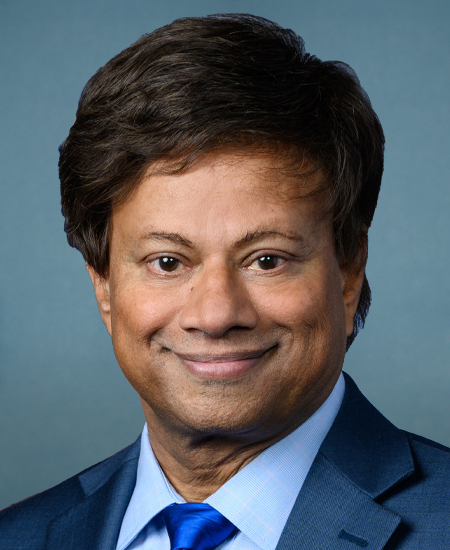
Rep. Shri Thanedar
Sponsored bills
Maddy summaryHRES 917 is a ceremonial resolution congratulating Korson’s Tree Farms in Montcalm County, Michigan, for being selected to provide the 2025 White House Christmas tree. It recognizes the farm as the first Michigan grower in 41 years to supply the official White House tree and highlights Michigan’s Christmas tree industry, which ranks third nationally in harvests and generates over $40 million annually. The resolution includes no policy changes or funding; it solely offers congratulations, acknowledges the farm’s past contest wins, and invites the farm to the Capitol for recognition. This procedural resolution affects no legislation or regulations, serving only as a symbolic honor.
Maddy summaryThis bill prohibits federal funding for White House construction or renovations during any government shutdown (funding gap), except for projects directly related to health or safety. It directly affects White House maintenance and development projects by blocking non-essential work when Congress fails to pass a budget. The key provision bans all non-essential spending on White House grounds during budget lapses, with explicit health/safety exceptions. The bill aims to prevent new projects from starting during shutdowns without altering existing contracts or ongoing work.
Maddy summaryThe FRESHER Act of 2025 requires the Secretary of the Interior to study stormwater runoff impacts from oil, gas, and mining operations on groundwater and aquifers. It mandates a specific analysis of measurable contamination, groundwater resources, and aquifer susceptibility to contamination in affected areas. The study must be completed within one year of the bill's enactment, with results reported to Congress. This bill directly affects oil, gas, and mining operations by establishing new federal study requirements for their stormwater runoff.
Maddy summaryHR 6318, the No GOUGE Act, prohibits large businesses from excessively raising prices on goods affected by tariffs or planned tariffs (e.g., imports subject to new tariffs) for five years after the tariff takes effect. It specifically targets companies with over $100 million in U.S. revenue, banning price hikes that exceed the actual cost of the tariff plus legitimate operational expenses (excluding executive pay or stock buybacks). The Federal Trade Commission (FTC) enforces this by presuming violations if large firms (over $1 billion revenue) raise prices beyond pre-tariff averages during "tariff shock" periods, though companies can rebut this by proving costs were genuinely tied to the tariff. The law aims to prevent price gouging by ensuring tariff costs - not profit motives - drive price changes for consumers.
Maddy summaryThe CARE for Moms Act aims to reduce maternal mortality in the United States by expanding access to comprehensive care for pregnant and postpartum individuals. It directly affects women, particularly Black women who face disproportionately higher maternal mortality rates, as well as rural and underserved communities. Key provisions include funding State-based perinatal quality collaboratives ($35 million annually), requiring 12-month Medicaid coverage for postpartum individuals, mandating oral health services during pregnancy, supporting doula services through $50 million in grants, and creating regional centers to address implicit bias in healthcare. The bill also establishes rural mobile health units for obstetric care and requires hospitals to notify authorities 90 days before closing obstetric units. These changes aim to address systemic issues contributing to the U.S. maternal mortality crisis, which has the highest rate among developed nations.
Maddy summaryHR 6305, the High-skilled Immigration Reform for Employment Act, expands opportunities for U.S. employers to hire foreign workers in specialty occupations by increasing the annual H-1B visa cap from 65,000 to 130,000 and adjusting employer thresholds to make it easier for larger companies to qualify for H-1B visas. It also creates a new $25 million annual grant program (2026-2030) to fund states and schools that strengthen K-12 and higher education in science, math, engineering, and technology fields. The bill directly affects U.S. employers seeking H-1B workers and schools receiving STEM education grants. Key mechanisms include raising the H-1B cap, modifying employer size thresholds for H-1B-dependent status, and authorizing federal grants for STEM education programs.
Maddy summaryHR 6249, the "Addressing Addiction After Disasters Act," updates federal disaster relief guidelines to explicitly include substance use and alcohol use disorders in crisis counseling services. It amends the Robert T. Stafford Disaster Relief Act to allow FEMA-funded programs to address these issues alongside mental health needs for disaster survivors. The bill requires FEMA to revise application forms and guidance within 180 days to reflect these changes and mandates a GAO report on program duration and compliance with using funds only for disaster-related substance/alcohol issues. This directly affects disaster survivors facing substance use or alcohol challenges by expanding access to covered support services.
Maddy summaryHRES 909 is a House resolution affirming that immigrant justice and reproductive justice are interconnected and must be addressed together. It calls on the Department of Homeland Security to reinstate protections for pregnant individuals in detention, eliminate the 5-year bar restricting immigrants’ access to federal health programs like Medicaid, and implement transparent oversight of reproductive health care in detention facilities. The resolution also urges Congress to remove barriers to health care access for immigrants and requires federal agencies to report on policies affecting reproductive health care for detained individuals. This resolution directly affects policies toward immigrants in detention, particularly regarding access to abortion, prenatal care, and mental health services, but does not create new laws.
Maddy summaryThis bill extends health insurance premium tax credits for taxpayers with household incomes above 400% of the poverty line, temporarily allowing credits for those who would otherwise lose eligibility. It modifies the Internal Revenue Code to apply this extension without a fixed end date, instead tying it to budget estimates that must balance increased federal costs against tariff revenue gains. The key provision adjusts how the credit amount is calculated for tax years beginning after December 31, 2025, using a temporary rule based on projected federal budget impacts. It directly affects middle- and higher-income individuals who rely on these subsidies to afford health insurance coverage. The bill does not change eligibility thresholds but extends current subsidy rules under specific fiscal constraints.